If you’ve been putting off an HVAC upgrade because you’re not sure whether the rebates are worth the hassle — or whether they even apply to you — you’re not alone. A lot of Nassau County homeowners are in the same spot. They’ve seen the ads, heard the word “NYSERDA,” maybe even looked it up once. But the programs are layered, the terminology is confusing, and it’s hard to know what’s actually real versus what’s just marketing language contractors use to get you on the phone.
We’ve put together this guide to give you a straight answer on how the rebate programs work in Nassau County specifically, what changed recently, and what to watch out for before you commit to anything.
How Air and Heating Services Rebates Work in Nassau County
Here’s the thing most people get wrong: in Nassau County, PSEG Long Island and NYSERDA aren’t two separate rebate programs you can stack on top of each other. PSEG Long Island administers the NYS Clean Heat program on Long Island — so when you see both names mentioned, you’re looking at one combined rebate, not two checks. This trips up a lot of homeowners who’ve done research online, because most of what’s written about NYSERDA rebates applies to upstate New York, where different utilities run separate programs.
What that means practically is that your rebate comes through PSEG, and the amount depends on the type of system you install, its efficiency rating, and your household income. The program is real, the money is real, and for many Nassau County homeowners, the rebate is substantial enough to meaningfully change the math on an upgrade they’ve been delaying.
Heating & Air Conditioning Service Rebate Amounts: What Nassau County Homeowners Can Expect
For most Nassau County homeowners at standard market rates, PSEG’s Home Comfort Program pays between $500 and $1,000 per ton of capacity for a qualifying heat pump installation, with total rebates capped at $5,000. That’s not a small number. On a typical two-to-three ton system, you’re looking at a rebate that covers a meaningful portion of the installation cost — before you factor in any state tax credits or financing.
But here’s where it gets more interesting. If your household income falls below 80% of the area median income, you may qualify for PSEG’s Home Comfort Plus program instead. Under that tier, rebates can cover 100% of the total project cost, or up to $11,000 — whichever comes first. That’s a completely different financial picture, and it’s one that a lot of Nassau County homeowners don’t know they qualify for because nobody walked them through the income determination process.
The income threshold isn’t as low as people assume. Nassau County’s area median income is high relative to state averages, so the 80% threshold still captures a meaningful portion of the county’s population. If you’ve never checked, it’s worth checking before you assume you’re in the standard tier.
There’s also NYSERDA’s EmPower+ program for households below 60% of state median income, which provides energy efficiency upgrades at no cost to the homeowner. For qualifying households, the maximum assistance available has increased to $24,000 through the HEAR program. These aren’t obscure programs — they’re fully funded and actively accepting applications. The barrier isn’t eligibility. It’s awareness.
One more thing worth knowing: to qualify for any of these PSEG rebates, you have to use a participating contractor. That’s not a technicality — it’s a hard requirement. If you hire a contractor who isn’t enrolled in the PSEG Home Comfort program, you don’t get the rebate, full stop. It doesn’t matter how good the installation is or how efficient the equipment is. Contractor participation status is something you should confirm before you sign anything.
Air Conditioning & Heating Service Upgrades: What Happened to the Federal Tax Credit
A lot of Nassau County homeowners were factoring the federal Section 25C energy efficiency tax credit into their upgrade budget — up to $2,000 back on a qualifying heat pump installation. That credit expired on December 31, 2025. If you installed a qualifying system in 2025, you can still claim it on your 2025 federal tax return. But for new installations in 2026, the federal credit is gone.
This matters because some homeowners heard the credit was expiring and decided to wait and see if it gets renewed. It’s a reasonable instinct, but it’s worth understanding what you’re waiting on. Federal energy policy is genuinely uncertain right now, and there’s no clear timeline for reinstatement. Meanwhile, the PSEG and NYSERDA programs are funded and active. Waiting for a federal credit that may or may not return while sitting on an aging system isn’t necessarily the conservative move it feels like.
The more useful question is whether the remaining incentives — PSEG rebates up to $5,000 at standard rates, or up to $11,000 for income-eligible households, plus New York State’s own tax programs — make the upgrade math work for you without the federal credit. For most Nassau County homeowners replacing an oil-fired heating system or an older central AC unit, the answer is yes. Especially when you account for the long-term reduction in monthly energy costs from a high-efficiency system.
Speaking of oil heat: if your home currently runs on oil, you may qualify for a higher rebate tier altogether. NYSERDA’s programs treat fossil fuel decommissioning — meaning you’re fully replacing an oil, propane, or gas heating system with a heat pump — as a separate, higher-incentive category. On Long Island, full decommissioning projects can qualify for up to $25,000 in combined rebates. Nassau County has a historically high rate of oil-heated homes, so this pathway is more relevant here than in most other markets. If you’re heating with oil right now, that’s the first thing to mention when you call for an estimate.
Why Nassau County Homes Have Specific HVAC Upgrade Challenges
Nassau County’s housing stock is old. Most of it was built during the post-WWII suburban expansion of the 1940s through 1960s — Cape Cods, ranches, split-levels — homes that were never designed with modern central HVAC in mind. That creates real challenges when you’re trying to retrofit a new system, and it’s one reason why a lot of homeowners here have delayed upgrades that homeowners in newer construction markets would have made years ago.
The good news is that the challenges are well understood and there are practical solutions. We know Nassau County’s housing stock inside and out, and we don’t treat every job the same regardless of what we’re walking into.
Do Heat Pumps Work in Nassau County Winters?
This is probably the most common question we hear, and it’s worth addressing directly because the concern is legitimate — it’s just based on outdated information. The heat pumps that were common fifteen or twenty years ago did lose efficiency significantly in cold weather, and the skepticism that built up around them was earned at the time.
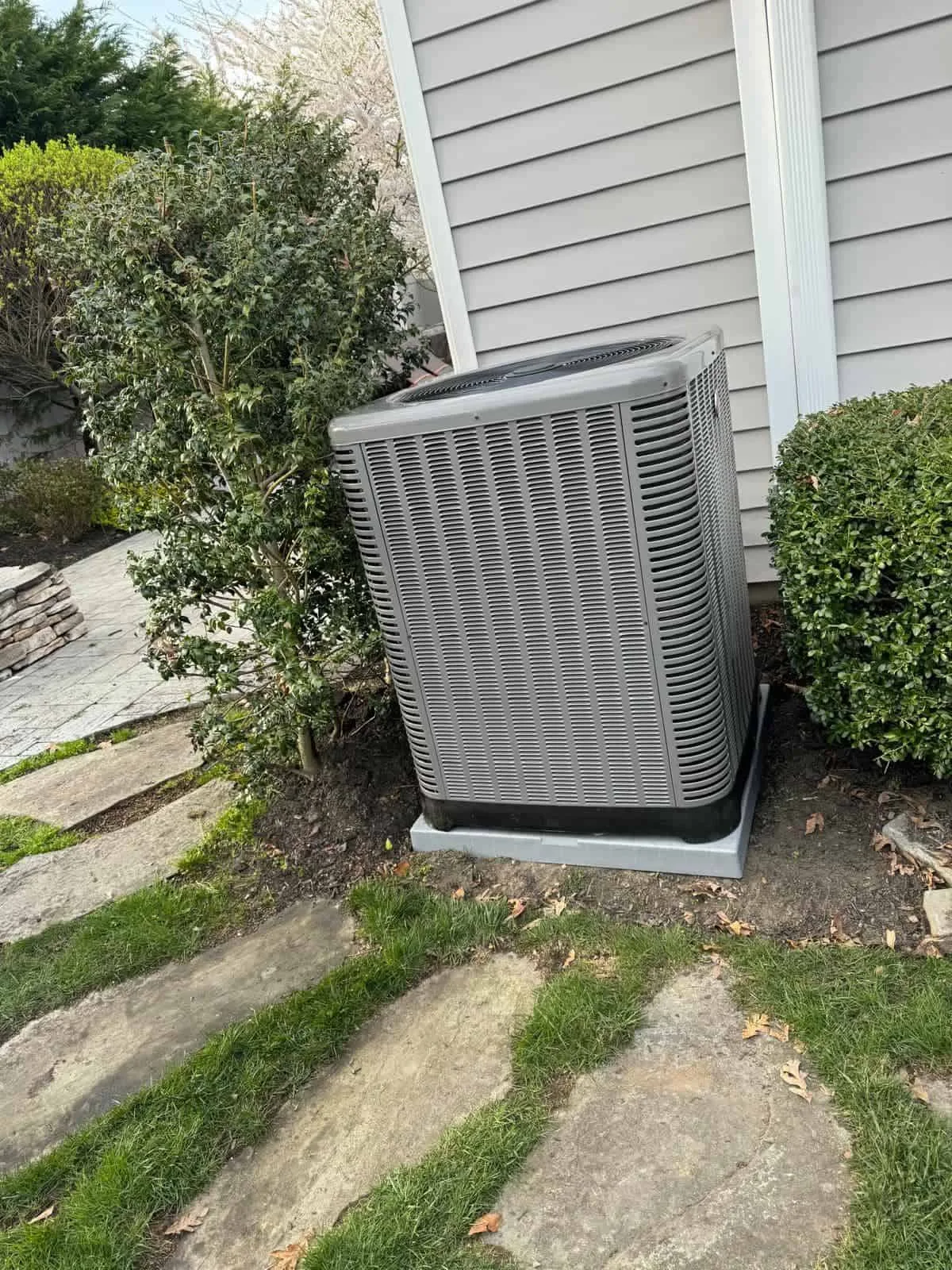
Cold-climate air source heat pumps are a different technology. They’re specifically engineered to operate efficiently at temperatures well below freezing, and they’ve been installed and performing well across Long Island for years. Nassau County’s winters are cold, but they’re not extreme by the standards these systems are designed for. Average January lows run in the mid-20s Fahrenheit. Cold-climate heat pumps are rated to maintain meaningful heating output well below that threshold.
That said, proper sizing matters enormously. A system that’s undersized for your home’s actual heating load — which requires a Manual J load calculation to determine accurately — will underperform regardless of how good the equipment is. This is one of the reasons equipment quality and installation quality are both part of the rebate eligibility requirements. PSEG’s program requires proper sizing documentation, not just a receipt for a qualifying unit.
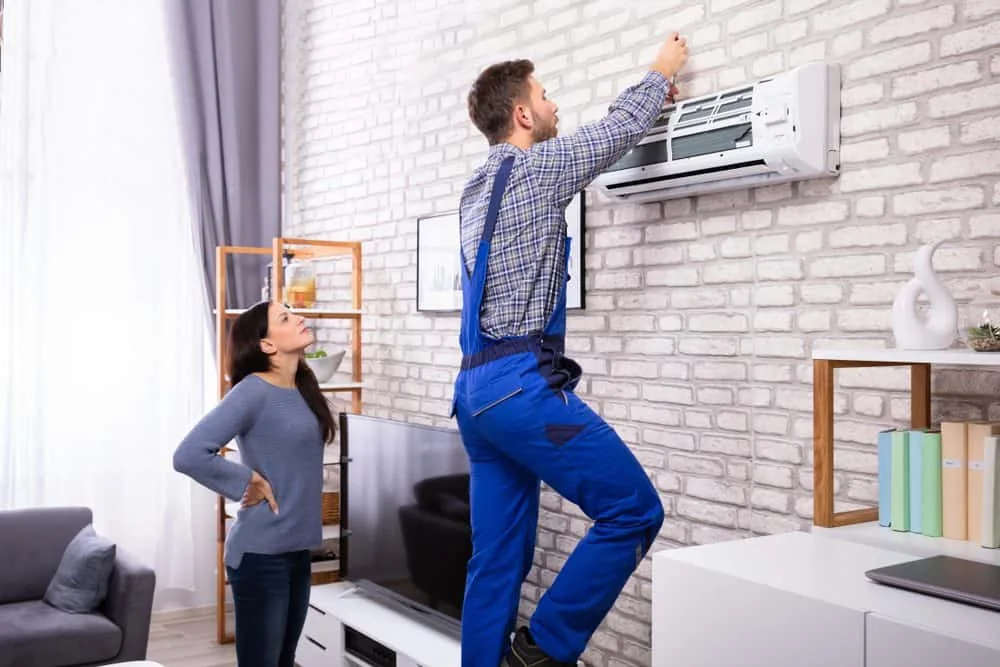
For homes without existing ductwork — which describes a significant portion of Nassau County’s older housing stock — ductless mini-split systems are often the most practical route. They don’t require tearing into walls to run ducts, they allow zone-by-zone temperature control, and they qualify for the same PSEG rebate programs as central systems. Mitsubishi’s ductless systems, which we install and service, are among the most widely used in this application across Long Island.
What to Ask Before Hiring an HVAC Contractor for a Rebate-Eligible Job in Nassau County
Before you commit to any contractor for a heat pump installation or heating and air conditioning service upgrade in Nassau County, there are a few things worth confirming. First and most important: are they a PSEG participating contractor? This is non-negotiable if you want the rebate. Ask directly. A contractor who hedges on this answer or says they’ll “figure it out” is not the right choice for a rebate-eligible job.
Second, ask whether they’ll handle the rebate application paperwork or whether that falls to you. A good contractor manages this process on your behalf. The homeowner’s role should be minimal — you provide income documentation if you’re applying for the income-eligible tier, and you sign where required. The rest should be handled by the contractor.
Third, ask about equipment efficiency ratings. PSEG’s rebate tiers are tied to system efficiency — higher SEER2 ratings generally qualify for better rebate amounts. American Standard systems we install reach up to 22.0 SEER2 with AccuComfort variable-speed technology and come with a 10-Year Limited Warranty. That combination of efficiency and warranty coverage matters both for rebate eligibility and for the long-term value of the investment.
Finally, ask about financing. Even with a rebate of $5,000 or more, the upfront cost of a full system installation is significant. We offer financing through Wells Fargo for American Standard systems and through Synchrony for Mitsubishi products, which allows you to capture the rebate while spreading the remaining cost over time. The rebate itself reduces the financed amount from day one — so you’re not waiting to be reimbursed while carrying the full balance.
We’ve been handling heating and air conditioning work across Nassau County since 2016. We hold a BBB A+ rating, our technicians are NATE-certified and factory-trained, and we carry a 5.0-star rating across more than 142 verified reviews from Nassau County homeowners. We show up when we say we will, we explain what you’re actually getting, and we don’t recommend equipment you don’t need.
Getting the Most From Nassau County HVAC Rebates Before They Change
The PSEG and NYSERDA rebate programs are funded and active right now. The federal credit is gone, but the state and utility programs that remain are substantial — and for Nassau County homeowners replacing oil heat or upgrading aging systems in older homes, the incentive window is genuinely strong in 2026. The biggest risk isn’t acting too soon. It’s waiting until a system fails in the middle of July or January and losing the ability to plan the upgrade on your own terms.
If you’re considering a heat pump installation, a ductless mini-split, or a full system replacement and you want a clear picture of what you’d actually qualify for — not a ballpark, not a sales pitch — reach out to COOL BROS CORP. We’ll walk you through the rebate tiers, confirm your eligibility, and give you a free estimate on a new system before you commit to anything.