Your HVAC system does more than control temperature—it's your primary defense against indoor pollutants, allergens, and poor air quality that affects your family's health.
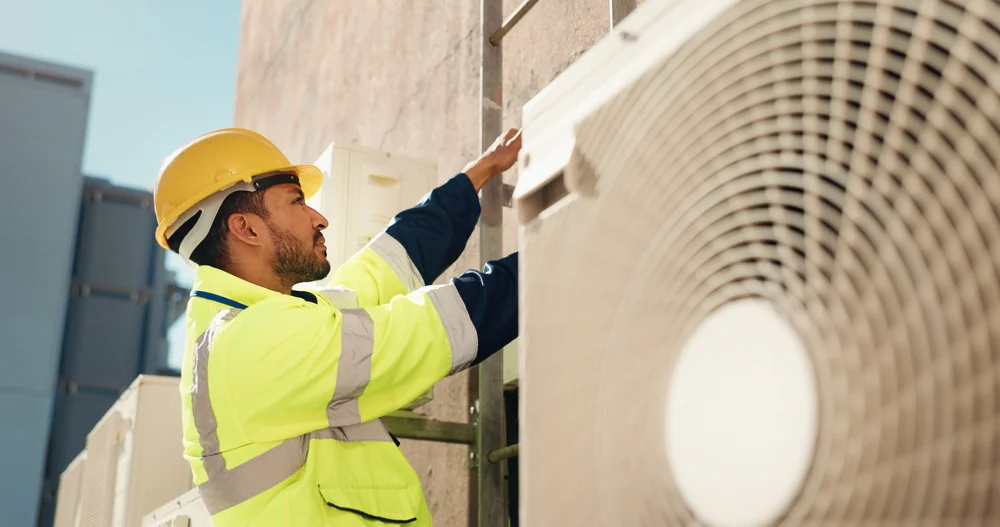
Most people think of their HVAC system as temperature control. It keeps you warm in winter and cool during Nassau County’s humid summers. But every time your system cycles, it’s also moving air through filters, past coils, and into every room of your home.
That process matters because the equipment we install determines how clean that air stays. Dust, pollen, pet dander, mold spores, and other particles get pulled into your return vents. What happens next depends entirely on your system’s condition and the quality of components doing the filtering.
When your AC or furnace runs, air passes through a filter designed to trap particles before they recirculate. If that filter is clogged, outdated, or low-quality, those contaminants go right back into your living space. The same applies to dirty coils, leaky ductwork, or humidity that’s not properly controlled. Your system can either improve your air quality or make it worse.
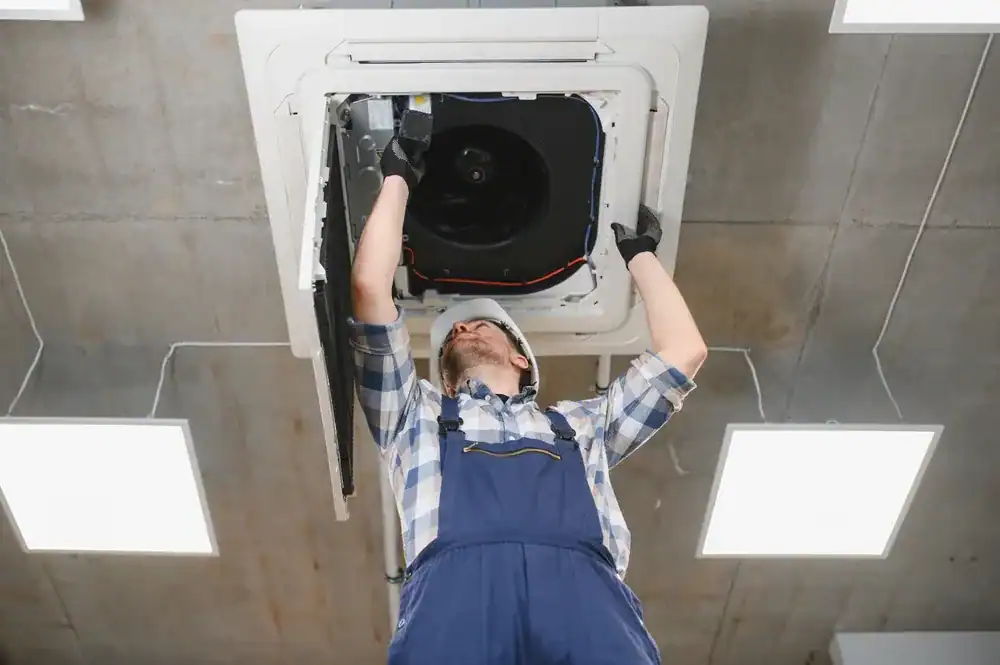
Nassau County, NY’s climate creates conditions that directly impact indoor air. Summers bring high humidity that encourages mold growth in ductwork and around evaporator coils. Winters mean homes are sealed tight with heating systems running constantly, which reduces fresh air circulation and allows pollutants to build up.
The fluctuating weather also means your HVAC system works harder than it would in more stable climates. When your AC runs frequently to manage both temperature and humidity, components like filters and coils accumulate debris faster. That buildup reduces efficiency and air quality at the same time.
Pet dander, seasonal allergens, and dust are common in most homes, but they become more concentrated when ventilation is limited. Without enough fresh air exchange, these particles just keep circulating. You can clean surfaces all day, but if your HVAC system isn’t filtering effectively, you’re fighting a losing battle.
Homes built or renovated for energy efficiency sometimes make this worse. Tighter construction keeps conditioned air inside, which saves energy but also traps pollutants if the ventilation system wasn’t designed to compensate. That’s why understanding how your specific system handles air quality matters more than generic advice.
Your HVAC system is already working to manage these challenges. The question is whether it has the right tools to do the job well. Simple upgrades can make a measurable difference in what you’re breathing every day, without requiring a complete system overhaul.
Nassau County, NY’s climate creates conditions that directly impact indoor air. Summers bring high humidity that encourages mold growth in ductwork and around evaporator coils. Winters mean homes are sealed tight with heating systems running constantly, which reduces fresh air circulation and allows pollutants to build up.
The fluctuating weather also means your HVAC system works harder than it would in more stable climates. When your AC runs frequently to manage both temperature and humidity, components like filters and coils accumulate debris faster. That buildup reduces efficiency and air quality at the same time.
Pet dander, seasonal allergens, and dust are common in most homes, but they become more concentrated when ventilation is limited. Without enough fresh air exchange, these particles just keep circulating. You can clean surfaces all day, but if your HVAC system isn’t filtering effectively, you’re fighting a losing battle.
Homes built or renovated for energy efficiency sometimes make this worse. Tighter construction keeps conditioned air inside, which saves energy but also traps pollutants if the ventilation system wasn’t designed to compensate. That’s why understanding how your specific system handles air quality matters more than generic advice.
Your HVAC system is already working to manage these challenges. The question is whether it has the right tools to do the job well. Simple upgrades can make a measurable difference in what you’re breathing every day, without requiring a complete system overhaul.
Want live answers?
Connect with a Cool Bros expert for fast, friendly support.
Improving your home’s air quality doesn’t require guesswork or gimmicks. It comes down to a few proven approaches that work with your existing HVAC system. Some are simple enough to handle yourself. Others need professional installation but deliver results you can actually measure.
Start with what’s already in your system. Your air filter is the first line of defense against airborne particles, but not all filters do the same job. Upgrading to a higher-efficiency filter can capture smaller particles that standard filters miss, including pollen, mold spores, and bacteria.
Beyond filters, there are targeted solutions for specific air quality issues. UV lights kill biological contaminants. Humidity control prevents mold growth and improves comfort. Proper ventilation dilutes indoor pollutants with fresh outside air. The right combination depends on what you’re dealing with in your Nassau County, NY home.
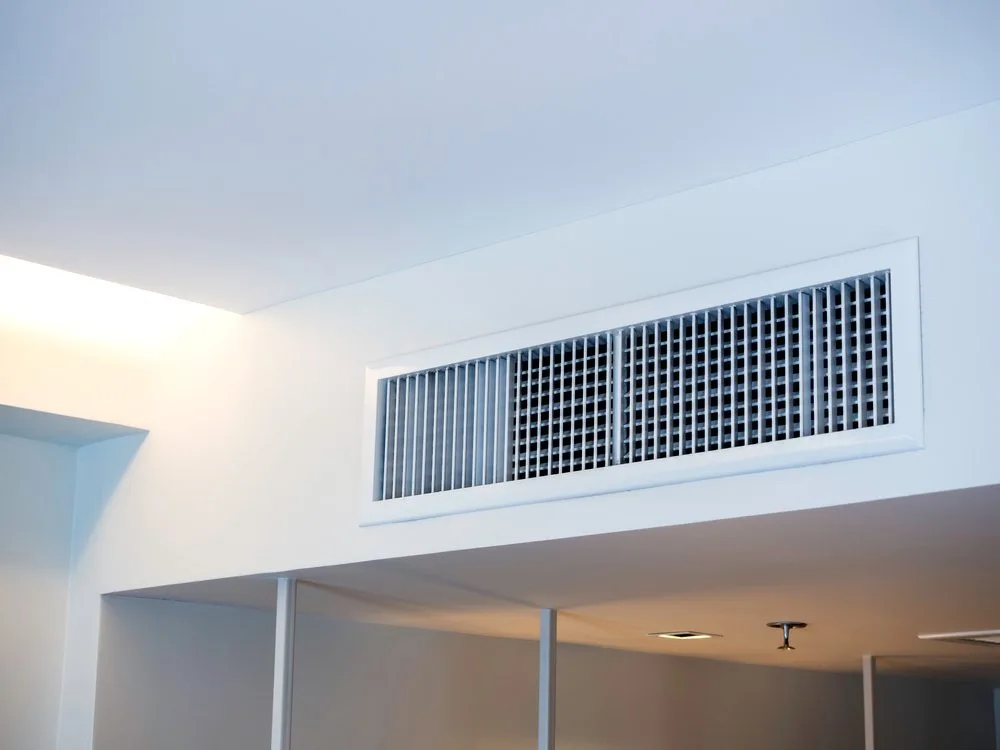
The filter in your HVAC system right now is probably doing the bare minimum. Standard fiberglass filters are designed to protect your equipment, not improve your air quality. They catch large particles like dust and lint, but smaller pollutants pass right through.
Higher-efficiency filters use pleated material with more surface area to trap finer particles. These filters are rated using the MERV scale, which measures how effectively they capture particles of different sizes. A MERV 8 filter handles most household needs. MERV 11 or 13 filters work better if you have allergies, pets, or respiratory concerns.
HEPA filters represent the highest level of filtration, removing up to 99.97% of particles. They’re extremely effective but also restrict airflow more than standard filters. Not every HVAC system can handle that restriction without modifications, so you’ll want to verify compatibility with us before installing one.
Filter upgrades only work if you’re actually changing them regularly. A high-efficiency filter that’s clogged with debris performs worse than a basic filter that’s clean. Most filters need replacement every 1-3 months depending on your home’s conditions. Homes with pets, smokers, or high dust levels need more frequent changes.
When you upgrade your filter, you’re making your HVAC system work slightly harder to pull air through the denser material. That’s normal and expected. What you get in return is cleaner air and fewer particles circulating through your home. The tradeoff is worth it for most households, especially those dealing with allergies or respiratory issues.
Installing a better filter is one of the simplest ways to improve home air quality. You don’t need professional help in most cases—just buy the right size and MERV rating for your system, and swap it out according to the manufacturer’s schedule. That small change can make a noticeable difference in how your home’s air feels and smells.
Some air quality problems can’t be solved with better filters alone. Biological contaminants like mold, bacteria, and viruses are small enough to pass through most filters, and they thrive in the damp environment inside your HVAC system. That’s where UV lights and humidity control come in.
UV-C lights installed near your evaporator coil or in your ductwork kill microorganisms by disrupting their DNA. These lights run continuously when your system is on, sterilizing air as it passes through. They’re particularly effective at preventing mold growth on coils and in drain pans, which are common problem areas in humid climates like Nassau County, NY.
The effectiveness of UV lights is well-documented. They can eliminate up to 99% of airborne bacteria and mold spores, according to research on germicidal UV technology. That doesn’t just improve air quality—it also keeps your HVAC system cleaner, which improves efficiency and reduces maintenance needs over time.
Humidity control works hand-in-hand with UV lights to create an environment where mold and bacteria can’t thrive. The ideal indoor humidity range is 30-50%. Above 60%, you’re creating conditions where mold grows easily. Below 30%, you get dry skin, static electricity, and respiratory irritation.
Your air conditioner naturally removes some moisture from the air as it cools, but that’s often not enough during Nassau County’s humid summers. A whole-home dehumidifier works independently of your AC to maintain optimal humidity levels without overcooling your space. That means better comfort, lower energy bills, and less risk of mold growth.
Humidifiers do the opposite in winter, adding moisture when heating systems dry out indoor air. Proper humidity makes your home feel warmer at lower temperatures, which can reduce heating costs. It also prevents issues like cracked wood furniture, static shocks, and dry respiratory passages.
These upgrades require professional installation, but they address air quality issues that filters alone can’t solve. If you’re dealing with musty odors, visible mold, or persistent humidity problems, UV lights and humidity control are worth considering. They work with your existing HVAC system to create healthier indoor air year-round.
Your HVAC system already plays a major role in the air quality inside your home. The question is whether it’s equipped to do that job well. Simple improvements like upgrading filters make a measurable difference. More advanced solutions like UV lights and humidity control address problems that basic filtration can’t solve.
Most homes in Nassau County, NY can benefit from at least one air quality upgrade. Which one depends on what you’re dealing with—allergies, mold, humidity, or just general dust and staleness. We can assess your system and recommend solutions that actually fit your situation and budget.
If you’re ready to breathe cleaner air and get more from your HVAC system, we’re here to help. We’ve been serving Nassau County homeowners for over 8 years with honest advice and professional installations. Reach out to discuss your air quality concerns and find out which improvements make sense for your home.
Summary: