Not sure which HVAC system fits your Nassau County home? This guide breaks down central air, heat pumps, and mini-splits for Long Island's unique climate.

HVAC stands for heating, ventilation, and air conditioning. It’s the system responsible for keeping your home comfortable no matter what’s happening outside. In Nassau County, that means handling summer heat that regularly climbs into the 80s and winter cold that drops below freezing for weeks at a time.
At the most basic level, HVAC systems move heat. In the summer, they pull heat out of your home and dump it outside. In the winter, they bring heat in. The ventilation part keeps air moving through your home so you’re not just sitting in stale, humid air.
The system you choose depends on your home’s layout, your budget, and how you heat your home now. Some Nassau County homes are set up for central air with ductwork running through the walls. Others work better with ductless systems that don’t require tearing into your walls to install.
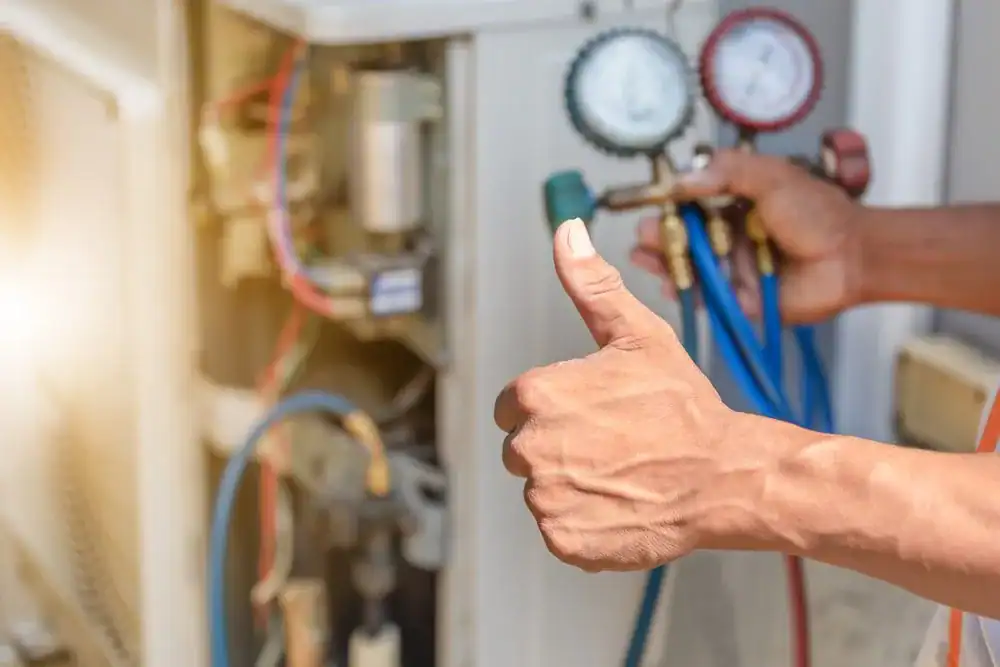
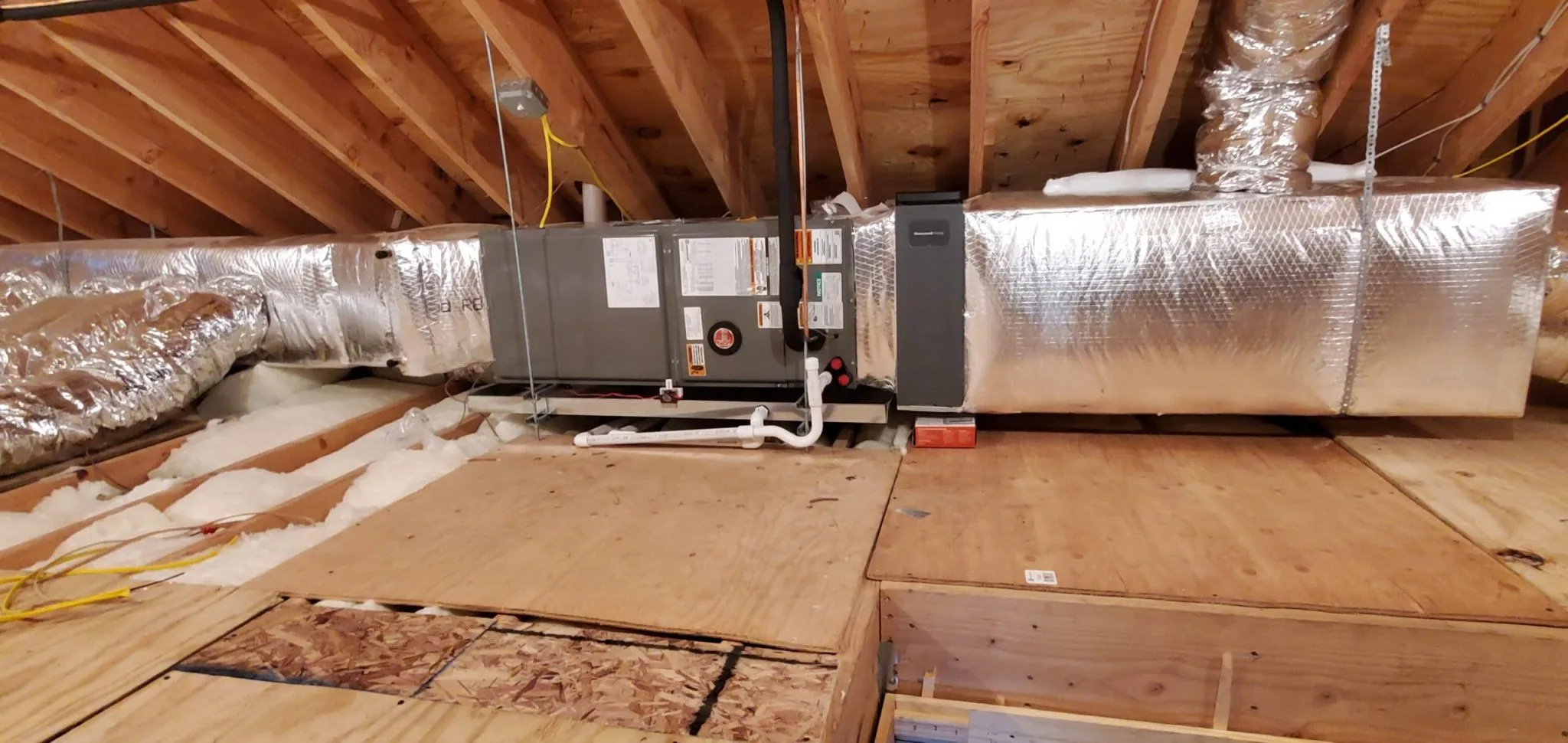
Central air is what most people picture when they think about home cooling. You have an outdoor unit sitting next to your house and an indoor unit tucked away in your basement, attic, or utility closet. The system uses ductwork to push cooled air through vents in every room.
Central air works well if your home already has ducts in place. If you’re replacing an older system, this is usually the most straightforward HVAC installation option because the infrastructure is already there. The outdoor unit contains the compressor and condenser, which do the heavy lifting of cooling the refrigerant. The indoor unit has the evaporator coil and blower fan that distribute cold air through your ducts.
One of the benefits of central air is that it cools your entire home from a single thermostat. You set the temperature once, and the system handles the rest. It’s also less visible inside your home compared to other options since most of the equipment is hidden away. The downside is that you’re cooling every room to the same temperature, even if you’re only using a few of them.
Central air systems are measured in tons, which refers to cooling capacity. A typical 2,000 square foot home in Nassau County usually needs a 3 to 3.5 ton system, but that depends on factors like insulation, window quality, and how much sun your home gets. An oversized system will cool too quickly and shut off before it removes humidity from the air. An undersized system will run constantly and never quite get your home comfortable.
If your home doesn’t have ductwork, installing it can add thousands of dollars to your project. In that case, a ductless system might make more sense for your Long Island home. But if the ducts are already there and in good shape, central air is often the most cost-effective way to cool your entire home.
Central air is what most people picture when they think about home cooling. You have an outdoor unit sitting next to your house and an indoor unit tucked away in your basement, attic, or utility closet. The system uses ductwork to push cooled air through vents in every room.
Central air works well if your home already has ducts in place. If you’re replacing an older system, this is usually the most straightforward HVAC installation option because the infrastructure is already there. The outdoor unit contains the compressor and condenser, which do the heavy lifting of cooling the refrigerant. The indoor unit has the evaporator coil and blower fan that distribute cold air through your ducts.
One of the benefits of central air is that it cools your entire home from a single thermostat. You set the temperature once, and the system handles the rest. It’s also less visible inside your home compared to other options since most of the equipment is hidden away. The downside is that you’re cooling every room to the same temperature, even if you’re only using a few of them.
Central air systems are measured in tons, which refers to cooling capacity. A typical 2,000 square foot home in Nassau County usually needs a 3 to 3.5 ton system, but that depends on factors like insulation, window quality, and how much sun your home gets. An oversized system will cool too quickly and shut off before it removes humidity from the air. An undersized system will run constantly and never quite get your home comfortable.
If your home doesn’t have ductwork, installing it can add thousands of dollars to your project. In that case, a ductless system might make more sense for your Long Island home. But if the ducts are already there and in good shape, central air is often the most cost-effective way to cool your entire home.
Want live answers?
Connect with a Cool Bros expert for fast, friendly support.
Not every HVAC system works for every home. The right choice depends on your home’s layout, your existing infrastructure, and how you want to control temperatures in different areas. Let’s break down the most common options for Nassau County homes and when each one makes sense.
Ductless mini-splits are becoming increasingly popular on Long Island, especially in older homes that were never built with ductwork. They’re also a smart choice for home additions, converted garages, or any space where running ducts would be expensive or impractical. Each indoor unit handles one room or zone, and you can control each one independently.
Traditional furnaces paired with central air conditioning are still common in Nassau County. If you have a gas furnace for heating and a separate AC unit for cooling, you’re running what’s called a split system. It works, but you’re maintaining two separate pieces of equipment, and your heating costs depend on natural gas prices.

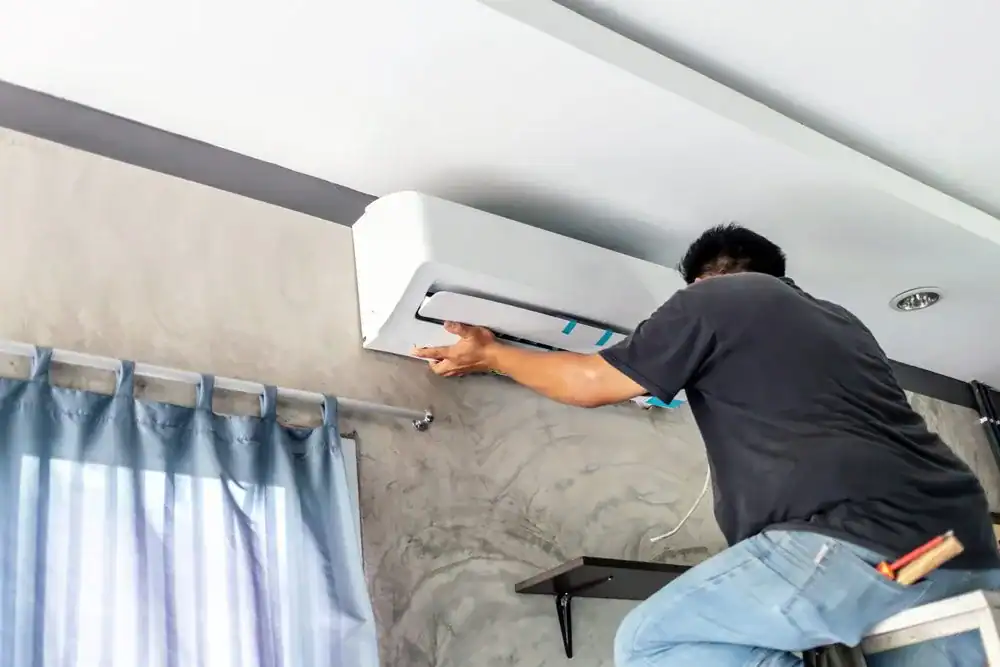
Ductless mini-splits are exactly what they sound like: heating and cooling systems that don’t require ductwork. You have one outdoor unit that connects to one or more indoor units mounted on your walls. A small conduit running through a three-inch hole in your exterior wall carries the refrigerant lines, power, and condensate drain.
The biggest advantage of mini-splits is zoning. Each indoor unit operates independently, so you can keep your bedroom at 68 degrees while the living room sits at 72. You’re not wasting energy heating or cooling rooms you’re not using. That flexibility makes them incredibly efficient, and many models have SEER ratings well above 20.
Mini-splits are ideal for homes without existing ductwork because HVAC installation doesn’t require tearing into walls and ceilings. They’re also perfect for additions, finished basements, or any space where extending ductwork would be difficult or expensive. The installation is relatively quick—often completed in a single day for a few zones.
The initial cost of a ductless system is typically higher than central air if you’re cooling multiple rooms. You’re paying for several indoor units instead of one central system. But the efficiency gains often make up for that difference over time through lower energy bills. You’re also avoiding the energy loss that happens in ductwork, which can account for 20 to 30 percent of your cooling capacity in a ducted system.
One thing some homeowners don’t love about mini-splits is the aesthetic. The indoor units are visible on your walls, and while they’re sleek and modern, they’re not hidden away like a central system. You can get ceiling-mounted cassette units if you want something less noticeable, but those cost more to purchase and install.
Mini-splits work as both heating and cooling systems, so they’re a complete HVAC solution. They’re especially popular in older Nassau County homes that have radiators or baseboard heat and no existing ductwork for central air. Instead of the expense and disruption of installing ducts throughout the house, you can add mini-splits room by room as needed.
System sizing is one of the most important decisions you’ll make, and it’s where a lot of homeowners go wrong. Bigger is not better when it comes to HVAC equipment. An oversized system will cool your home too quickly and shut off before it removes humidity from the air. You’ll end up with a clammy, uncomfortable house and higher energy bills because the system is constantly cycling on and off.
An undersized system has the opposite problem. It runs constantly but never quite gets your home to the temperature you want. On the hottest or coldest days of the year in Nassau County, it just can’t keep up. You’re paying to run the equipment all day long without getting the comfort you need.
The right way to size an HVAC system is with a Manual J load calculation. This is a detailed assessment that considers your home’s square footage, ceiling height, insulation levels, window types, and even which direction your home faces. It accounts for heat gain from sunlight, heat loss through windows and walls, and how many people typically occupy the space. A proper Manual J calculation tells you exactly how many BTUs of heating and cooling your home needs.
As a rough guideline, a 2,000 square foot home in Nassau County typically needs a 3 to 3.5 ton air conditioning system. But that’s just a starting point. If your home has large south-facing windows, poor insulation, or high ceilings, you might need more capacity. If it’s well-insulated with newer windows and good air sealing, you might need less.
HVAC systems are measured in tons for cooling and BTUs for heating. One ton equals 12,000 BTUs of cooling capacity. Systems typically come in half-ton increments: 1.5, 2, 2.5, 3, 3.5, 4, and 5 tons. If your calculated load falls between sizes, it’s usually better to go with the smaller system rather than oversizing.
The climate zone you’re in also matters. Nassau County sits in a zone that requires systems capable of handling both hot, humid summers and cold winters. That’s why heat pumps designed for cold climates have become so popular here on Long Island—they’re built specifically for this kind of weather variability. A system that works great in Florida might struggle during a Nassau County winter.
Working with an experienced HVAC contractor who understands Nassau County’s climate is essential. We perform a load calculation before recommending equipment, not just guessing based on square footage. That calculation ensures you’re getting a system that’s properly matched to your home’s specific needs.
Choosing an HVAC system comes down to understanding your home, your budget, and what matters most to you. If you want whole-home comfort with minimal visible equipment, central air or a ducted heat pump makes sense. If you value zone control and energy efficiency, ductless mini-splits might be the better option. If you’re replacing an existing system and the ductwork is in good shape, sticking with a similar setup is usually the most cost-effective path.
The key is working with a contractor who takes the time to assess your home properly, explains your options clearly, and sizes the equipment correctly. You want someone who’s focused on solving your comfort problems, not just selling you the biggest system they can.
We’ve been helping Nassau County homeowners navigate these decisions for over 8 years. Our certified technicians understand Long Island’s climate and what it takes to keep homes comfortable year-round. Whether you need a full system replacement, a new HVAC installation, or just honest advice about your options, we’ll walk you through it without the pressure or confusion.
Summary: