Your air conditioner rarely fails without warning. Learn the red flags that signal repair needs before you're stuck in the heat.

Most AC breakdowns don’t happen suddenly. Your system gives you clues, sometimes for weeks before it actually stops working. The trick is knowing what to look for and what it means.
Warm air blowing from your vents is the most obvious one. If you’ve got the thermostat set to cool and you’re feeling room-temperature air or worse, that’s a problem. It could be a compressor issue, low refrigerant, or a thermostat that’s not communicating properly with the system.
Weak airflow is another big one. Even if the air is cold, if it’s barely coming out of the vents, something’s blocking it or your blower isn’t working right. Clogged filters, ductwork leaks, or a failing blower motor are usually the culprits.
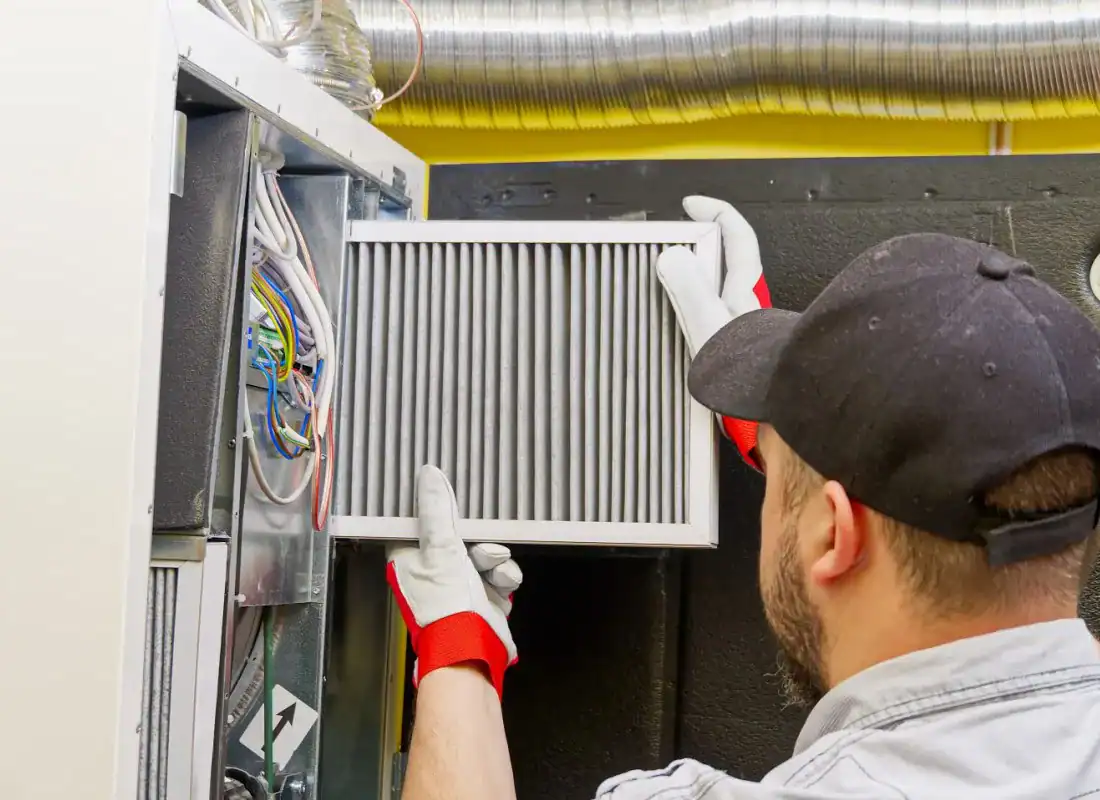
Your AC should run fairly quietly. You’ll hear the hum of the compressor and the whoosh of air through the vents, but that’s about it. Anything beyond that deserves your attention.
Grinding or scraping sounds usually mean metal parts are rubbing together where they shouldn’t be. This could be motor bearings wearing out or a fan blade that’s come loose. If you ignore it, those parts can damage other components and turn a small repair into a big one.
Banging or clanking is often a sign that something inside the unit has broken loose. It could be a connecting rod, a piston pin, or part of the compressor assembly. This isn’t something that fixes itself, and running the system while it’s making these noises can cause serious damage.
Hissing or bubbling sounds point to refrigerant leaks. Refrigerant is what allows your AC to actually cool the air, so when it’s leaking, your system can’t do its job. Beyond that, refrigerant exposure isn’t great for your health, and continuing to run a system with a leak will eventually kill the compressor.
Squealing might indicate a belt issue or a motor that needs lubrication. It’s not always an emergency, but it’s telling you that something’s under stress and needs attention before it fails completely.
Your AC should run fairly quietly. You’ll hear the hum of the compressor and the whoosh of air through the vents, but that’s about it. Anything beyond that deserves your attention.
Grinding or scraping sounds usually mean metal parts are rubbing together where they shouldn’t be. This could be motor bearings wearing out or a fan blade that’s come loose. If you ignore it, those parts can damage other components and turn a small repair into a big one.
Banging or clanking is often a sign that something inside the unit has broken loose. It could be a connecting rod, a piston pin, or part of the compressor assembly. This isn’t something that fixes itself, and running the system while it’s making these noises can cause serious damage.
Hissing or bubbling sounds point to refrigerant leaks. Refrigerant is what allows your AC to actually cool the air, so when it’s leaking, your system can’t do its job. Beyond that, refrigerant exposure isn’t great for your health, and continuing to run a system with a leak will eventually kill the compressor.
Squealing might indicate a belt issue or a motor that needs lubrication. It’s not always an emergency, but it’s telling you that something’s under stress and needs attention before it fails completely.
Want live answers?
Connect with a Cool Bros expert for fast, friendly support.
Not every AC problem requires an immediate emergency call, but some definitely do. Knowing the difference can save you money and help HVAC companies prioritize the people who really need urgent help.
Emergency situations are the ones that affect your safety or could cause serious damage to your system or home. Complete system failure during a heat wave, especially if you have young kids, elderly family members, or anyone with health conditions, qualifies as an emergency. Burning smells that get stronger instead of fading, any smell of gas, loud banging that doesn’t stop, visible sparks or smoke, and refrigerant leaks all warrant an immediate call.
Scheduled repairs are for issues that are inconvenient but not dangerous. Gradually declining efficiency, minor noises that aren’t getting worse, uneven cooling, slightly higher bills, and systems that still work but just not as well as they used to can usually wait for a regular appointment during business hours.
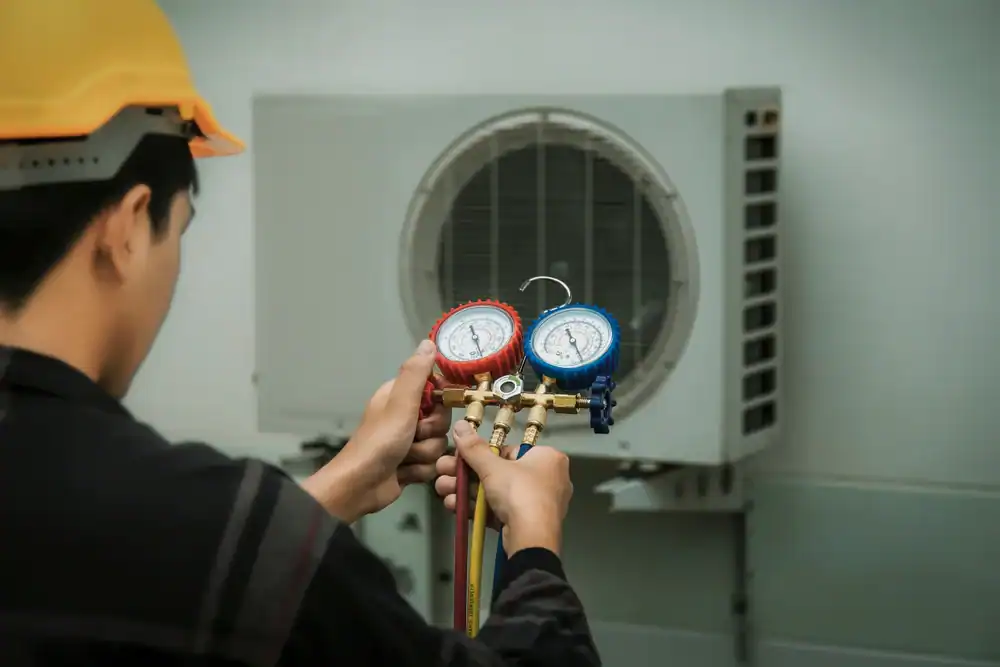
The best way to avoid both emergency calls and expensive air conditioning repair is to catch problems before they become problems. That’s what regular AC maintenance in Nassau County is actually for.
Annual tune-ups give a technician the chance to spot things you wouldn’t notice. We’ll check refrigerant levels, clean coils, inspect electrical connections, test the capacitor, look at your ductwork, and make sure everything’s calibrated correctly. A lot of the warning signs we’ve talked about can be prevented entirely if a tech catches them during HVAC seasonal maintenance.
Spring is the ideal time to schedule your AC tune-up, right before you really need it for summer. That way, if something does need repair, you’re handling it on your schedule instead of in the middle of July when every HVAC company in Nassau County is slammed with emergency calls.
The cost of maintenance is a fraction of what you’d pay for a major repair or emergency service. More importantly, systems that get regular attention last longer. You’re looking at 10 to 15 years of life from a well-maintained AC versus maybe 8 to 10 from one that only gets looked at when it breaks.
Beyond just avoiding repairs, maintenance keeps your system running efficiently, which means lower energy bills month after month. It also maintains your warranty coverage. Most manufacturers require proof of regular professional maintenance to honor warranty claims, so skipping tune-ups can actually cost you coverage when you need it most.
If you’ve never called for AC repair before, here’s what to expect. Understanding the process makes it less stressful and helps you ask the right questions.
We start with diagnostics. We’ll ask you what symptoms you’ve noticed, when they started, and whether anything’s changed recently. Then we’ll inspect both your indoor and outdoor units, check electrical connections, test the thermostat, measure refrigerant levels, and look at airflow. Good techs use diagnostic tools, not just guesswork.
Once we’ve identified the problem, we’ll explain it to you in plain language. What’s broken, why it happened, what needs to be done to fix it, and what it’s going to cost. You’ll get that information before any work starts, not after.
Most common air conditioning repairs can be completed the same day. Capacitor replacements, cleaning condensate drains, fixing minor leaks, replacing contactors, and addressing airflow issues usually don’t require ordering parts. More complex repairs like compressor replacement, extensive ductwork repairs, or control board issues might need a follow-up appointment if parts have to be ordered.
After the repair, we’ll test the system to make sure it’s working properly and that the fix actually solved the problem. We’ll also give you some guidance on what to watch for and when to schedule your next maintenance visit.
For emergency repairs, the process is similar but faster, and yes, it costs more. Emergency service rates reflect the reality that someone’s working outside normal hours, potentially rearranging their schedule, and prioritizing your call over others. If it’s truly an emergency, that premium is worth it. If it can wait until morning, schedule it for regular hours and save yourself the extra cost.
Your AC will tell you when something’s wrong. Warm air, strange noises, weak airflow, higher bills, moisture where it shouldn’t be—these aren’t things that fix themselves. The longer you wait, the more expensive the fix becomes, and the more likely you are to end up without cooling on the hottest day of summer.
Catching problems early means smaller repairs, lower costs, and systems that last longer. Regular maintenance catches most issues before they become emergencies. And knowing when to call for help versus when something can wait a few days helps everyone get the service they need when they need it.
If you’re noticing any of the warning signs we’ve covered, or if it’s been more than a year since your last tune-up, reach out to us at Cool Bros. We serve Nassau County with straightforward central AC repair and maintenance that keeps your system running when you need it most.
Summary: