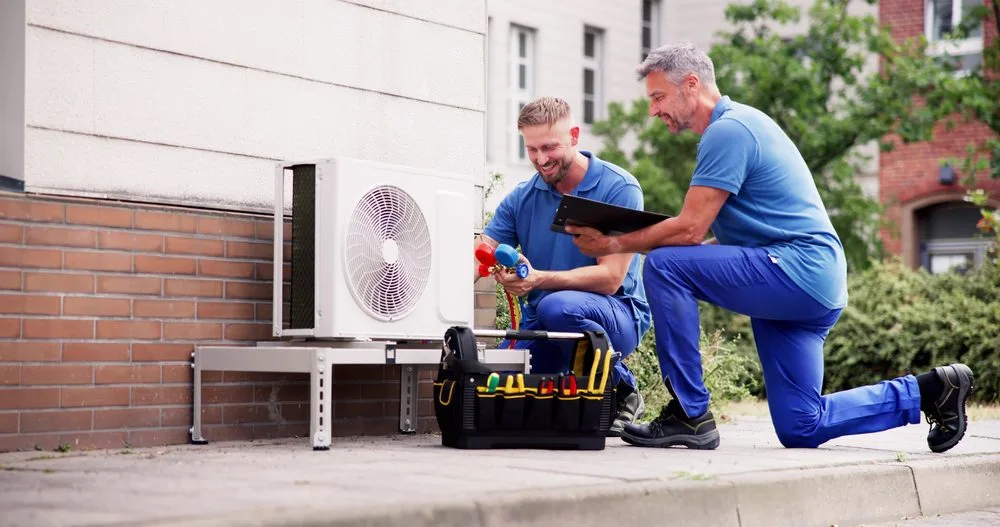
Your AC was running fine last night. This morning, it’s pushing warm air through every vent in the house, and Nassau County’s summer humidity is already doing its thing. Nothing obvious changed. You didn’t touch the thermostat. You didn’t do anything differently. And now you’re standing in your living room wondering if you’re looking at a $5 filter swap or a $5,000 repair bill.
Here’s the honest answer: most of the time, it’s closer to the filter. Before you call anyone, run through these five checks. Two of them take under a minute. The rest will tell you exactly what kind of problem you’re dealing with — and whether you actually need a technician at all.
Why Your Air Conditioner Suddenly Stopped Blowing Cold Air
The word “suddenly” is doing a lot of work here. It feels sudden because one day it was fine and the next it wasn’t — but in most cases, the system had been working toward this moment for a while. A filter that’s been slowly clogging over months. A capacitor that’s been weakening through hundreds of startup cycles. A condensate drain that’s been creeping toward a blockage.
That doesn’t make it less frustrating. But it does mean the fix is usually something specific and diagnosable, not a mystery. The five causes below cover the vast majority of “suddenly stopped” calls we handle from Nassau County homeowners every summer.
Start With Your Thermostat and Circuit Breaker
Start here, because these two checks take about sixty seconds combined and solve the problem more often than most people expect.
First, the thermostat. Go look at it — not just glance at it, actually look. Make sure it’s set to “cool,” not “heat” or “fan only.” Then check that the fan setting is on “auto,” not “on.” When the fan is set to “on,” it runs continuously regardless of whether the system is actually cooling. So you feel air moving through the vents, but it’s not conditioned air — it’s just recirculated room-temperature air. It feels like the AC stopped working. It’s actually just a setting. Change it to “auto” and give it a few minutes.
If the thermostat looks right, go to your electrical panel. AC units draw a significant amount of power, and a tripped breaker is one of the most common reasons a system shuts down without warning. Nassau County gets its share of summer thunderstorms, and a power surge during one of those storms can trip the breaker instantly — leaving you with a system that appears to be running but isn’t actually cooling. Look for the breaker labeled for your AC or air handler. If it’s tripped, it’ll be sitting between the “on” and “off” positions.
Reset it fully to “off” first, then back to “on.” If it trips again immediately, stop — that’s a sign of an electrical issue that needs a licensed technician, not a DIY fix.
These two checks alone resolve a meaningful percentage of “my AC stopped working” calls. They’re worth doing before anything else.
A Dirty Air Filter Can Freeze Your System Solid
If the thermostat and breaker both look fine, your next stop is the air filter. This is the single most common cause of preventable AC problems, and it’s also the one homeowners most consistently underestimate.
Here’s what actually happens: your AC system pulls warm air from inside your home across the evaporator coil, which is cold. That process is what cools your air. But if the filter is clogged, airflow drops dramatically. The evaporator coil gets too cold without enough warm air passing over it, and it freezes. When it freezes, it turns into a block of ice that blocks airflow entirely. The system runs, the fan blows, but no cold air gets through — because there’s a frozen coil sitting in the way.
Pull your filter out and hold it up to the light. If you can’t see through it, it needs to be replaced. Most standard filters cost between $5 and $20 and take under five minutes to swap. If the coil is already frozen, you’ll need to turn the system off and let it thaw completely — usually several hours — before turning it back on with a clean filter. Running it while frozen can damage the compressor, which is the most expensive component in the system.
This is also a good moment to check that none of your supply or return vents are blocked by furniture, rugs, or closed registers. Restricted airflow anywhere in the system can contribute to the same problem.
AC Suddenly Not Blowing Cold Air? Three Mechanical Causes to Know About
If the thermostat is set correctly, the breaker hasn’t tripped, and the filter is clean — or you’ve addressed all of those and the system still isn’t cooling — you’re likely dealing with something mechanical. These next three causes aren’t DIY fixes, but understanding them will help you have a more informed conversation when you call for service, and help you avoid being oversold on something you don’t need.
Low Refrigerant Means You Have a Leak, Not a Depleted Tank
This is probably the most misunderstood cause of AC not blowing cold air, and it’s worth clearing up before a technician arrives.
Refrigerant does not deplete over time. It’s not like motor oil or a gas tank — it doesn’t get “used up” through normal operation. If your system is low on refrigerant, it’s because there’s a leak somewhere in the system. Topping it off without finding and fixing the leak is a temporary fix that will fail again, usually sooner than you’d expect.
When refrigerant levels drop, the system loses its ability to absorb heat from the air inside your home. You’ll feel air coming through the vents, but it won’t be cold. You might also notice the outdoor unit icing up, or hear a hissing or bubbling sound near the refrigerant lines — both are signs of a leak.
The fix is to locate the leak, repair it, and then recharge the system to the correct level. This requires EPA 608 certification to legally handle refrigerants — it’s not something a homeowner can or should attempt. What you can do is note any symptoms you’ve observed (ice on the unit, unusual sounds, how long the problem has been building) so the technician can diagnose it faster.
One more thing worth knowing: Nassau County’s coastal environment accelerates corrosion on outdoor condenser units and refrigerant lines. Salt air from the Atlantic and the Sound works on metal components over time in ways that inland markets simply don’t experience. If you’ve never had your outdoor unit inspected or cleaned, that corrosion may be contributing to the problem.
Failing Capacitors and Clogged Condensate Drains Shut Systems Down Without Warning
Two more causes that don’t get nearly enough attention — and both are very common in Nassau County homes, especially in older housing stock.
The capacitor is a small cylindrical component that gives your compressor and fan motors the electrical jolt they need to start up. It degrades over time, and when it fails, the motor it serves can’t start. You might hear the outdoor unit humming but not actually running, or the system might start and quickly shut off. A failed capacitor is a relatively straightforward repair for a qualified technician — it’s not a reason to replace the entire system.
The condensate drain line is something most homeowners have never thought about, but it’s a surprisingly common cause of sudden shutdowns. Your AC removes humidity from the air as it cools, and that moisture drains out through a condensate line. Over time, algae and debris build up in that line and clog it. When it clogs, water backs up into the drain pan. Most modern systems have a float switch that detects this and automatically shuts the system down to prevent water damage. From the homeowner’s perspective, the AC just stops working — no warning, no obvious reason. Clearing the drain line restores normal operation.
If your AC stopped cooling suddenly and none of the DIY checks resolved it, these two causes — along with a dirty outdoor condenser coil that’s blocking heat transfer — are the most likely culprits. A technician can diagnose all three quickly, and a transparent diagnosis means you’ll know exactly what needs to be fixed before any work begins.
When to Call an AC Repair Technician in Nassau County
Run through the five checks. Thermostat settings, circuit breaker, air filter, refrigerant signs, and the condensate drain. Two of them you can handle in minutes. The rest will tell you whether you have a mechanical issue that needs a licensed technician.
If you’ve worked through the list and the system still isn’t cooling — or if it tripped the breaker again, or there’s ice on the unit, or you’re hearing sounds you haven’t heard before — that’s your signal to call. Nassau County summers don’t give you much margin when the humidity is climbing and the house is heating up fast.
We handle AC repair across Nassau County with NATE-certified technicians, true 24/7 emergency availability, and upfront pricing before any work starts. If you need someone out today, we can make that happen.