You’ve searched around, found a few names, and now you’re staring at a list of companies that all say roughly the same thing. Licensed. Experienced. Affordable. The best in the area.
Here’s the problem: most of them can’t back that up with anything specific. No verifiable credentials, no explanation of what “certified” actually means, no honest answer about whether they’ll show up if your system dies on a Sunday night in August.
If you’re in Nassau County, NY and trying to figure out who to actually trust with your home’s cooling system, this guide will give you a real framework — not a sales pitch. By the end, you’ll know exactly what to look for and what questions cut through the noise.
What Makes the Best Air Conditioner Service Company in Nassau County
The bar for calling yourself the best AC company is surprisingly low. A Google Business Profile, a few reviews, and a logo on a van — that’s enough for most companies to make the claim. But when your system goes down during a heat wave, “best” stops being a marketing word and starts being a real question with real consequences.
Nassau County’s summers are genuinely demanding. The humidity off the Atlantic and Long Island Sound pushes heat index values into the mid-90s through July and August. Many homes here — built in the 1950s and 1960s — weren’t designed with modern cooling loads in mind. The right company understands that. The wrong one installs a unit and moves on.
We’ve seen too many systems installed without considering the actual conditions they’d face in Nassau County, NY. Coastal salt air, aging ductwork, older electrical panels — these aren’t afterthoughts. They’re the foundation of a proper installation.
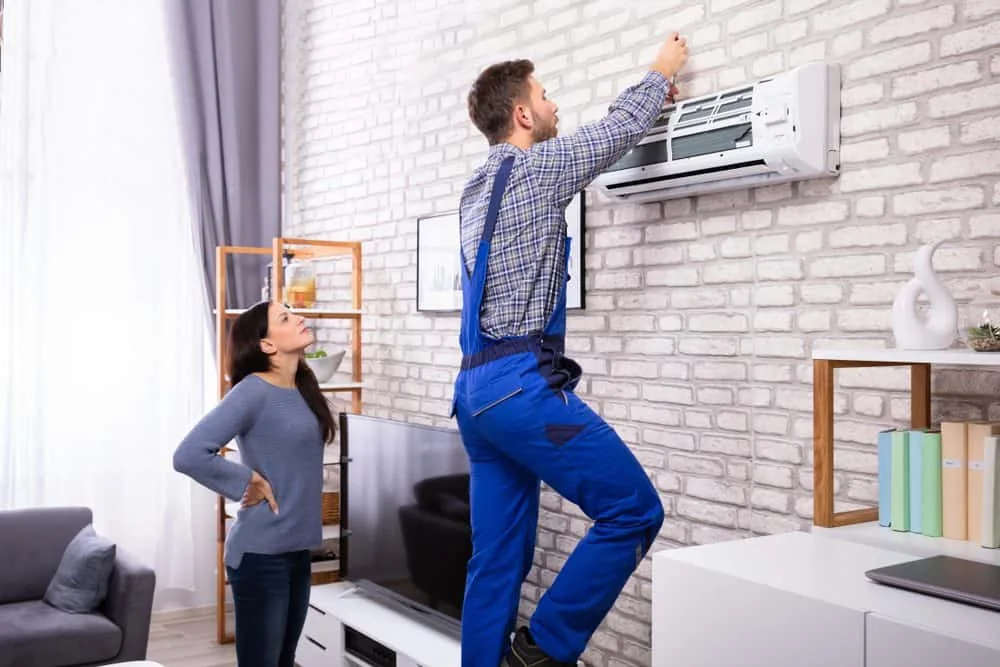
What Should a Good AC Mechanic Actually Know?
The word “technician” gets used loosely in this industry. So does “certified.” What those words mean in practice depends entirely on which certifications the person actually holds — and whether those certifications require them to prove anything.
NATE certification — North American Technician Excellence — is the industry’s most rigorous independent credential. It’s not a training course you sign up for. It’s a series of exams covering installation, service, and repair across multiple system types. An AC mechanic who holds NATE certification has demonstrated technical competence in a way that’s independently verified and publicly recognized. Most HVAC companies don’t require it. The ones that do are telling you something about their standards.
EPA Section 608 certification is a different matter — it’s not optional. Under the Clean Air Act, any technician who handles refrigerants is legally required to hold this certification. That’s federal law, not an industry preference. A company sending out uncertified technicians to handle refrigerant work is operating illegally, and any warranty tied to that equipment is almost certainly voided as a result. Ask directly: are our technicians EPA Section 608 certified?
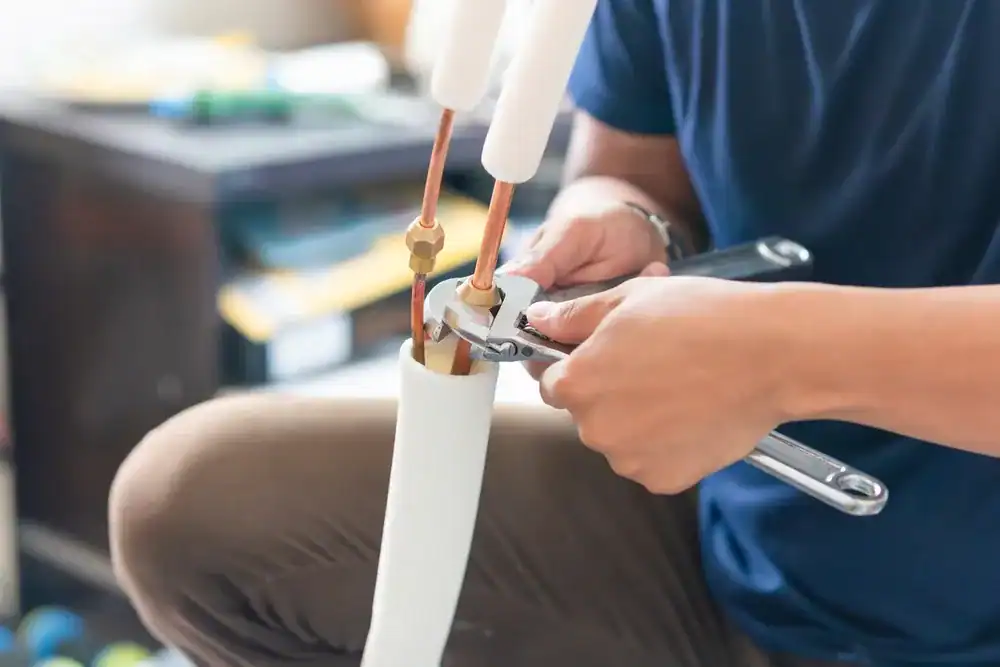
Beyond credentials, the best AC mechanics approach every job with a diagnostic mindset rather than a replacement mindset. They ask why the system failed, not just what part needs to be swapped. They size new systems using a Manual J load calculation — the industry standard for determining the right equipment size for a specific home — rather than guessing based on square footage or whatever was there before.
An oversized system short-cycles, fails to dehumidify properly, and wears out faster. An undersized one runs constantly and never quite gets the job done. Getting the size right matters, and it requires actual math.
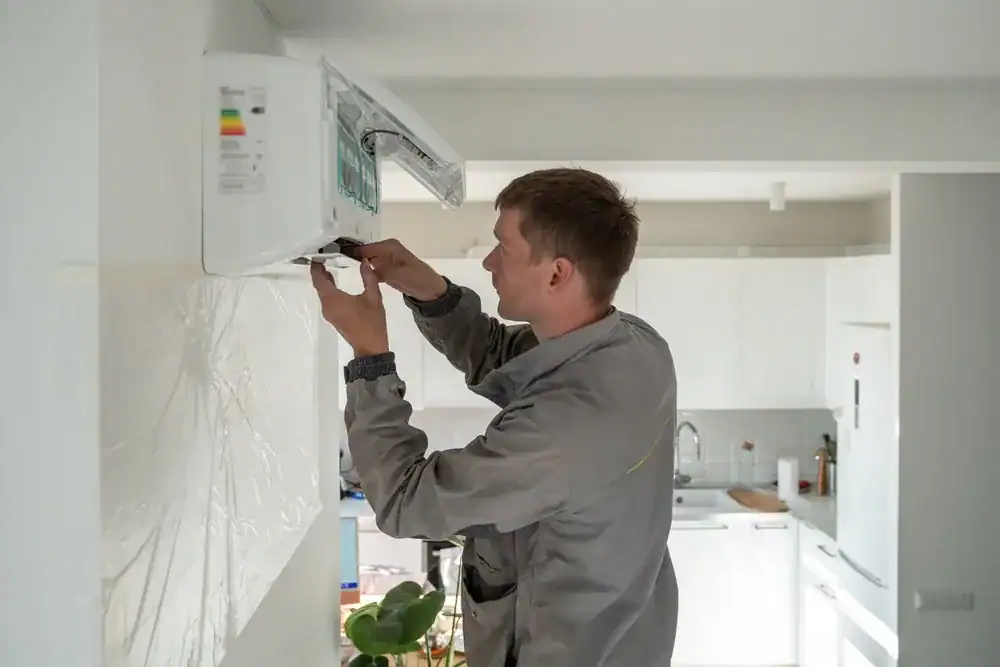
Factory training is another marker worth paying attention to. Authorized dealers for brands like American Standard, Amana, and Mitsubishi Electric receive training directly from the manufacturer. That training covers the specific equipment they install and service, which means they can diagnose problems more accurately, install systems correctly the first time, and honor the full manufacturer warranty. A contractor who isn’t factory-trained or authorized may not be able to support the warranty on the equipment they install — which is a problem you won’t discover until something goes wrong.
How Do You Know If an AC Company Will Actually Show Up When It Matters?
This is the question most homeowners don’t think to ask until they’re stuck. Every HVAC company in Nassau County, NY advertises 24/7 emergency service. What that often means in practice is that you’ll reach an answering service, leave your information, and get a call back the next morning scheduling you for the next available appointment — which might be three days out during peak season.
True 24/7 emergency service means a licensed technician is dispatched the same night. It means that when your AC fails on a Friday at 10 PM in July, someone is actually coming — not a recording, not a callback promise, not a “we’ll get you on the schedule.” This distinction matters enormously for households with elderly residents, young children, or anyone medically vulnerable to heat.
The way to test this before you need it is to look at the specifics. Does the company’s website describe what 24/7 service actually means, or does it just use the phrase? Do reviews mention emergency calls being handled promptly, with technicians arriving the same night? Is there a direct number that reaches a real person after hours?
Same-day service availability during normal business hours is a related but separate issue. Nassau County’s peak cooling season creates backlogs fast. A company that can schedule same-day appointments even in July and August has the staffing and dispatch infrastructure to back up its availability claims. One that’s booking two weeks out by mid-June is telling you something about its capacity.
Reliability is also about what happens after the job is done. A 100% satisfaction guarantee isn’t just a marketing line — it signals that the company expects to stand behind its work and is prepared to come back if something isn’t right. That kind of accountability is harder to fake over time, which is why verified review volume matters. A company with 150 verified reviews at a 5.0 average has been tested repeatedly, by real customers, across real service calls. That record is public and auditable in a way that any single claim cannot be.
Local HVAC Knowledge in Nassau County: What It Actually Means
“Local” gets used as a selling point by companies operating out of three counties away. What it should actually mean is that the contractor understands the specific conditions, regulations, and housing characteristics of the area they’re working in — and can demonstrate that knowledge in how they approach a job.
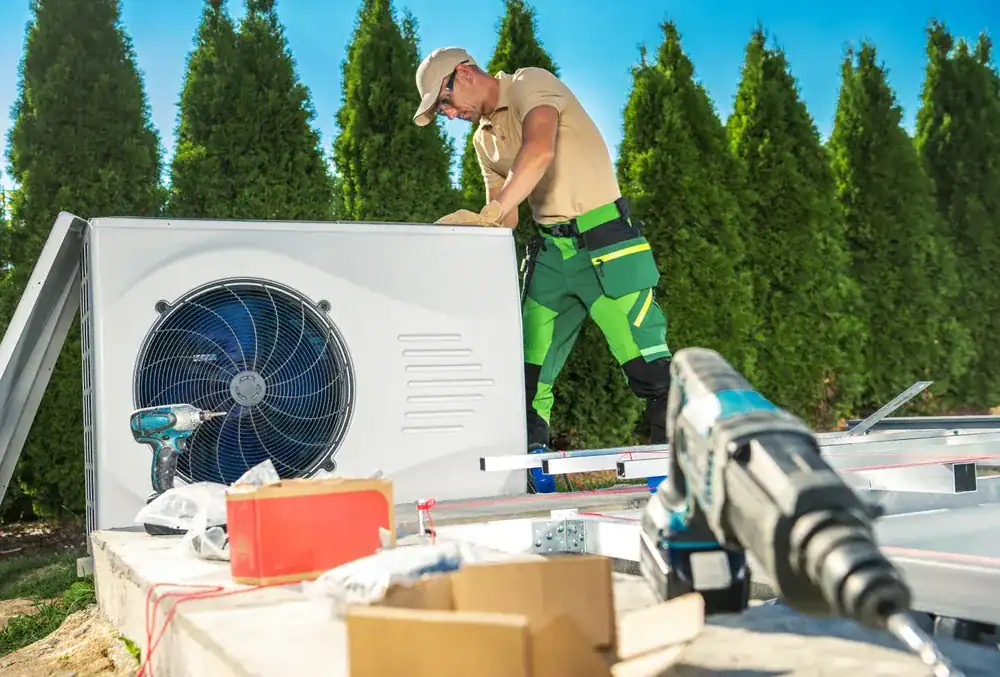
Nassau County, NY has its own set of factors that a genuinely local AC company needs to know. The housing stock is older — much of it built between 1945 and 1970 — which means aging ductwork, older electrical panels, and systems that have often been patched rather than properly replaced. The coastal communities along the South Shore face salt air corrosion that accelerates equipment degradation and requires specific installation practices, including coated coils and elevated pad placements.
And the county’s permit structure is genuinely complex.
Nassau County HVAC Permits: Why This Is Your Problem If the Contractor Gets It Wrong
Nassau County, NY isn’t a single municipality with a single building department. Hempstead, North Hempstead, Oyster Bay, Long Beach, and Glen Cove each run their own building departments, with different permit requirements, different fee structures ranging from $150 to $450, and different inspection windows. A contractor who works across the county — or who comes in from outside it — needs to know which municipality they’re working in and what that municipality’s process looks like.
This matters to you as a homeowner for a very specific reason: if an HVAC installation is done without the required permit, the liability doesn’t fall on the contractor. It falls on you. Unpermitted work can surface during a home inspection when you go to sell, triggering required remediation, delays, and costs that far exceed whatever the contractor saved by skipping the paperwork. Some homeowner’s insurance policies also have provisions related to unpermitted work that can complicate claims.
A contractor who handles the permit process — pulls the permit, schedules the inspection, closes it out properly — is doing something that protects you, not just themselves. It’s worth asking any company you’re considering: do you pull permits for HVAC installations in Nassau County, NY? If the answer is vague or conditional, that’s information.
PSEG Long Island, which serves Nassau County as the primary electric utility, also offers rebate programs for high-efficiency HVAC installations. A knowledgeable local contractor will know which systems qualify and can help you access those rebates as part of the installation process. It’s not something every company tracks, but it’s the kind of detail that adds real value when you’re investing in a new system.
How to Evaluate Any AC Company Before You Hire Them
The decision usually comes down to three or four companies. Here’s how to cut through the noise without spending hours on research.
Start with verifiable credentials, not claims. NATE certification, EPA Section 608 certification, BBB accreditation — these are all independently verified and publicly searchable. An A+ BBB rating requires ongoing compliance with standards for honesty, transparency, and complaint resolution. It’s not self-reported. A BuildZoom score above 100 reflects active permit history and license standing — another data point that’s calculated independently, not claimed.
Look at review volume and specificity together. A company with 150 reviews at a 5.0 average has been tested across a lot of service calls. Read the written comments, not just the star ratings. Customers who describe specific experiences — a technician who explained the problem clearly, a company that came out the same night, a quote that matched the final bill — are telling you something that a star rating alone cannot.
Ask about pricing transparency before any work begins. The best companies provide written, upfront pricing so you know exactly what you’re paying before a technician touches anything. If a company is reluctant to give you a written estimate, or if the quote changes significantly between the phone call and the invoice, that pattern usually continues.
Finally, ask directly about financing if a new system is part of the conversation. Free estimates on new systems remove the barrier to getting a professional assessment. Financing options through established partners make it possible to move forward without deferring a necessary replacement until a breakdown forces the issue — usually at the worst possible time.
Choosing the Right AC Company in Nassau County Comes Down to Proof
Most of what separates a genuinely great AC company from a mediocre one isn’t visible from the outside. It’s in the credentials the technicians hold, the permits that get pulled, the willingness to show up on a Saturday night, and the consistency of the work over hundreds of real service calls.
If you’re in Nassau County, NY and you want an honest assessment of your system — whether that’s a repair, a tune-up, or a full replacement — the right starting point is a company that can back up its claims with verifiable proof. Not a list of adjectives on a website, but actual credentials, actual reviews, and actual local knowledge.
We’ve been serving Nassau County homeowners from our base in Lynbrook for over eight years. If you want to talk through what your system actually needs, we’re here — and yes, we answer the phone.