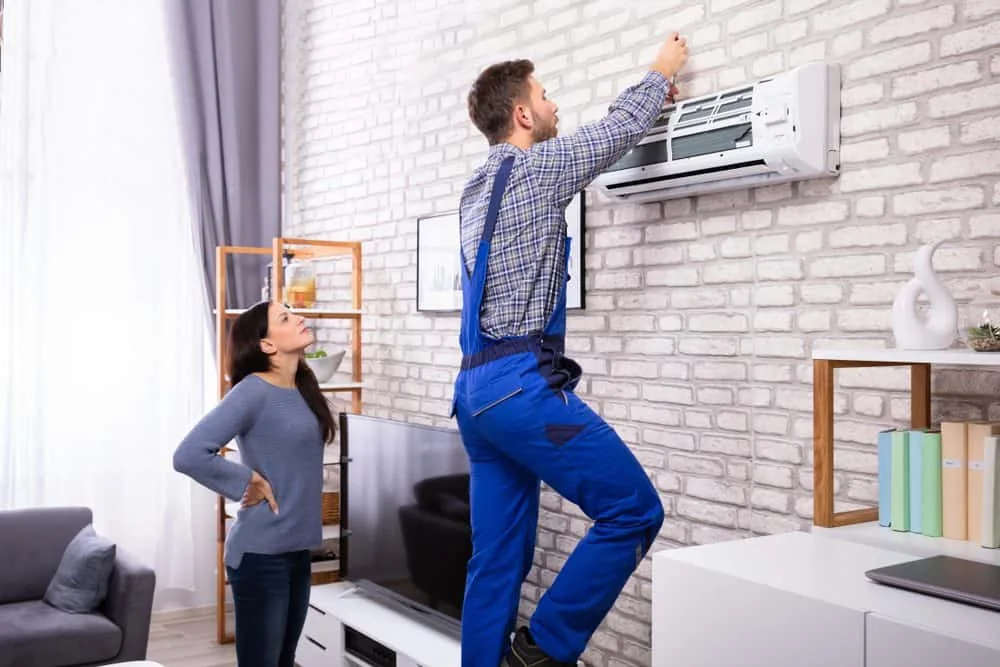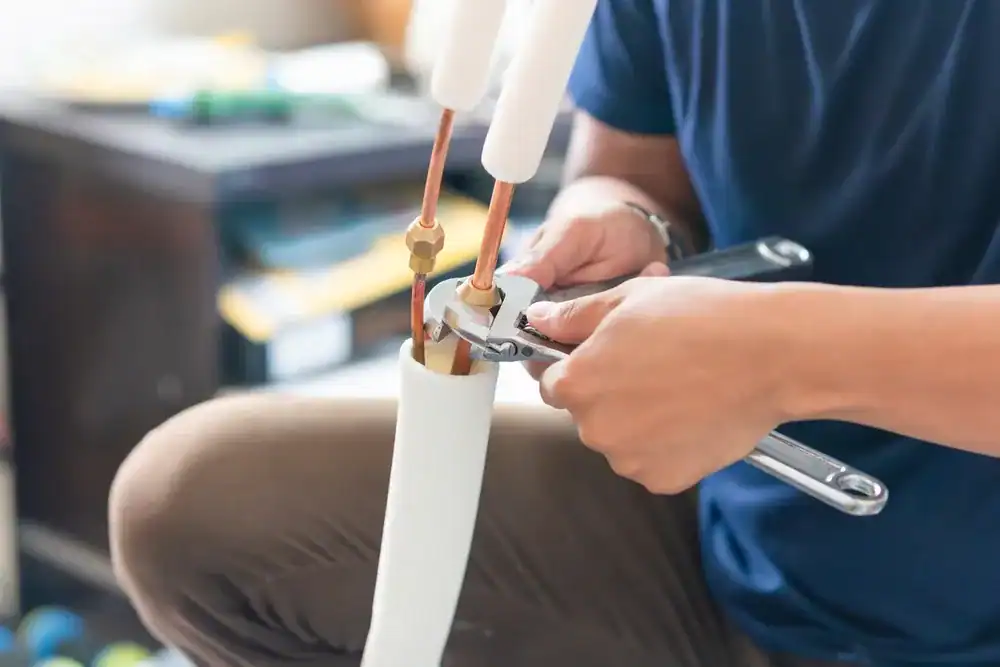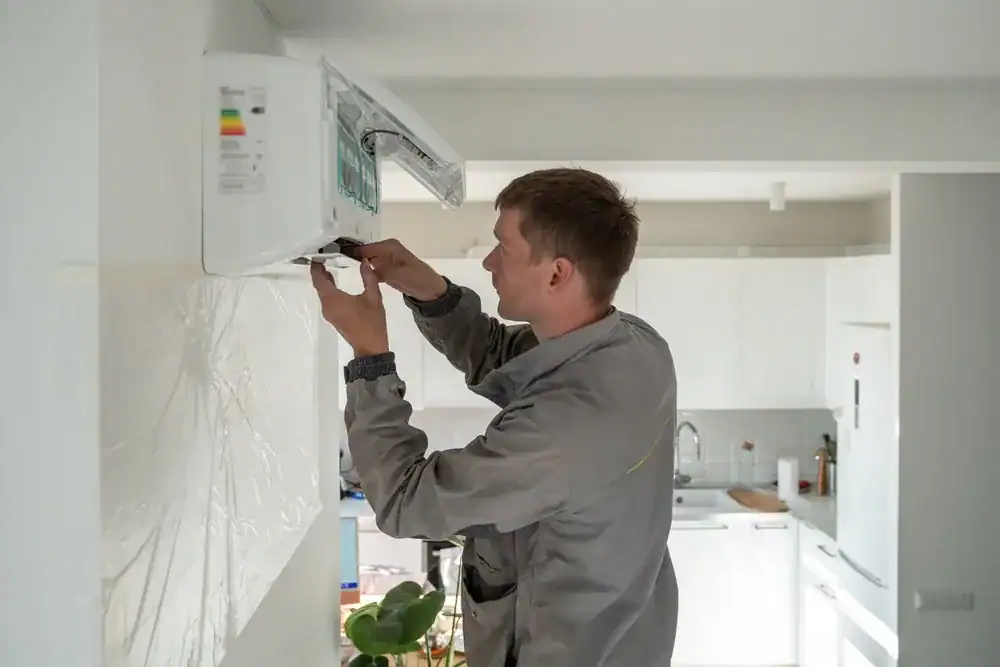
It’s a Tuesday evening in July. The heat index outside is pushing 97°F, and you’ve just noticed the air coming out of your vents is warm. Or maybe the system isn’t running at all. Either way, your stomach drops a little — because you know this isn’t going to fix itself.
Before you call anyone, there are a few things worth checking. Some AC failures have a simple cause you can address in five minutes. Others need a licensed technician, and the sooner you know which one you’re dealing with, the better. This guide covers both — what to do right now, how to tell if it’s a real emergency, and what to expect when you reach out for 24-hour emergency AC repair in Nassau County.
My AC Stopped Working — What Should I Check First?
The first thing to do is resist the urge to panic — and also resist the urge to start poking around inside the unit. Most AC failures trace back to a handful of common causes, and some of them you can rule out in under ten minutes without touching a single wire.
Start with the thermostat. It sounds obvious, but a thermostat accidentally switched to “heat” or “fan only” is behind more service calls than you’d expect. Make sure it’s set to “cool,” that the temperature is set below the current room temperature, and that the fan is set to “auto” rather than “on.” If everything looks right there, move to your electrical panel and check whether the breaker for the AC unit has tripped. A tripped breaker is worth resetting once — flip it fully off, then back on. If it trips again immediately, stop there and call a professional. A breaker that keeps tripping is telling you something is wrong electrically, and resetting it repeatedly can cause more damage or create a fire hazard.
What to Check When Your AC Won’t Turn On at All
If the thermostat looks fine and the breaker isn’t tripped but the system still won’t run, the next place to look is your air filter. A severely clogged filter can restrict airflow to the point where the system shuts itself down as a protective measure. Pull the filter out and hold it up to the light — if you can’t see through it, that’s a problem. Swap it for a fresh one if you have one on hand, then try the system again.
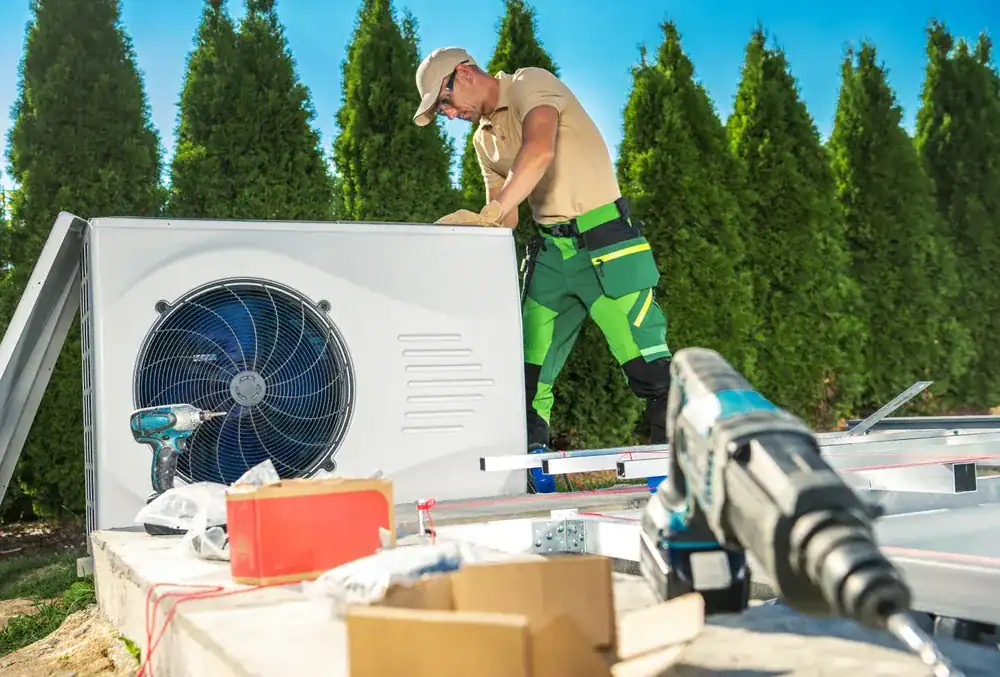
After that, go outside and look at the condenser unit — that’s the large box sitting on a pad outside your home. Is the fan spinning? Is the unit making a buzzing sound but not fully starting? A buzzing compressor that won’t kick on is often a sign of a failed capacitor, which is one of the most common AC failures we see in Nassau County during peak summer heat. Capacitors wear out faster when a system is running hard day after day through July and August, and they’re not something you can replace yourself — but they are a relatively straightforward repair for a certified technician.
One more thing to check: make sure the condensate drain line isn’t blocked. Many modern AC systems have a safety float switch that shuts the unit down if the drain pan fills up with water. If you notice standing water near your air handler, that could be why the system isn’t running. You can try clearing a minor blockage with a wet-dry vacuum, but if you’re unsure, it’s better to leave it for the tech.
What you should not do: don’t keep cycling the system on and off repeatedly, don’t remove any panels from the indoor or outdoor unit, and don’t attempt to add refrigerant yourself. Refrigerant handling requires EPA Section 608 certification — it’s federally regulated, and an improper recharge can damage the compressor and void your warranty.
House Not Cooling Down Even Though the AC Is Running?
This is a different problem from a system that won’t start, and it’s one that confuses a lot of homeowners. If the AC is running — you can hear it, the fan is blowing — but the house just won’t cool down, the cause is usually one of a few things.
The most common culprit in Nassau County homes is low refrigerant. If your system has a slow refrigerant leak, it loses its ability to absorb heat effectively. The air coming out of the vents might feel slightly cool but never actually brings the room temperature down. You might also notice ice forming on the refrigerant lines near the air handler, which is a counterintuitive sign that something is wrong — ice on the coil actually restricts airflow and makes the problem worse. If you see ice, turn the system off and let it thaw before the technician arrives. Running a frozen coil risks damaging the compressor, which is a much more expensive repair.
Another possibility specific to Nassau County’s coastal communities — places like Long Beach, Atlantic Beach, and Freeport — is a corroded or fouled condenser coil on the outdoor unit. Salt air accelerates coil degradation significantly, and a coil that’s caked with salt deposits and debris can’t release heat efficiently. The system runs, but it’s essentially fighting itself. This is something we see regularly on the south shore, and it’s why coil cleaning is a standard part of any tune-up we do for homes near the water.
It’s also worth considering whether the system is simply undersized for the heat load on a 95°F Nassau County afternoon. If your home has had additions, if the ductwork is old and leaky, or if the system was never properly sized to begin with, it may struggle during peak heat even when it’s working perfectly. That’s a longer conversation — but it’s one worth having before next summer.
AC Won’t Cool: When It’s Time to Stop Troubleshooting and Call
There’s a point where DIY troubleshooting stops being useful and starts being risky. If you’ve checked the thermostat, the breaker, and the filter, and the system is still not running or not cooling, it’s time to call a licensed technician. Continuing to run a malfunctioning system can turn a $200 capacitor replacement into a $1,500 compressor failure — the kind of damage that happens when a struggling component finally gives out under load.
The other factor is temperature. Nassau County summers are not forgiving. The number of days above 90°F has been increasing since the late 1970s, and when the heat index climbs past 95°F, it stops being a comfort issue and becomes a health issue — especially for children, elderly residents, and anyone with a respiratory condition. If your home is approaching that threshold and you have vulnerable household members, that’s not a “wait until morning” situation.
Is This a True HVAC Emergency or Can It Wait Until Morning?
This is the question most homeowners wrestle with at 11 PM when the house is at 85°F and they’re not sure whether to call for after-hours service or stick it out until the next day. Here’s a practical way to think about it.
Call immediately if: the indoor temperature is at or approaching 95°F, you have elderly family members, young children, or anyone with a medical condition in the home, you smell burning or notice any electrical odor coming from the unit, or the system is making a grinding, screeching, or loud buzzing sound that it wasn’t making before. These are situations where waiting can cause harm — either to people in the home or to expensive components in the system.
It can likely wait until morning if: the indoor temperature is uncomfortable but not dangerous (say, 80–84°F with working ceiling fans), the system was running fine earlier in the day and just tripped a breaker once, or the issue is clearly a dirty filter and you’ve already replaced it and the system is running again. In these cases, keeping the house as cool as possible with fans, closing blinds on sun-facing windows, and limiting heat-generating appliances overnight is a reasonable approach.
The honest reality is that after-hours HVAC calls in Nassau County do carry a premium — typically an additional $50 to $100 on top of the standard service cost, with common repairs ranging from $150 to $500 depending on the issue. That’s a real cost worth factoring in. But so is the cost of a compressor that burns out overnight because a refrigerant leak went unaddressed, or a flooded air handler from a backed-up condensate drain. Sometimes waiting costs more than calling.
What to Expect When You Call for 24-Hour Emergency AC Repair in Nassau County
When you call us at COOL BROS CORP, you’re not reaching a national call center that routes your request to whoever is closest. We’re based in Lynbrook — we’re a Nassau County company, and the technician who shows up knows the roads, the housing stock, and the specific challenges that come with servicing homes in this area. That matters more than it might sound. A post-war Cape Cod in Levittown has different ductwork challenges than a pre-war colonial in Garden City or a south shore home in Baldwin that’s been dealing with salt-air corrosion on the condenser for fifteen years. We’ve worked on all of them.
When you call, you’ll get a real person, a realistic arrival window, and an upfront price quote before any work begins. No surprise charges added after the fact, no pressure to replace the whole system when a repair will do the job. Our technicians are NATE-certified, EPA-certified, background-checked, and factory-trained on the equipment they’re working on. We carry $1 million in liability insurance and hold Nassau County Home Improvement Contractor License H36422800 — credentials you can verify before we set foot in your home.
We stock our service trucks with the components most commonly needed for the brands and system types we service, which means most repairs get handled on the first visit. We know how frustrating it is to have a technician show up, diagnose the problem, and then tell you they have to order a part and come back in three days. We do everything we can to avoid that outcome.
If it turns out the system is beyond repair or has reached the end of its useful life, we’ll tell you honestly — and we offer free estimates on new system installations, along with financing options through Wells Fargo and Synchrony so that a replacement doesn’t have to become a financial emergency on top of a comfort one. We’re an American Standard dealer and an Amana Certified Dealer, and our systems go up to 22.0 SEER2 with AccuComfort variable-speed technology — a meaningful upgrade if your current system has been limping along for the past decade.
Nassau County Heating and AC Repair: What to Do Right Now
To recap: check the thermostat, check the breaker, check the filter, and look at the outdoor unit before you call. If those checks don’t resolve it, stop troubleshooting and reach out — especially if indoor temperatures are climbing or you have vulnerable people in the home. Waiting out a minor issue can turn it into a major one.
If you’re in Nassau County and need a technician today — or tonight — COOL BROS CORP offers genuine 24/7 emergency service, upfront pricing, and a team that’s been working in this area long enough to know exactly what they’re walking into. Give us a call at 516-646-2260 or text 516-928-4702. We’ll give you a straight answer and get someone out to you as quickly as we can.