You got the quote. Maybe it was for a full replacement, maybe just a major repair — either way, the number hit harder than you expected. That’s the moment most Nassau County homeowners either call around for a second opinion or quietly put it off until the system forces their hand. Neither one is a great position to be in.
Financing is the option that doesn’t get explained nearly enough. Not just “financing available” — but how it actually works, what you’re agreeing to, and whether it makes sense for your situation. That’s what this guide covers.
How Air Conditioning Repair Companies Handle Financing — and What Most Don’t Tell You
When a contractor mentions financing, they’re typically referring to a third-party lender — not an in-house payment plan. We have relationships with lenders like Wells Fargo and Synchrony Bank, and when you apply, you’re applying directly with that lender. We get paid in full. You repay the lender over time.
That’s the basic structure. What gets glossed over is everything else — the promotional period, what happens if you don’t pay it off in time, and which lender is actually the right fit for what you’re buying. Most air conditioning companies in Nassau County say “financing available” and leave it there. That’s not enough information to make a smart decision.
What’s the Difference Between Wells Fargo and Synchrony HVAC Financing?
We offer two financing paths depending on which system is the right fit for your home. For American Standard systems, financing runs through Wells Fargo. For Mitsubishi products, it runs through Synchrony Bank. They’re both legitimate, widely used lenders in the HVAC space — but they work differently, and that matters.
Wells Fargo offers unsecured personal loans for HVAC projects, which means you don’t need home equity to qualify. Loan amounts can range from $1,000 up to $100,000, with repayment terms stretching from 12 to 120 months. There’s no prepayment penalty, so if you want to pay it off early, you can — without getting hit with fees for doing the right thing.
Synchrony typically offers promotional financing — the kind where you see “0% interest for 18 months” in the marketing. Here’s what that phrase actually means: it’s a deferred interest plan. The interest doesn’t disappear. It sits in the background. If you pay off the full balance before the promotional period ends, you pay nothing extra. But if any balance remains when that window closes, Synchrony charges interest on the original purchase amount going all the way back to day one. On a $10,000 system at a standard rate, that retroactive charge can run into the thousands.
That’s not a reason to avoid Synchrony financing — it’s a reason to go in with eyes open. If you’re disciplined about the payoff timeline and the math works in your favor, the promotional period can genuinely save you money. If there’s any chance you won’t clear the balance in time, a fixed-rate loan with a predictable monthly payment might be the smarter call. We’ll explain both clearly before you sign anything.
Does Financing an HVAC System Actually Make Financial Sense on Long Island?
This is the question most homeowners don’t think to ask — and it’s the most important one. The instinct is to think of financing as debt, which makes it feel like something to avoid. But there’s another way to look at it, especially if you’re in Nassau County.
PSEG Long Island electricity rates are consistently among the highest in the continental United States. An aging, inefficient HVAC system running on those rates isn’t just uncomfortable. It’s expensive. The gap between what an older system costs to run and what a modern high-efficiency system costs can be significant enough that a monthly financing payment is partially offset by what you’re saving on electricity.
American Standard systems available through us reach up to 22.0 SEER2 efficiency — that’s the kind of rating that delivers measurable savings in a high-rate market like Nassau County, where the math is more favorable than almost anywhere else in the country. When you factor in what you’re currently spending to run an old system through a Nassau County summer, the “I’ll wait until I’ve saved up” plan sometimes costs more than moving forward today.
There’s also the timing problem. Nassau County’s housing stock is largely post-WWII construction — a lot of homes in communities like Lynbrook, Rockville Centre, Valley Stream, and Massapequa are running systems that are 15, 20, even 25 years old. Those systems don’t fail on a convenient Tuesday in April. They fail on the first real heat wave in July, when every HVAC company on Long Island is slammed and you’re making decisions under pressure. Financing a planned replacement on your terms, before a breakdown forces your hand, puts you in a much better position.
What to Look for in Heating and Air Conditioning Companies in Nassau County
Financing is only part of the decision. The other part is making sure you’re working with a company that’s going to be around if something goes wrong — and that installs the system correctly in the first place. An estimated 50% of homeowners have an improperly installed HVAC system, with sizing errors being the most common cause. A system that’s too big or too small for your home will cycle inefficiently, wear out faster, and cost more to operate regardless of how efficient the equipment is rated.
The credentials that actually matter are verifiable ones: NATE certification for technicians, EPA Section 608 certification for refrigerant handling, a valid New York State Home Improvement Contractor license, and manufacturer dealer status that lets the company offer factory warranties. Reviews matter too — but volume and consistency over time tell you more than a handful of recent five-star posts.
Why Nassau County’s Coastal Climate Changes the Replacement Equation
Long Island’s proximity to the Atlantic and Long Island Sound isn’t just a nice feature of living here. It’s a real factor in how HVAC equipment ages. Salt air accelerates corrosion on outdoor condenser units and refrigerant lines in ways that inland markets don’t deal with at the same rate. Systems in communities like Long Beach, Freeport, and Oceanside can degrade faster than the manufacturer’s expected lifespan suggests — which means the replacement conversation often comes earlier than homeowners anticipate.
This is worth knowing when you’re evaluating financing terms. If a system in a coastal Nassau County location realistically has a 12–15 year lifespan rather than 18–20, the math on a longer financing term looks different than it does in a market without salt air exposure. It’s one of the reasons we do a proper evaluation before recommending a system — not a quick eyeball estimate, but an actual assessment of your home, your ductwork, and your environment.
The other piece of this is the humidity. Nassau County summers combine heat with coastal humidity in a way that places real stress on equipment. A system that’s undersized for those conditions isn’t just uncomfortable — it runs constantly trying to keep up, which drives up your energy costs and shortens the equipment’s life. Getting the sizing right matters more here than in a drier climate, and it’s something a NATE-certified technician with local experience handles differently than someone who’s just swapping units.
We’ve been based in Lynbrook for over eight years. Nassau County’s climate isn’t something we read about — it’s what we work in every day, across communities from Hempstead to Hicksville to Great Neck. That local context shapes how we approach every installation.
What Sets the Best Air Conditioning Companies Apart in Nassau County
The companies that consistently earn strong reputations in this market share a few things in common — and most of them have nothing to do with advertising.
They show up when they say they will. They give you a written, itemized quote before any work starts. Their technicians are certified and background-checked. They carry manufacturer dealer status so that when a warranty question comes up two years after installation, there’s actually someone accountable on the other end. And they don’t disappear after the job is done.
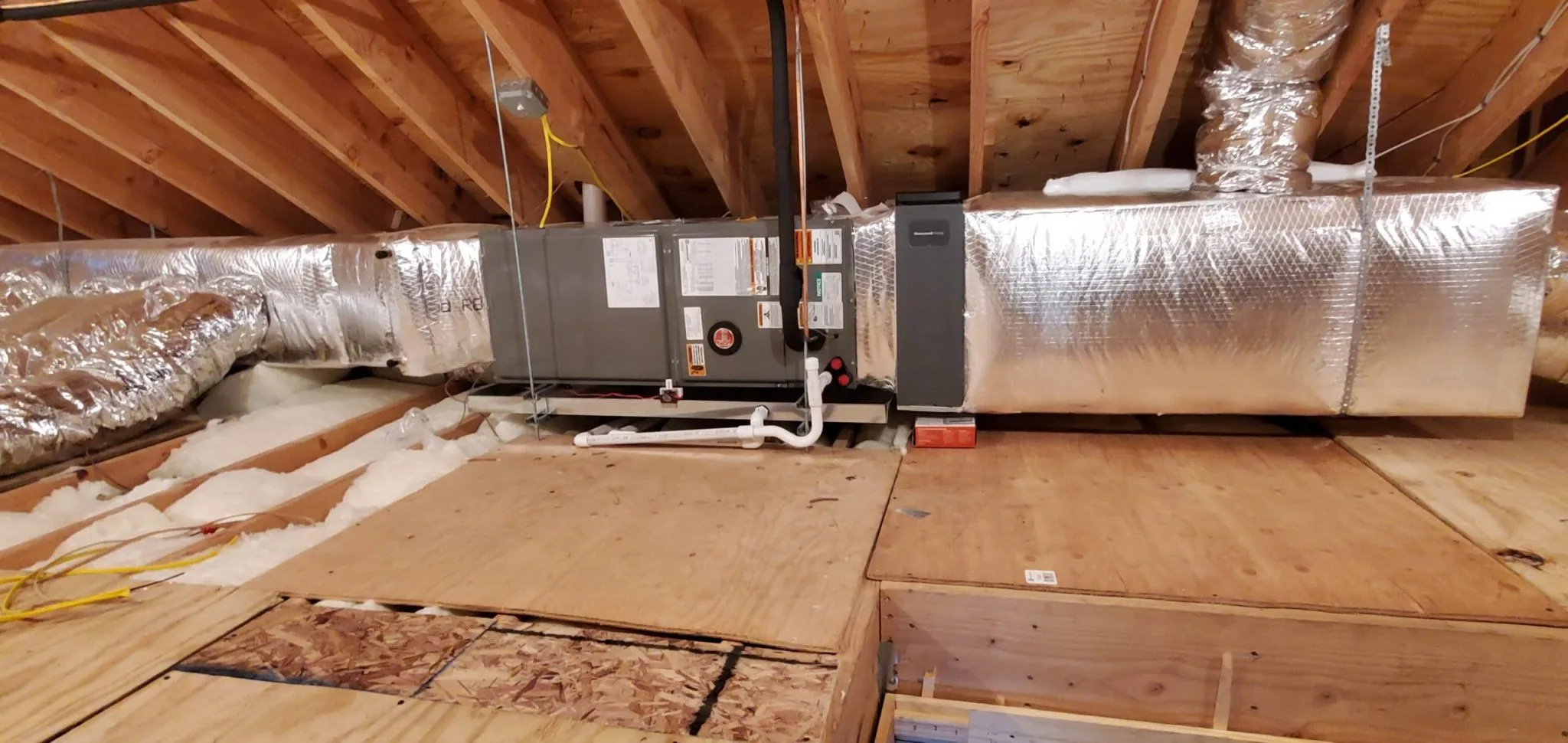
What separates good from bad in this industry often comes down to installation quality — something you can’t evaluate from a quote. A proper installation starts with a Manual J load calculation, which determines the right system size for your specific home based on square footage, insulation, window placement, and sun exposure. Without that step, a contractor is guessing. And an improperly sized system will underperform regardless of how good the equipment is.
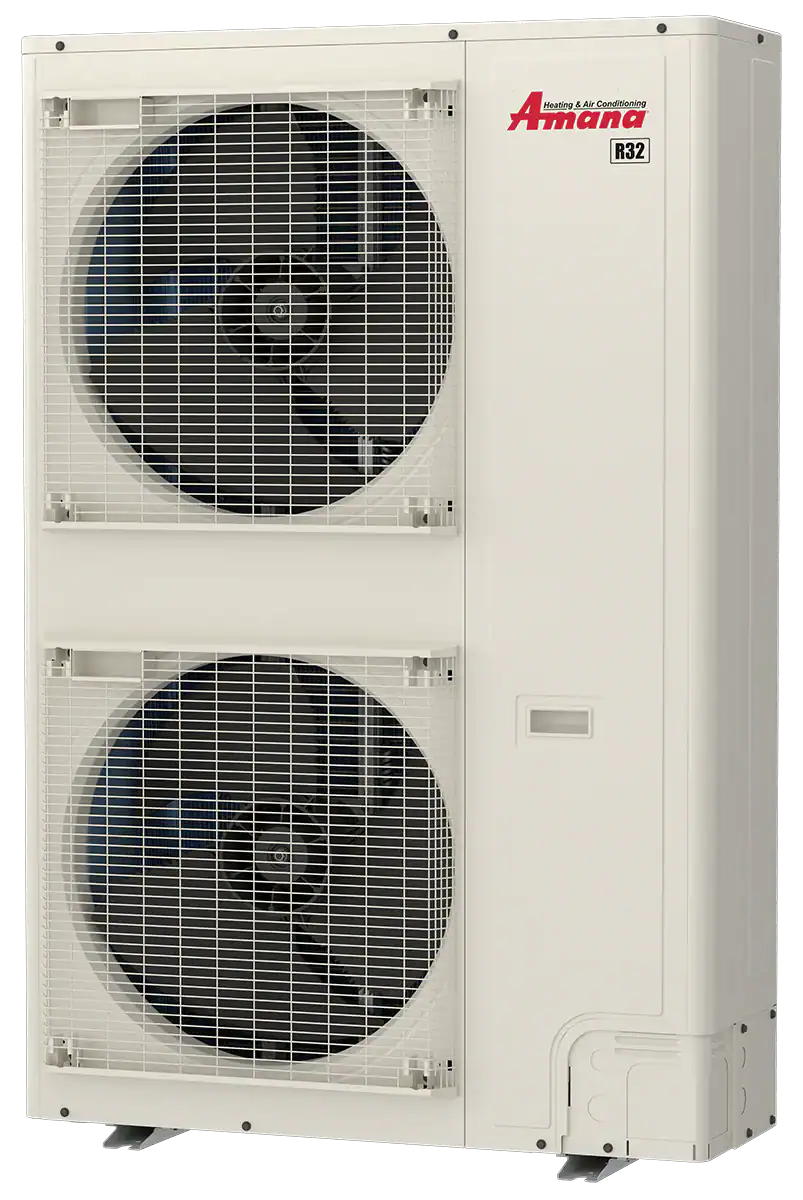
We hold a BBB A+ rating, employ NATE-certified technicians, maintain an active New York State Home Improvement Contractor license, and operate as authorized dealers for both American Standard and Amana — which means the 10-Year Limited Warranty on American Standard systems is actually backed by the manufacturer, not just a contractor’s handshake promise. Our 142+ five-star reviews reflect the kind of consistent experience that builds that kind of reputation over eight years: showing up, doing the work correctly, and treating people fairly.
The financing conversation is part of that. We offer two options — Wells Fargo for American Standard systems and Synchrony for Mitsubishi — because different homeowners are in different financial situations, and one size doesn’t fit everyone. We’ll explain both clearly, tell you what the terms actually mean, and let you decide what makes sense. No pressure, no fine print surprises.
Ready to Talk Through Your HVAC Financing Options in Nassau County?
The biggest mistake Nassau County homeowners make with HVAC financing isn’t choosing the wrong lender. It’s waiting until a breakdown forces the decision — and then making it under pressure, in July, when options are limited and timelines are tight.
If you have a system that’s aging, an energy bill that keeps climbing, or a quote sitting on your kitchen table that you’re not sure what to do with, the next step is a conversation — not a commitment. Free estimates on new systems mean you can understand exactly what you’re looking at before you decide anything.
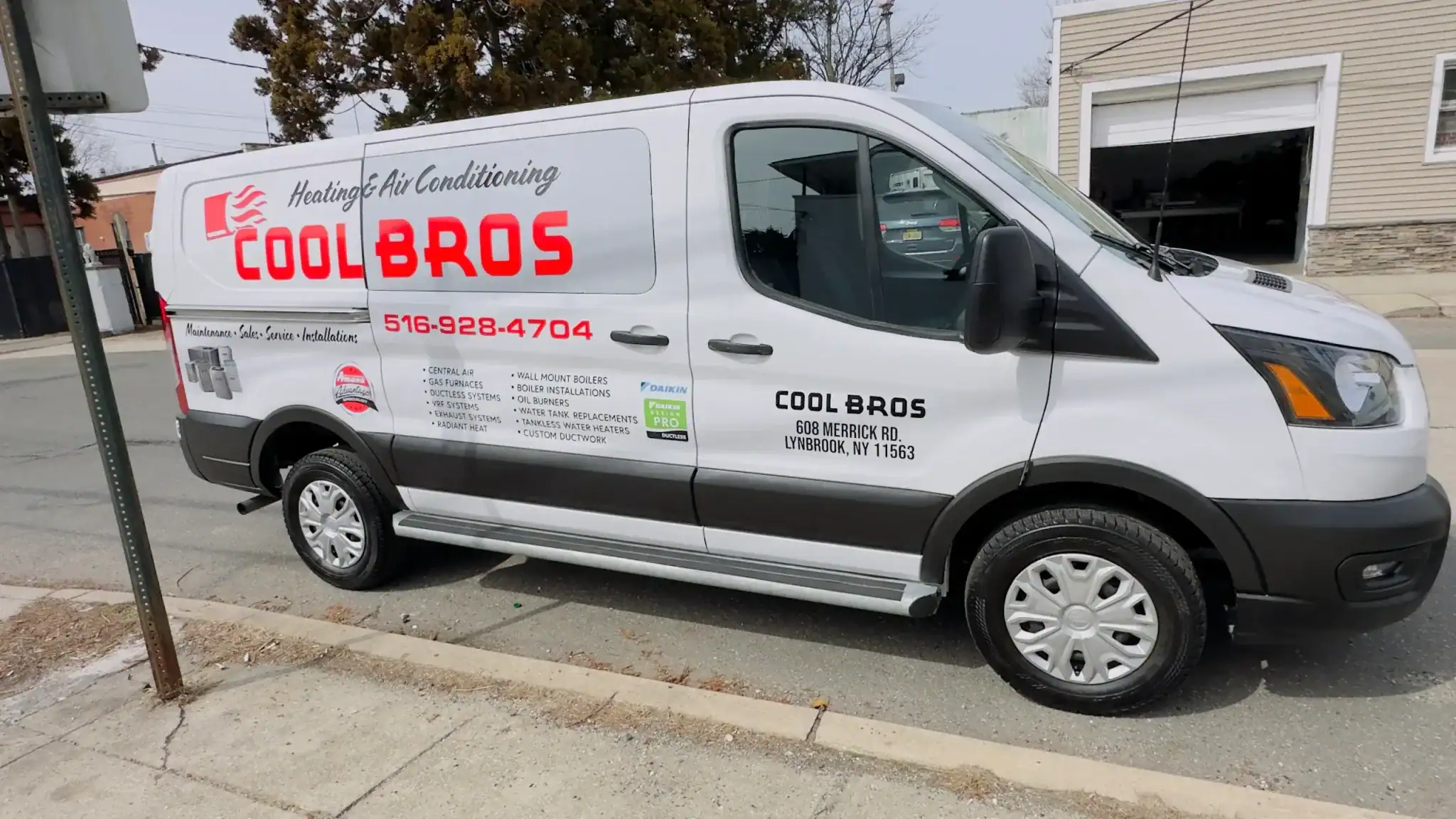
COOL BROS CORP is based in Lynbrook and serves residential and commercial properties throughout Nassau County. Reach out to talk through your options — we’ll give you the straight answer on what makes sense for your home, your budget, and your timeline.