If you’ve heard that PSEG Long Island offers rebates for heat pumps and energy-efficient upgrades, you’ve heard right. What most homeowners don’t realize is how much the details matter — which contractor you use, which equipment qualifies, and which programs can be stacked together. Get those details right and you could be looking at thousands of dollars back. Get them wrong and you might walk away with $150. This guide covers what’s actually available, what the programs pay, and what Nassau County homeowners specifically need to know before making any decisions.
PSEG Long Island Heat Pump Rebates: How the Program Actually Works
PSEG Long Island has paid out $475 million in energy efficiency rebates to Long Island and Rockaway customers over the past decade. The money is real, the programs are active, and Nassau County homeowners are eligible — but the process has rules that most people don’t learn until after they’ve already made decisions they can’t undo.
The core program for heating upgrades is called the Home Comfort Program. It’s built around air-source heat pumps, including cold climate models, and the rebate is calculated based on your system’s heating capacity. For a typical Nassau County home, that works out to somewhere between $1,666 and $6,333 in rebates — depending on system size and whether you qualify for the standard or income-based tier.
Why Your Contractor Choice Is Worth More Than You Think
Here’s the detail that catches most homeowners off guard. PSEG Long Island pays its full Heat Pump rebates only when the installation is completed by a participating Home Comfort Partner — a contractor that’s been vetted and approved by the program. If you use a contractor who isn’t on that list, the rebate drops to a flat $150 per unit.
On a 3-ton system, the difference between a participating and non-participating contractor could be $5,000 or more. That’s not a rounding error — that’s a significant portion of the project cost.
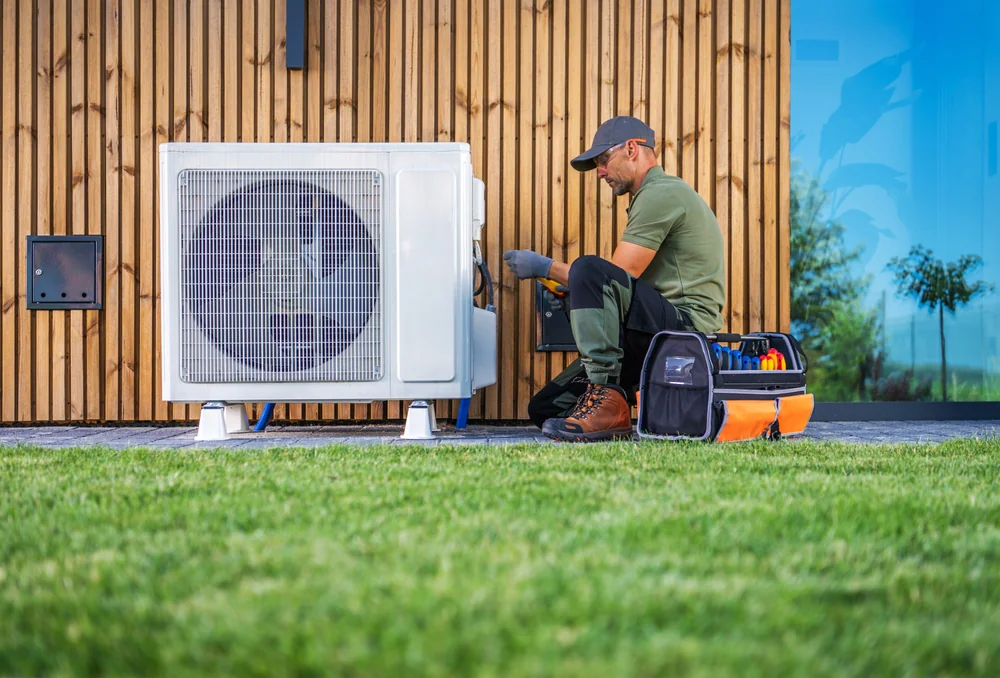
We’re a participating PSEG Long Island contractor. When we install a qualifying heat pump system in your Nassau County home, we handle the rebate process on your behalf — the paperwork, the product verification, the program requirements. You don’t have to figure that part out yourself.
PSEG also requires a Manual J load calculation for whole-house heat pump projects. This is an engineering calculation that determines exactly how much heating and cooling capacity your home actually needs. It’s not guesswork, and it’s not a rule-of-thumb estimate. PSEG uses it to verify that the system is sized correctly — between 90% and 120% of your home’s peak heating load — which is a condition of rebate eligibility. We perform Manual J calculations as part of our free in-home estimates, so that step is handled before any purchase decision is made.
One more thing worth knowing: partial system replacements don’t qualify. If you’re replacing just the outdoor unit and keeping the old indoor equipment, you won’t be eligible for the Home Comfort rebate. The program requires a full system installation — both indoor and outdoor components must be new.
Income-Qualified Nassau County Homeowners May Pay Very Little — or Nothing
There’s a separate tier of the program that most people never hear about: the Home Comfort PLUS Program. It’s designed for households that fall at or below certain income thresholds, and the rebate amounts are substantially higher — ranging from $4,000 for a smaller system in an existing home up to $10,500 or more for larger whole-house installations.
For households at or below 60% of the state median income, the program can cover the full cost of installation. For households at or below 80% of the state median income, there’s a moderate-income rebate level that still represents a significant reduction in out-of-pocket cost. PSEG handles income verification directly — you don’t have to navigate that process alone or prove anything to us.
If you’re not sure whether you qualify, it’s worth asking. A lot of Nassau County homeowners assume these programs are only for very low-income households, but the income thresholds are broader than most people expect.
The reason this matters so much in Nassau County specifically is the housing stock. A huge share of homes here were built in the 1950s and 1960s — Levittown is the most famous example, but the same era of construction covers Westbury, Franklin Square, Inwood, Valley Stream, and dozens of other communities. Many of those homes still run on oil boilers. They’re aging systems, they’re expensive to fuel, and they’re exactly the kind of whole-home heating replacement that the Home Comfort PLUS program was designed for. If your home fits that description, the conversation about income eligibility is worth having before you assume you don’t qualify.
PSEG LI Energy Efficiency Programs: Beyond Heat Pumps
The heat pump rebate gets most of the attention, but PSEG Long Island’s energy efficiency programs cover more than just heating systems. Nassau County homeowners can also access rebates on heat pump water heaters, smart thermostats, and a free home energy assessment program — and several of these can be stacked in the same project cycle.
Understanding the full picture matters because the combined value of these programs is significantly higher than any one piece of it. Most homeowners only act on the rebate they already know about, and leave the rest on the table.
What Else PSEG Rebates Cover: Water Heaters, Thermostats, and Rate Savings
PSEG Long Island offers up to $1,200 back on ENERGY STAR certified heat pump water heaters. The rebate is capped at 50% of the purchase price, and you can claim it once per account every five years. If you’re already upgrading your heating system, adding a heat pump water heater to the project is one of the more straightforward ways to increase the total rebate value without a lot of additional complexity.
Smart thermostats are also rebatable — PSEG offers $100 to $130 depending on the model. That’s not a life-changing number on its own, but it’s real money for something you’d likely install alongside a new heat pump system anyway.
Then there’s Rate Code 580. This is a special electric rate that PSEG Long Island makes available to heat pump customers, and it’s worth an estimated $400 to $800 per heating season in reduced energy costs. It’s not a one-time check — it’s an ongoing reduction in what you pay every year. When you factor that in alongside the upfront rebate, the total first-year value of a heat pump upgrade looks quite different than the sticker price suggests.
PSEG also offers free comprehensive home energy assessments through the Home Performance with ENERGY STAR program. This is a no-cost evaluation of your home’s energy use — insulation, air sealing, heating and cooling efficiency — that can identify additional rebate opportunities before you commit to any purchase. If you’re early in the process and still figuring out what makes sense for your home, this is a useful starting point that costs you nothing.
Stacking PSEG Rebates With Federal Tax Credits and NYSERDA
This is where the numbers start to look genuinely different. PSEG rebates don’t exist in isolation — they can be stacked with the federal IRA Energy Efficient Home Improvement Credit and NYSERDA’s Clean Heat program, and the combined first-year value for a typical Nassau County heat pump installation can reach $7,000 to $9,500 or more.
The federal tax credit covers 30% of qualifying heat pump installation costs, up to $2,000 per year. This is a credit against what you owe in federal taxes — not a deduction — which makes it more straightforward to calculate. It applies in the same tax year as the installation, so timing matters.
NYSERDA’s Clean Heat program runs separately from PSEG but is stackable with it. For market-rate customers, it adds $500 to $1,000 per ton of heating capacity, up to a cap of $5,000 or 70% of the total project cost. For income-qualified households, NYSERDA’s coverage can go much higher — in some cases covering 70% to 100% of the installation cost when combined with PSEG’s Home Comfort PLUS program.
The reason most Nassau County homeowners don’t know this is that no single source puts it all together. PSEG’s website covers PSEG programs. NYSERDA’s website covers NYSERDA programs. The IRS covers the tax credit. Nobody’s job is to show you the combined picture — which is part of why working with a contractor who understands all three is genuinely useful. When we sit down with a homeowner for a free estimate, we walk through what’s realistically available for their specific situation — not a best-case scenario, but an honest accounting of what they can expect to receive and when.
One practical note: PSEG rebates run on a calendar year basis. The purchase and installation must fall within the same calendar year to count toward that year’s rebate. If you’re considering a heat pump installation and you’re reading this in the second half of the year, the window is narrower than it might seem.
Getting the Full PSEG Rebate in Nassau County: What to Do Next
The rebate programs are real, the money is significant, and Nassau County homeowners are well-positioned to take advantage of them — especially those in older homes still running on oil or aging gas systems. But the difference between getting the full rebate and getting a fraction of it comes down to which contractor you use and whether the installation is done correctly from the start.
If you’re trying to figure out what you actually qualify for, the most useful first step is a free in-home estimate. That’s where the Manual J gets done, where the equipment options get matched to your home’s actual needs, and where you get a clear picture of what PSEG, NYSERDA, and the federal tax credit could realistically put back in your pocket.
COOL BROS CORP is a participating PSEG Long Island contractor serving all of Nassau County. If you want straight answers about what’s available for your home, reach out — we’ll give you the full picture, not just the parts that sound good.