It’s a Tuesday afternoon in July. You’re commuting home on the Southern State Parkway, it’s 86 degrees outside, and the humidity is sitting at that suffocating Long Island level where the air feels thick before you even step off the LIRR. You walk in the front door expecting relief, and the house is warm. Not sweltering, just… not right. The AC is running. Something’s off.
That moment, when you know something is wrong but aren’t sure how wrong, is exactly what this guide is for. Nearly 75% of major AC breakdowns happen because early warning signs were ignored for too long. Here are the seven most common ones, and what they mean for your system.
7 Warning Signs Your Central AC Needs Repair Before It Stops Working Entirely
Your central AC system almost never fails without giving you some kind of heads-up first. The problem is that those early signals are easy to rationalize away: the house is still cool enough, the noise isn’t that loud, or the bill is probably just because of the heat wave. That logic makes sense in the moment, but it’s how a $243 capacitor replacement quietly becomes a $2,400 evaporator coil job.
The seven warning signs below are the ones we see most often when Nassau County homeowners call us after waiting too long. Some are obvious, some are subtle, and all of them are worth taking seriously.
Your AC Is Running But The House Won’t Cool Down
This is the most common complaint we hear, and it’s also the one that gets dismissed the longest. The system is on, and cool air is technically coming out, so how bad can it be? The issue is that your AC isn’t just supposed to run; it’s supposed to maintain a consistent temperature throughout your home. When it can’t do that, the system works harder than it should to deliver less than it should.
On Long Island, where July humidity regularly pushes dew points into the mid-to-upper 60s, an AC that’s struggling to keep up isn’t just uncomfortable. It gets pushed past its limits every single day it runs in that condition, accelerating wear on every major component.
The most likely culprits are low refrigerant from a slow leak, a failing compressor, or a dirty evaporator coil restricting airflow. None of these fix themselves. A refrigerant recharge without finding and sealing the leak is a temporary patch; the refrigerant leaks out again, and you end up right back where you started. A compressor that’s on its way out will keep degrading until it fails entirely, usually on the hottest day of the summer.
If your system runs constantly and still leaves rooms warm, especially if you’ve noticed one or two rooms that never quite cool down, that’s your system asking for a professional diagnosis, not a wait-and-see approach.
Strange Noises, Sudden Spikes In Your Electric Bill, And Other Signs You Shouldn’t Ignore
Strange sounds coming from your AC unit are clear signals that something mechanical has gone wrong. Banging or rattling usually points to a loose or broken component inside the unit, such as a blower motor part, a fan blade, or something that came free and makes contact with other components. Grinding typically means a bearing or belt is wearing out. Clicking at startup or shutdown is normal; clicking that repeats throughout the cycle often points to an electrical issue or a failing thermostat. Hissing or bubbling almost always signals a refrigerant leak.
None of these sounds are benign, and none of them resolve on their own.
A sudden spike in your electric bill is another warning sign that tends to get explained away: it’s hot out, the AC is running more, and the bill naturally climbs. That’s true to a point. But if your bill jumped noticeably compared to the same month last year and you haven’t changed your usage habits, your system is likely working significantly harder than it should to deliver the same result. That’s inefficiency, and it costs you money every day the underlying problem goes unaddressed.
Water pooling around your indoor unit is a third sign that warrants a call. A small amount of condensation is normal, but standing water or visible moisture around the unit typically means either a clogged condensate drain or a refrigerant leak, both of which can lead to mold growth if left alone. Nassau County summers are humid enough without adding moisture problems inside your walls.
Short cycling, when the system turns on, runs for a few minutes, shuts off, and repeats, is hard on every component and often signals an oversized system, a refrigerant issue, or a failing compressor. If your system is over 15 years old and showing any of these signs, the repair-versus-replace question is worth an honest conversation. The general industry guideline is straightforward: if the repair cost exceeds 50% of what a replacement would cost, replacement usually makes more financial sense, especially when you factor in the energy savings a modern high-efficiency system delivers.
How To Find A Reliable Central AC Repair Company In Nassau County
Knowing your system needs attention is one thing; knowing who to trust with it is another. Nassau County has no shortage of HVAC companies, and during peak summer months, the options multiply fast. Not all of them are established, and not all of them are verifiable. The homeowners who end up most frustrated are usually the ones who picked whoever showed up first in a search result without doing even a few minutes of research.
A few things are worth confirming before you let anyone work on your system: licensing and insurance, verifiable certifications, and a track record of local reviews you can read through.
What Credentials Should An HVAC Technician Have In New York?
New York State doesn’t issue a statewide HVAC contractor license, so oversight happens at the local and county level. That means the bar for who can legally call themselves an HVAC company varies, and it’s worth knowing what to look for before you hand over access to your home.
At minimum, the company you hire should hold a local Home Improvement Contractors license and carry both liability insurance and workers’ compensation. If something goes wrong during a repair and the technician isn’t insured, you’re the one holding the liability.
Beyond the basics, NATE certification is the credential that separates technicians who have been independently tested and verified from those who haven’t. NATE stands for North American Technician Excellence, and it requires passing rigorous exams that aren’t affiliated with any manufacturer or employer. When a company says their technicians are NATE-certified, that’s an externally verified claim, not just an internal training badge.
At COOL BROS CORP, our technicians are licensed, NATE-certified, and have been serving Nassau County homeowners for over eight years. We hold a Home Improvement Contractors License (H36422800), carry full insurance, and maintain an A+ rating with the Better Business Bureau. We’re also an authorized installer of Mitsubishi and American Standard equipment, which matters if you want manufacturer warranties to remain valid after the work is done.
Why Nassau County Homeowners Need A Local HVAC Expert
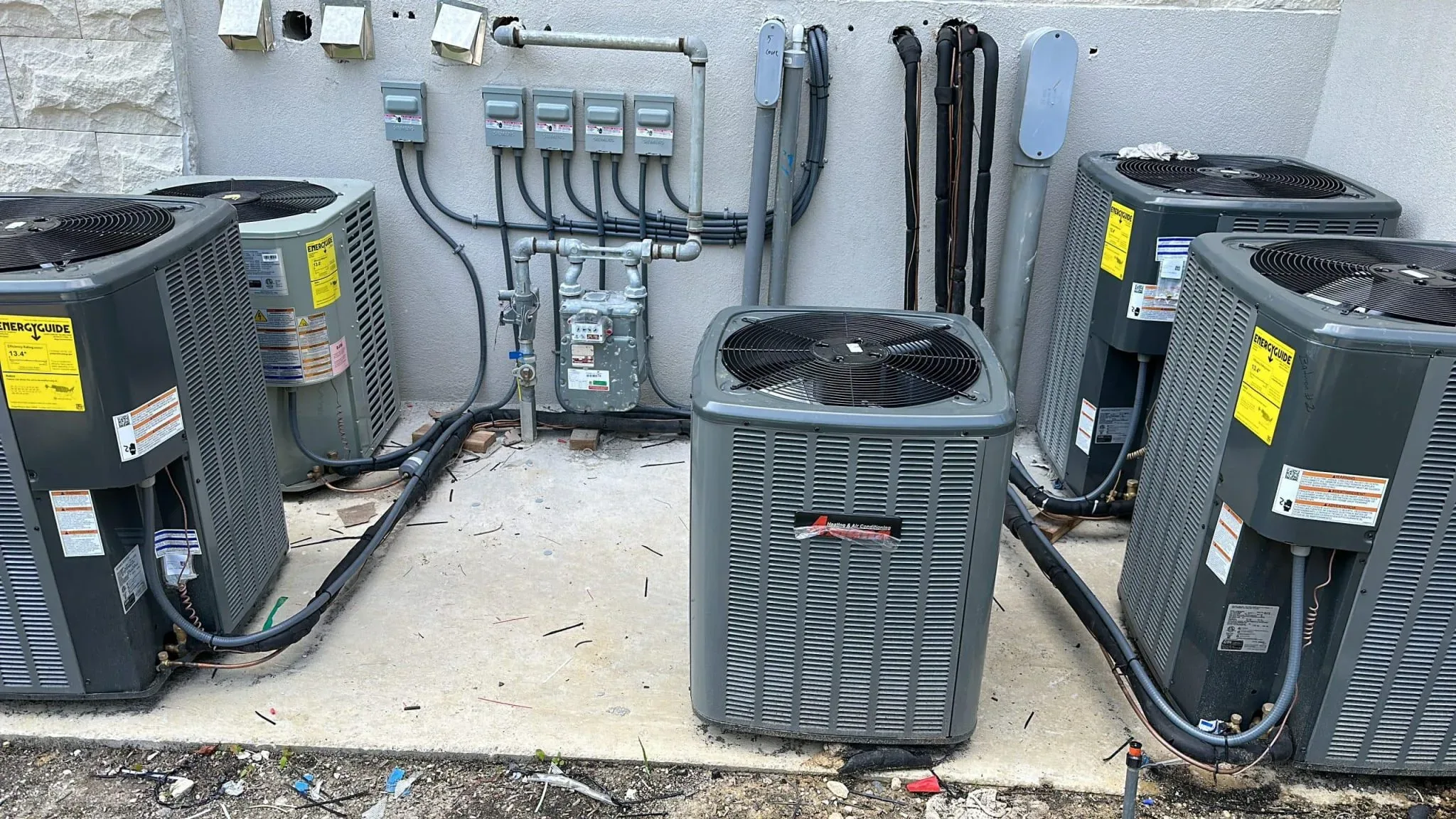
Long Island’s coastal climate creates conditions that accelerate HVAC wear in ways that don’t apply inland. Homes within a mile of the Atlantic Ocean or Long Island Sound, including communities like Long Beach, Freeport, Island Park, and Oceanside, deal with year-round salt-air exposure that corrodes outdoor condenser units faster than standard maintenance schedules account for. A technician who doesn’t know to look for that, or doesn’t know how to address it, is going to miss something critical.
Nassau County’s housing stock is another factor. Much of it was built during the post-World War II suburban boom, Levittown being the most famous example, but the same era of construction extends across much of the county. Those homes are now 70 to 80 years old, and many of the HVAC systems installed or updated in them are approaching or past the 15-to-20-year mark that represents the average lifespan of a well-maintained central AC system. If your system was installed in the early 2000s or before, you’re in the window where the repair-versus-replace conversation is worth having proactively, not reactively.
There’s also the commuter reality. A lot of Nassau County homeowners are away from the house for most of the day, on the LIRR, in the city, or otherwise not home to notice when the system starts struggling. By the time you get home and realize something is wrong, the system may have been running in a degraded state for hours. That’s why pre-season maintenance and paying attention to early warning signs matter more here than they might in other markets.
We’re based in Lynbrook, which puts us in the middle of the communities we serve: Valley Stream, Rockville Centre, Bellmore, Merrick, Garden City, Massapequa, and the rest of Nassau County. When you call us, you don’t get a national dispatch center routing a technician from two counties away. You get a local company that knows these neighborhoods, knows the housing stock, and knows what Long Island summers do to HVAC systems.
What To Do When Your Central AC Needs Repair In Nassau County
If your system is showing any of the warning signs covered here (warm air, strange noises, a higher-than-usual electric bill, water around the unit, or short cycling), the right move is to get a professional diagnosis before the problem escalates into an emergency. Most repairs that turn into expensive breakdowns started as something manageable that got pushed down the priority list. We provide free estimates with clear options and no pressure, so reach out to COOL BROS CORP today to schedule your central AC inspection and keep your home cool all summer long.