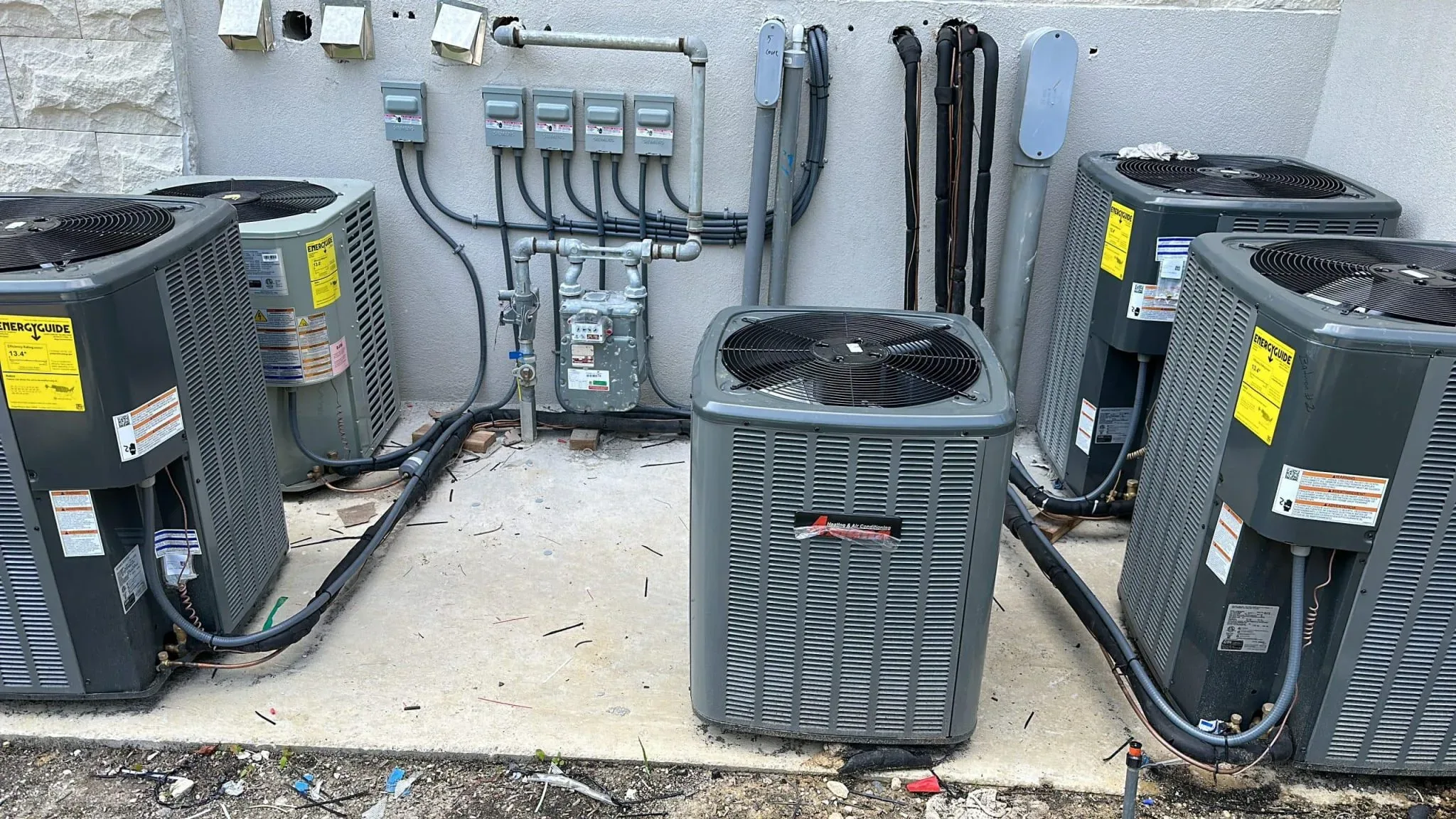
You have probably noticed that some rooms in your house never quite cool down, no matter what the thermostat says. Or maybe your energy bills keep climbing every summer without a clear explanation. A lot of the time, the problem is not the equipment; it is that the system was never the right size for the home to begin with.
That is more common than most people realize, and it is especially relevant here on Long Island. If you are looking into central AC installation in Nassau County, understanding how sizing works, before you talk to a single contractor, could save you thousands of dollars and years of frustration.
Why AC Sizing Matters More Than The Brand You Choose
Most homeowners focus on brand names and efficiency ratings when they start shopping for a new central AC system. Those things matter, but they are secondary to one question that often does not get asked: is this system the right size for your home?
The U.S. Department of Energy reviewed roughly 5,000 residential HVAC systems and found that 31% were oversized. A separate finding from the author of the industry-standard sizing methodology, ACCA Manual J, suggests that only 5 to 10% of residential HVAC installations have ever involved a proper load calculation. That means the vast majority of systems are sized by guesswork, habit, or convenience. Nassau County homes are not immune to that trend.
What Happens When Your Central AC Is Oversized
An oversized AC system does not just waste energy; it makes your home less comfortable in ways that are hard to diagnose if you do not know what to look for.
Here is the core problem: an oversized unit cools the air temperature down quickly, then shuts off before it has had time to run a full cycle. That process is called short-cycling, and it is particularly damaging in Nassau County’s climate. Long Island summers are not just hot, they are humid. July highs average around 84°F, but the dew points regularly sit between 65 and 72°F. That is the kind of sticky, heavy air that makes a 78-degree room feel like 85.
Removing that humidity is one of the most important jobs your AC does, and it only happens during longer run cycles. A system that short-cycles never gets there. The result is a home that registers the right temperature on the wall but still feels clammy and uncomfortable.
Homeowners often assume the system is broken or underpowered and call for service, when the true issue is that the unit is too large and never runs long enough to do its job properly. Beyond comfort, short-cycling puts mechanical stress on the compressor, the most expensive component in the system. A unit that turns on and off repeatedly wears out faster than one running normal cycles, which means you are looking at replacement sooner than you should be.
The fix is not complicated, but it requires doing the work upfront. A proper Manual J load calculation accounts for your home’s square footage, insulation quality, window placement, ceiling height, sun exposure, and local climate data. It is not a rule of thumb. It is an engineering calculation, and it is the only reliable way to determine what size system your home needs.
Nassau County’s Older Homes Create A Specific Sizing Challenge
A large share of Nassau County’s housing stock was built between the 1950s and 1970s. The cape cods, ranch homes, and colonials that define neighborhoods from Valley Stream to Merrick were constructed in an era before modern insulation standards and energy codes. Many still have their original ductwork, and that ductwork may be undersized, partially disconnected, or leaking conditioned air into unconditioned spaces like attics and crawlspaces.
This matters a great deal when you are installing a new central AC system. Even if the unit itself is perfectly sized, compromised ductwork will undermine the whole system. You will end up with uneven cooling, rooms that never reach the set temperature, and an AC that runs longer than it should trying to compensate for the losses.
When we work on central air installations in Nassau County, we evaluate the existing duct system before making any equipment recommendation. If there are issues, we address them. Installing a new system into bad infrastructure does not make sense for anyone, and it is one of the most common reasons homeowners end up disappointed after what should have been a straightforward upgrade.
There is also a coastal factor worth mentioning. For homeowners in South Shore communities like Long Beach, Oceanside, Freeport, and Baldwin, salt air is a real concern. Outdoor condenser coils are vulnerable to corrosion in coastal environments, and systems that are not selected with that in mind tend to degrade faster. It is a detail that often gets skipped in a generic installation conversation, but it is one we take seriously for clients in those neighborhoods.
How To Choose A Central AC Contractor In Nassau County
The contractor you hire matters as much as the equipment you install. A high-efficiency system installed incorrectly, or sized by guesswork, will underperform for its entire lifespan. And in Nassau County specifically, not every contractor who shows up with a van is legally authorized to do the work.
New York State does not issue a statewide HVAC contractor license. Authorization is handled at the county level, which means a contractor licensed to work in Suffolk County or New York City is not automatically permitted to perform residential HVAC installation in Nassau County. The credential you are looking for is a Home Improvement Contractor (HIC) license issued by the Nassau County Department of Consumer Affairs. It is a legal requirement, not an optional bonus, and any reputable contractor should be able to give you their license number on the spot.
What To Ask Before You Hire An HVAC Installer In Nassau County
Most homeowners get two or three quotes and choose based on price. That is understandable, since central AC installation is a significant expense, and the quotes can vary widely. But price alone does not tell you if the contractor is going to size the system correctly, assess your ductwork, pull the required permits, or stand behind their work afterward.
A few questions worth asking before you commit: Can they provide their Nassau County HIC license number? Will they perform a Manual J load calculation before recommending a system size? Do they assess existing ductwork as part of the installation process? What does their labor warranty cover, and for how long?
These are not trick questions. A contractor who does quality work will answer all of them without hesitation. One who gives vague answers or pushes back on the load calculation question is telling you something important about how they operate.
It is also worth verifying reviews independently. A 5-star Google rating with over 100 reviews from homeowners in your area is a meaningful signal, not because reviews are infallible, but because volume and recency are hard to fake. Check the BBB as well. Accreditation with an A+ rating means the business has met specific standards for ethical conduct and customer responsiveness, giving you a third-party channel if something goes wrong.
We are based in Lynbrook, which puts us in the middle of the communities we serve: Rockville Centre, Oceanside, Garden City, Hempstead, Merrick, and the rest of Nassau County. When you call us, you are not getting a crew dispatched from two counties away. That proximity matters when scheduling is tight, when a job runs longer than expected, or when you have a question after the install is done.
Does SEER2 Rating Matter For Long Island Homeowners?
Yes, and probably more than you would expect. SEER2 is the efficiency rating system that replaced the older SEER standard in 2023. It uses a more realistic testing methodology, so SEER2 numbers run slightly lower than equivalent SEER ratings for the same equipment. If you are comparing quotes that reference both standards, they are not directly comparable.
The reason efficiency matters more on Long Island than in most other markets comes down to electricity costs. PSEG Long Island customers pay some of the highest electricity rates in the continental United States. That changes the math on higher-efficiency systems considerably. The annual savings from a more efficient unit are meaningfully larger here than they would be in a market with lower utility costs, which means the premium you pay upfront for a higher SEER2 system pays back faster.
This does not mean you should automatically buy the most expensive, highest-efficiency unit on the market. The right choice depends on how much you run your system, how long you plan to stay in the home, and what your current energy bills look like. What it does mean is that the efficiency conversation is worth having, not as a sales pitch for a pricier unit, but as an honest look at what makes financial sense for your specific situation.
We are straightforward about this when we talk to homeowners. We are not going to recommend the largest or most expensive system just because it is available. The goal is a system that is correctly sized, appropriately efficient for your usage, and installed properly so it performs the way it is supposed to for the next 15 to 20 years.
One more practical note: Nassau County requires mechanical and electrical permits for HVAC installation. Any contractor who installs without pulling permits is creating a liability for you as the homeowner through insurance complications, potential issues at resale, and code violations that become your problem, not theirs. Permits are part of the job, and we handle them as a standard part of every installation.
Ready To Install Central AC In Nassau County? Here’s Where To Start
The short version: sizing matters more than brand, ductwork condition matters more than most contractors will tell you, and the contractor you choose matters as much as the equipment itself. Nassau County’s humid summers, aging housing stock, and high electricity rates make all of these factors more consequential here than in most other markets. If you are in the research phase, the most useful thing you can do right now is enter contractor conversations prepared with questions about Manual J calculations, duct assessments, and verified HIC licensing. Contact COOL BROS CORP today to schedule your in-home consultation and ensure your new central AC is sized and installed perfectly for your Long Island home.