Most Nassau County homeowners don’t think about their boiler until it stops working. That’s understandable — if it’s been running every winter for 20 years, why would this one be any different? But that logic is exactly what leads to a heating failure at 11 PM on a January night when a Nor’easter is pushing wind chills into single digits. This guide is for anyone who wants to get ahead of that situation instead of reacting to it. We’ll walk through what pre-winter boiler prep actually involves, what signs your system is trying to tell you something, and what makes Nassau County homes a particularly important case for staying on top of it.
Why Nassau County Heating and Air Service Starts With the Boiler
Nassau County’s median home was built in 1955. That means the majority of single-family homes in this county were constructed before forced-air furnaces became the standard — which means a huge share of them were originally built around steam or hot-water boiler systems. Many of those systems are still running today.
That’s not necessarily a problem. Boilers are durable — they can last 20 to 35 years under the right conditions. But “still running” and “running well” are two different things. A boiler that’s been in service for 25 years without regular maintenance may be operating at 60 to 70 percent efficiency, quietly burning more fuel than it should without any obvious signs that something is off.
Pre-winter service isn’t about finding reasons to replace your system. It’s about making sure what you have is working the way it should before the first real cold snap hits.
What a Boiler Tune-Up Actually Covers
A boiler tune-up isn’t just a technician showing up and poking around for 20 minutes. A thorough pre-winter inspection covers the internal components that directly affect how safely and efficiently your system runs — and in Nassau County’s older homes, those components deserve real attention.
During a proper boiler service visit, we clean the heat exchanger and burner components. This matters because buildup on these parts forces the system to work harder to produce the same amount of heat, which drives up your fuel costs and puts additional stress on components that were already aging. We’ll also test safety controls, check combustion gases, and inspect the venting system to make sure exhaust is exiting your home the way it’s supposed to. A blocked or degraded flue isn’t just an efficiency problem — it’s a carbon monoxide risk.
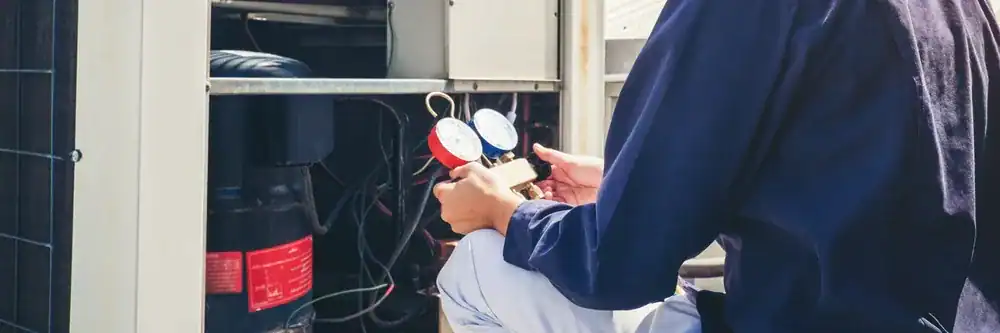
Beyond the internal components, we check your boiler’s pressure gauge. Most residential systems should operate between 1 and 1.5 bars. Outside that range, the system either underperforms or shuts itself down entirely — neither of which you want to discover at 6 AM when the heat isn’t coming on.
Here’s something most homeowners don’t factor in: Nassau County’s coastal environment adds a layer of wear that inland markets don’t deal with. The county sits between Long Island Sound and the Atlantic Ocean, and that salt air doesn’t just affect your outdoor AC unit. It accelerates corrosion on boiler venting components, external piping, and metal fittings — the kind of gradual damage that doesn’t announce itself until something fails. Our technicians who’ve been working in Nassau County homes for years know exactly where to look for it.
Radiators and baseboards are part of the picture too. Air trapped in the system prevents heat from circulating properly — rooms that feel cold even when the boiler is running are often a sign of this. Bleeding the system to release that trapped air is a straightforward fix, but it’s one that gets skipped when homeowners are managing it themselves without knowing what to look for.
The goal of a pre-season visit is to catch the small things before they become expensive things. A failed pressure relief valve or a cracked heat exchanger that gets caught in October is a very different situation than one that surfaces during a February cold snap.
Warning Signs Your Nassau County Boiler Is Telling You Something
Boilers rarely fail without giving some kind of advance notice. The problem is that most homeowners either don’t recognize the signals or assume they’ll go away on their own. They usually don’t.
Banging, whistling, or gurgling sounds coming from your boiler or pipes are among the most common things homeowners report before a breakdown. These noises aren’t just annoying — they typically point to specific problems. Banging often indicates kettling, where limescale buildup on the heat exchanger causes water to overheat and steam in localized pockets. Gurgling usually means air has gotten into the system. Whistling can signal a pressure issue. None of these problems fix themselves, and all of them get worse under the sustained load of a Long Island winter.
Uneven heating is another signal worth taking seriously. If certain rooms in your home are consistently colder than others — even with the thermostat set the same — it’s worth having someone look at the system before winter. In Nassau County’s older homes, where radiators may not have been serviced in years, this is a particularly common issue.
Keep an eye on your energy bills too. If your heating costs jumped noticeably last winter without a corresponding change in how cold it was or how you used the system, efficiency loss is likely the explanation. An 8 percent drop in boiler efficiency means you’ve already paid for a tune-up several times over in excess fuel costs — you just didn’t know it.
One more thing worth mentioning: if your boiler is approaching or past the 20-year mark, the calculus around repair versus replacement starts to shift. There’s a general rule in the heating industry that when a single repair costs more than 50 percent of what a new system would cost, replacement typically delivers better long-term value. That’s not a reason to panic — it’s a reason to have a real conversation with someone who can assess your specific system, not give you a generic answer over the phone.
Heating and Cooling Service in Nassau County: Why Timing and Local Knowledge Matter
There’s a window every fall — roughly September through November — when scheduling a boiler service is straightforward. Technicians are available, lead times are short, and you have time to address anything that comes up before the cold arrives. Once December hits and temperatures drop, that window closes fast.
Nassau County winters don’t ease you in gently. Nor’easters can arrive quickly, temperatures can fall into the teens, and wind chills can push well below zero. When a boiler fails under those conditions, emergency service queues back up. You’re not the only one calling. Getting ahead of that situation by a few weeks is one of the simplest and most effective things a homeowner can do.
How to Choose the Right Heating and Cooling Repair Companies in Nassau County
Not every HVAC company that operates on Long Island has deep experience with the boiler systems common in Nassau County’s older homes. This distinction matters more than it might seem. Steam and hot-water boiler systems require different knowledge than forced-air furnaces or heat pumps — and the pre-war colonials, 1950s ranches, and post-war Capes that make up so much of Nassau County’s housing stock have their own quirks that come with experience, not a quick read of the manual.
When you’re evaluating who to call, credentials are a reasonable starting point. NATE certification — North American Technician Excellence — is the highest independent technician credential in the HVAC industry. It’s awarded by a third-party organization, not self-reported. EPA certification is required by federal law for any technician handling refrigerants. A Nassau County Home Improvement Contractor license is required by law for any job over $200 — it’s verifiable through the county’s Office of Consumer Affairs, and any legitimate company should be able to provide it without hesitation.
Reviews matter too, and 91 percent of consumers rely on them when selecting an HVAC contractor. But look at the pattern, not just the star rating. A company with 142 verified five-star reviews from Nassau County homeowners is telling you something different than a company with a handful of reviews spread across multiple counties. Specificity and consistency are what you’re looking for.
Ask whether the company performs an in-home assessment before quoting you on anything significant. Accurate diagnosis requires seeing the system in person — not estimating over the phone. And ask about transparency around pricing. In a category where billing surprises are one of the most common complaints, a company that gives you a clear number before any work begins is worth something.
Finally, consider what happens if something goes wrong after the service visit. A company that offers 24/7 emergency service — not just an answering service, but actual response — is a meaningful safety net for Nassau County homeowners who know what a mid-January heating failure actually looks like.
Emergency Heating and Cooling: What Nassau County Homeowners Should Know Before They Need It
Nobody wants to think about emergency heating service until they need it. But understanding what it actually means — and what separates a company that genuinely offers it from one that just says they do — is worth knowing before you’re making the call at 2 AM.
Real 24/7 emergency heating service means someone answers when you call on a Sunday night in February, not a voicemail that promises a callback the next business day. It means a technician can get to your home that night, not in three days when the queue clears. In Nassau County, where Nor’easters can knock out heat for multiple days and temperatures can drop fast, this isn’t a minor distinction — it’s the difference between a manageable situation and a genuine safety emergency.
Pipes freeze when a home loses heat in sustained cold. Elderly residents face real health risks. Families with young children can’t simply wait it out. The homeowners who feel this most acutely are the ones who skipped pre-season maintenance and are now competing for emergency service slots with everyone else in the same situation.
There’s also a practical reality about Nassau County’s permit requirements worth knowing. Any significant heating system work — particularly a boiler replacement — requires permits through your local building department. Nassau County is divided into multiple towns and cities (Hempstead, North Hempstead, Oyster Bay, Long Beach, Glen Cove), and each runs its own building department with its own process and fee structure. A local contractor who works in this county regularly handles that paperwork as part of the job. A company from outside the area often won’t.
If you’re weighing a boiler replacement, it’s also worth knowing that Nassau County falls within PSEG Long Island’s service territory. Homeowners who qualify for a heat pump upgrade may be eligible for rebates of $4,000 to $7,500 through a Participating Contractor — but those rebates require a Manual J load calculation filed at 100 to 120 percent of design load. That’s not a generic calculation — it’s a specific technical requirement, and it matters for the rebate to go through.
The point isn’t to overwhelm you with logistics. It’s to illustrate that Nassau County heating work has real local nuance, and the companies that do it well are the ones who already know the landscape.
Getting Your Nassau County Home Ready for Heating Season
Pre-winter boiler prep isn’t a luxury — in Nassau County, with its aging housing stock and coastal winters, it’s one of the more practical things a homeowner can do before October turns into December. The goal is simple: know what you have, know what shape it’s in, and don’t find out the hard way that something needed attention months ago.
Only about 30 percent of homeowners schedule annual preventative HVAC maintenance. The other 70 percent are counting on their system to hold up on its own — and many of them are right, until they’re not. The homes in this county average 73 years old. The boilers inside them have been working hard for a long time.
If you’re not sure when your system was last serviced, or if it’s been making sounds you’ve been meaning to get looked at, fall is the right time to act. COOL BROS CORP serves Nassau County homeowners from our base in Lynbrook, and we’re available when you’re ready to schedule — including same-day and 24/7 emergency service for situations that can’t wait.