It’s the middle of summer, your house is already warming up, and your AC just stopped working. Your first instinct is probably to assume something expensive broke. That instinct is understandable — but it’s often wrong.
A surprising number of AC “failures” come down to something simple: a tripped breaker, a clogged filter, a thermostat that got bumped to the wrong setting. Others are genuine mechanical problems that need a licensed technician. The trick is knowing which situation you’re in before you do anything else. That’s exactly what this guide is for — so let’s start with the easy stuff.
What to Check Before You Call Anyone
Before assuming your system is broken, there are a few things worth checking yourself. None of them require tools, and any one of them could be the entire reason your AC stopped working.
Start at your thermostat. Make sure it’s set to “cool,” that the temperature is set below whatever your house currently reads, and — if it runs on batteries — swap them out. Dead thermostat batteries are responsible for more “broken AC” calls than most people realize.
From there, head to your electrical panel and check whether the breaker for your AC unit has tripped. If it has, reset it once and see if the system comes back on. If it trips again immediately, stop there — that’s a sign of something electrical that needs professional attention.
Why a Dirty Air Filter Can Shut Your AC Down Completely
If the thermostat and breaker both check out, your next stop is the air filter. This one surprises people. A filter that’s completely clogged with dust and debris doesn’t just reduce airflow — it can cause the evaporator coil inside your air handler to freeze over, which shuts the system down entirely. The AC isn’t broken in any mechanical sense, but it can’t function with a block of ice forming on its coil.
Pull the filter out and hold it up to a light source. If you can’t see light through it, it needs to be replaced. Once you swap in a clean filter, turn the system off and give it an hour or two for any ice to melt before you try running it again. It sounds almost too simple, but this is a legitimate fix that costs a few dollars and takes ten minutes.
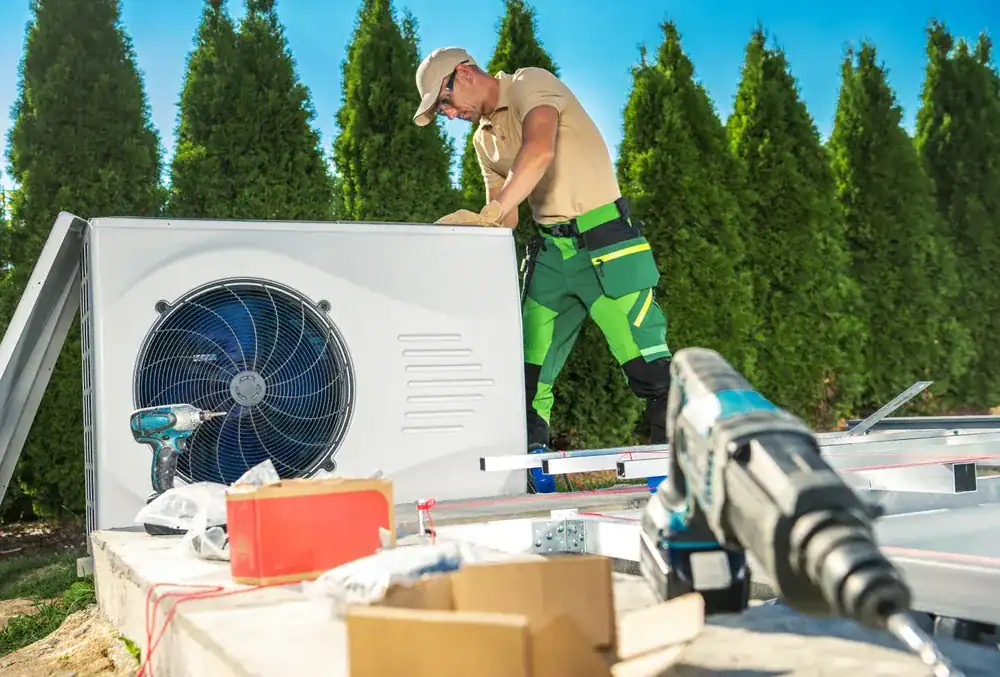
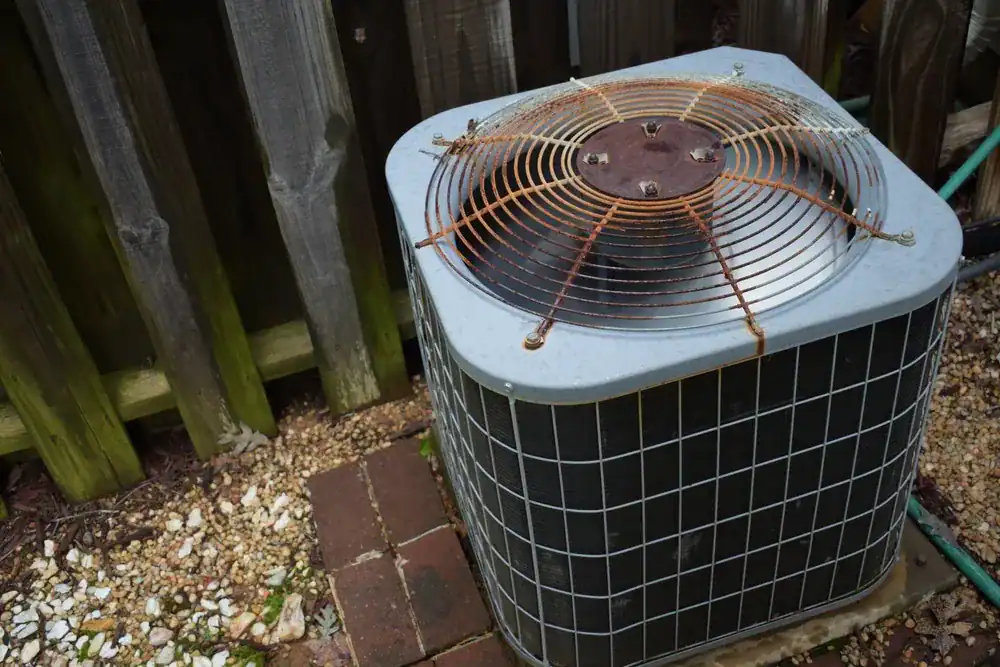
While you’re at it, go outside and take a look at your condenser unit — the large box that sits outside your home. Make sure nothing is blocking it: overgrown shrubs, a fence that’s crept too close, or debris that’s piled up around the sides. The condenser needs clear airflow to do its job. If it’s buried in vegetation or the fins are packed with dirt, the system can overheat and shut itself off as a protective measure.
Nassau County’s south shore communities — Long Beach, Oceanside, Merrick, and Massapequa — deal with an added challenge. Salt air from the Atlantic accelerates corrosion on condenser coils and aluminum fins, which means outdoor units near the water tend to degrade faster and need cleaning more often than units further inland. If you live close to the shore and your system is more than a few years old, the outdoor coil may be worth having a technician inspect even if it looks okay from the outside.
Signs That Tell You to Stop Troubleshooting and Call a Pro
There’s a point where DIY checks end and professional diagnosis begins, and it’s important to know where that line is. If you’ve checked the thermostat, reset the breaker, replaced the filter, and cleared the outdoor unit — and the system still won’t run — you’re past the quick-fix territory.
A few specific symptoms should move you to call someone immediately rather than keep investigating. If you smell something burning near your air handler or outdoor unit, that’s an electrical issue and you should turn the system off at the breaker until a technician can look at it. If you hear hissing or bubbling sounds coming from the refrigerant lines, that typically indicates a refrigerant leak — and refrigerant handling is regulated under federal law. Only EPA Section 608 certified technicians can legally purchase and work with refrigerants.
Ice forming on the refrigerant lines outside your air handler — not just inside — can point to a refrigerant problem or a more serious airflow issue than a dirty filter. A system that runs constantly but never cools the house below 80°F in July is also telling you something is wrong internally. And if you hear a loud banging or grinding noise when the system tries to start, that can indicate a failing compressor — the most expensive single component in a central AC system.
One thing worth knowing: if your system is more than 10 or 12 years old and it’s using R-22 refrigerant — sometimes labeled “Freon” on older equipment — a refrigerant leak puts you in a difficult position. R-22 production was banned in the U.S. as of January 2020. The only supply left is reclaimed refrigerant, which is expensive and increasingly scarce. Recharging an R-22 system with a leak isn’t just a temporary fix — it can cost more than the repair is worth. A technician should help you understand the full picture before you spend money on it.
Should You Repair Your AC or Replace It?
Once you know you need a professional, the next question is whether you’re looking at a repair or a full replacement. This is where a lot of homeowners feel uncertain — and where a lot of less-than-honest contractors can push you in the wrong direction.
There’s a practical framework that HVAC professionals use to think through this decision: multiply your system’s age in years by the estimated repair cost in dollars. If that number exceeds $5,000, replacement is usually the smarter financial move. A 12-year-old system needing an $800 repair hits $9,600 by that math — a clear signal to consider replacement. A 4-year-old system needing the same repair is a different story entirely.
What a Capacitor Failure vs. a Compressor Failure Actually Means for Your Wallet
Not all mechanical failures are created equal, and understanding the difference helps you have a more informed conversation with any technician you call.
A capacitor is a relatively small component that helps start and run the compressor and fan motors. Capacitor failure is one of the most common causes of a sudden AC shutdown, especially after a system has been sitting idle through spring and then gets hit with the first real heat of summer. It’s a legitimate repair — not a cheap part, but not a catastrophic one either. A system that fails because of a bad capacitor is generally worth fixing, assuming the rest of the unit is in reasonable condition.
A compressor failure is a different conversation. The compressor is the heart of the system — it circulates the refrigerant that actually moves heat out of your home. When a compressor fails on a system that’s already 10 or 15 years old, the repair cost often approaches or exceeds what a new, far more efficient system would cost.
Here’s what matters for Nassau County homeowners specifically: PSEG Long Island consistently charges some of the highest residential electricity rates in the country — around 20 to 24 cents per kilowatt-hour. Running an aging, low-efficiency system that struggles to keep up isn’t just uncomfortable — it’s expensive month after month. A modern American Standard system, for example, can reach up to 22.0 SEER2 in efficiency, compared to the 13.4 SEER2 minimum that federal law requires for new systems sold in the Northeast. That gap shows up on your PSEG bill every single month.
When a technician gives you a repair estimate, ask them to also walk you through what a replacement would look like — what it would cost, what efficiency rating you’d be getting, and how it compares to what you have now. A good technician won’t push you toward the more expensive option. They’ll give you the information you need to make the decision yourself.
Why Same-Day AC Service Matters More in Nassau County Than Almost Anywhere Else
Nassau County summers are genuinely uncomfortable without a working AC. Average July high temperatures run in the mid-80s, humidity regularly pushes above 70%, and the heat index — what it actually feels like — frequently climbs into the 90s. For households with elderly family members, young children, or anyone with a respiratory condition, a broken AC in those conditions isn’t just an inconvenience. It’s a health concern.
There’s also a practical reality that anyone who’s lived here long enough already knows: during a heat wave, HVAC companies fill their schedules fast. A company that offers same-day service in theory may not have availability by the time you call at noon. This is why who you call — and when — matters more than most people think.
Nassau County also has a specific housing stock challenge. Much of the county was built in the post-WWII era, particularly communities like Levittown, which was developed in the late 1940s and became one of the first large-scale planned suburbs in the country. Homes from that era were often retrofitted with HVAC systems decades after construction, which means ductwork, electrical capacity, and system sizing don’t always match the way they would in a purpose-built modern home. A technician who knows Nassau County’s housing stock — its quirks, its common failure points, its older ductwork — is going to diagnose your system more accurately than someone who’s never worked in this market.
We’re based in Lynbrook and have been working in homes across Nassau County for over eight years. We carry NATE certification and EPA Section 608 certification, which means our technicians are trained to diagnose problems correctly and handle refrigerant legally. We offer 24/7 emergency service — nights, weekends, and holidays — because a broken AC on a Saturday in August doesn’t wait until Monday. And when we tell you what’s wrong and what it’ll cost to fix it, that’s the number. No surprises at the invoice.
What to Do Right Now If Your AC Stopped Working
Start with the four quick checks: thermostat settings, circuit breaker, air filter, and the area around your outdoor unit. If any of those solve it, you’re done. If none of them do — or if you’re hearing strange sounds, smelling something burning, or seeing ice where it shouldn’t be — it’s time to call someone who can actually diagnose the problem.
If your system is older, ask for an honest repair-versus-replace assessment before committing to anything. The age of your system, the type of failure, and what it costs to run month after month on PSEG Long Island all factor into that decision. A technician worth calling will walk you through it without steering you toward the most expensive outcome.
Cool Bros Corp is available around the clock for Nassau County homeowners who need a straight answer and a same-day fix. Reach out and we’ll tell you exactly what you’re dealing with.