You searched for mini split installation cost because you want a real number — not a range so wide it tells you nothing, and not a sales pitch dressed up as a guide. That’s fair.
The honest answer is that mini split installation in Nassau County, NY typically falls somewhere between $3,000 and $12,000 depending on how many zones you need, what your home requires electrically, and which system you’re putting in. What actually moves that number — and what you can do to bring it down — is worth understanding before you talk to anyone. Let’s get into it.
Mini Split Cost Breakdown: What Nassau County Homeowners Actually Pay
The gap between a $3,000 quote and a $12,000 quote isn’t random. It comes down to a few concrete factors: how many indoor units (zones) you’re installing, the size of the system in BTUs, what your home’s electrical panel requires, and whether permits are included in the price.
A single-zone system — one outdoor condenser, one indoor head — typically runs $3,000 to $5,000 installed in Nassau County, NY. That covers a single room, a home addition, or a space that’s always been uncomfortable. Multi-zone systems covering two or three areas of the home typically land between $6,000 and $12,000 installed, depending on the complexity of the job.
Those are the ranges. What sits inside them depends on the details of your specific home.
Mini Split Prices: What’s Actually Included in the Quote
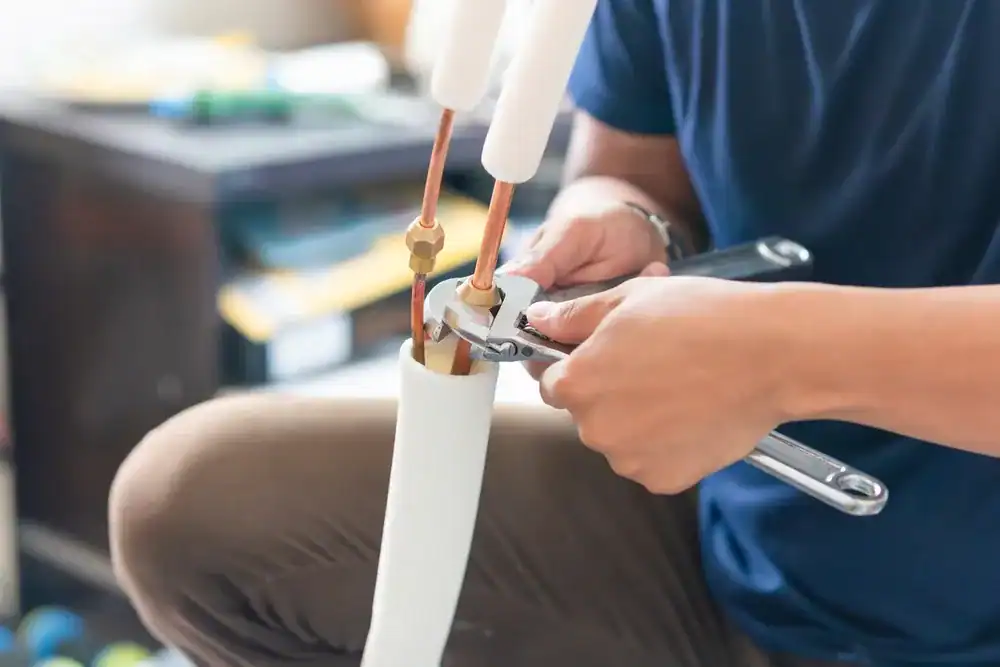
One of the most common points of confusion is the gap between the equipment price you see advertised and the total installed cost. The unit itself — the outdoor condenser and indoor air handler — is typically 50 to 70 percent of the total project cost. The rest covers labor, refrigerant line sets, electrical work, mounting hardware, permits, and any condensate drainage routing that needs to happen inside your walls.
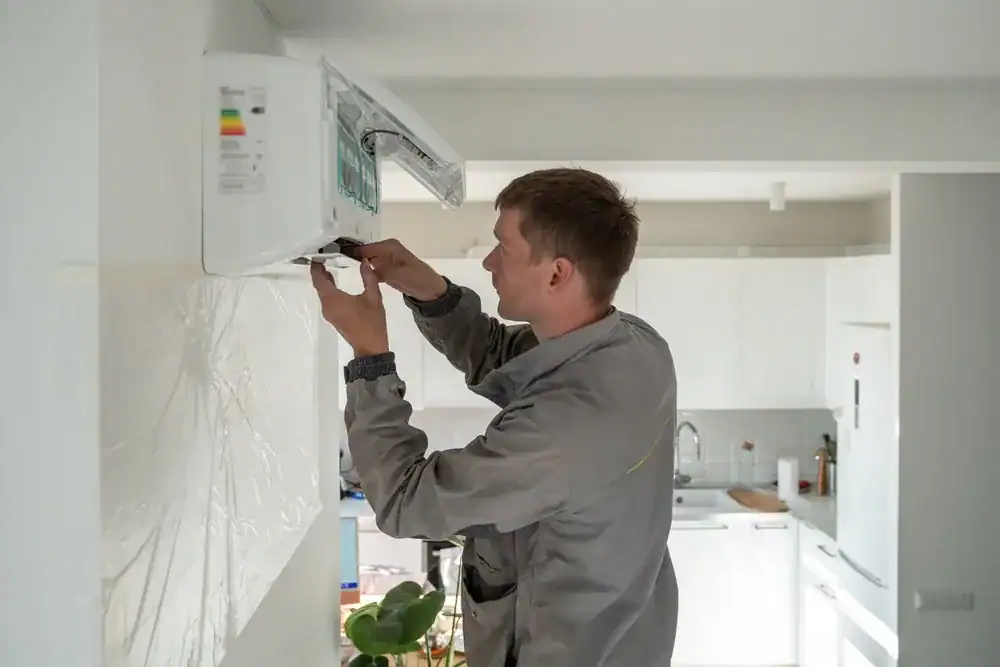
Labor alone for a standard single-zone installation runs four to eight hours for a licensed crew. If your home needs a new dedicated 240V circuit for the outdoor unit — which is common in Nassau County’s older housing stock — that adds $300 to $800 to the project. Permit fees in Nassau County municipalities typically add another $100 to $500 depending on the village.
This is why quotes from different contractors can look so different even when they’re for the same brand and same BTU size. One quote might include permits; another might not. One might factor in the electrical upgrade; another might assume your panel is already set up for it. When you’re comparing bids, the first question worth asking is: what exactly is included in this number?
There’s also the brand and efficiency tier to consider. A mid-efficiency system and a high-efficiency system serving the same room will have different equipment costs — and different long-term operating costs. Systems rated at 22.0 SEER2 and above cost more upfront but meaningfully reduce monthly bills, which matters in Nassau County where PSEG Long Island electricity rates are among the highest in the country. The payback math looks different here than it does in markets with cheaper power.
One more thing worth flagging: manufacturer authorization matters for the final price in ways buyers don’t always anticipate. If a contractor installs a Mitsubishi system without being a Mitsubishi Electric authorized installer, the manufacturer’s warranty can be voided. You’d have a system with no factory coverage. That’s a risk that doesn’t show up in the quote comparison — but it shows up later.
Nassau County Rebates and Tax Credits That Reduce Your Ductless Mini Split Cost
Most homeowners searching for mini split installation cost don’t know that a meaningful portion of it can be offset — if the contractor is set up to help you access those programs.
PSEG Long Island offers rebates on ENERGY STAR certified mini-split models when they’re installed by participating contractors. Those rebates range from $200 to $800 per unit depending on the model and its efficiency rating. On a two-zone installation, that can add up quickly. The key detail is that the contractor needs to be a participating installer — not every HVAC company in Nassau County qualifies.
On top of that, the federal Inflation Reduction Act established a tax credit of up to $2,000 for qualifying heat pump installations, which includes ductless mini-split heat pumps. This credit applies to the tax year the system is installed. Tax situations vary, so it’s worth confirming with your accountant — but for most Nassau County homeowners, this is real money on the table.
The practical implication is that a system with a sticker price that feels high can look quite different after incentives. A $7,000 two-zone installation with $800 in PSEG rebates and a $2,000 federal tax credit nets out to $4,200 out of pocket — a number that changes the comparison against window units and electric baseboard heat considerably. We help our customers navigate both the PSEG Long Island rebate process and the federal credit documentation as part of every qualifying installation.
It’s also worth noting that Nassau County’s older homes — particularly the post-war capes and split-levels in Levittown, the colonials in Jericho, and the bungalows throughout the Five Towns — were built without ductwork. Adding central air to one of these homes requires either running new ductwork (a $10,000+ project that involves opening walls and ceilings) or installing a ductless system. For most of these homes, the mini split isn’t just the more efficient option — it’s the only practical one.
Ductless Mini Split Cost vs. What You’re Comparing It Against
Before deciding whether a mini split installation cost is worth it, it helps to know what you’re actually comparing it against. For Nassau County homeowners without existing ductwork, the realistic alternatives are window units, portable ACs, electric baseboard heat, or a full central air system with new ductwork.
Window units average $150 to $500 each, but they only cool — they don’t heat, they don’t dehumidify as effectively, and they need to be removed and stored every fall. A ductless mini split heat pump handles both heating and cooling, runs more quietly, and doesn’t require seasonal removal. The total cost of ownership over a 15 to 20-year system lifespan tells a different story than the upfront number.
Does a Mini Split Actually Work as a Heating System in Nassau County Winters?
This is one of the most common questions we hear — and it’s a fair one. The assumption that mini splits are cooling-only systems is widespread, and it’s wrong.
Modern heat pump mini splits extract heat from outdoor air and move it inside, even when it’s cold outside. Mitsubishi’s H2i Hyper-Heating INVERTER technology, which we install, operates efficiently down to -13°F. Nassau County’s January lows typically run in the mid-20s°F — well within the operating range of these systems. That means a properly sized mini split can function as a primary heating source in most Nassau County homes, or as a strong supplement to an existing boiler or furnace.
This matters for the cost conversation because a system that handles both heating and cooling replaces two separate expenses. Homeowners currently running electric baseboard heat — common in Nassau County homes that were never set up for forced air — often see significant reductions in their heating bills after switching to a heat pump mini split. The DOE estimates that heat pumps use up to 50 percent less energy than electric baseboard heaters, and PSEG Long Island’s rates make that efficiency gap translate into real dollar savings on every bill.
The sizing question is also worth addressing directly. A system that’s too small won’t keep up on the hottest or coldest days. A system that’s too large will short-cycle — turning on and off too frequently — which wastes energy, fails to dehumidify properly, and accelerates wear on the equipment. The right answer is a Manual J load calculation performed before any equipment is specified. That calculation accounts for your home’s square footage, ceiling height, insulation, window count, and orientation to determine exactly what the system needs to do. We perform this on every free estimate — it’s not an upsell, it’s how proper sizing works.
How to Read a Mini Split Quote in Nassau County Without Getting Lost
If you’ve already gotten a few quotes, you’ve probably noticed they don’t look the same. Different brands, different efficiency ratings, different zone configurations, different line set lengths — and sometimes different assumptions about what your home already has in place electrically. It’s genuinely confusing, and it’s one of the most common frustrations we hear from Nassau County homeowners who are trying to make a good decision.
A few things worth looking for when you’re comparing bids. First, confirm that permits are included. In Nassau County, mechanical work on HVAC systems requires permits — and the county’s 64 incorporated villages each run their own building departments, which means the process varies by municipality. A contractor who skips permits is leaving you exposed to complications if you ever need to make an insurance claim or sell your home.
Second, ask whether the quote assumes any electrical upgrades. Each outdoor condenser requires its own dedicated 240V circuit. If your panel doesn’t have capacity, that work needs to happen — and a quote that doesn’t account for it will grow after the job starts.
Third, check the contractor’s credentials before you sign anything. In Nassau County, any home improvement contractor working on a project over $200 is required to hold a Home Improvement Contractor license from the Nassau County Office of Consumer Affairs. EPA Section 608 certification is federally required for anyone handling refrigerant. NATE certification, while voluntary, is the industry’s most recognized standard for technician competence. And manufacturer authorization — being a Mitsubishi Electric authorized installer, an Amana Certified Dealer, or an American Standard dealer — determines whether your factory warranty stays intact after the installation.
We hold all of these. COOL BROS CORP holds Nassau County HIC license H36422800, EPA-certified and NATE-certified technicians, Mitsubishi Electric authorized installer status, Amana Certified Dealer credentials, and American Standard dealer certification. We mention this not to list credentials for the sake of it, but because these are the specific things that protect you — your warranty, your permit record, and your investment — after we leave.
Getting a Mini Split Installed in Nassau County, NY: What to Do Next
Mini split installation cost in Nassau County, NY realistically ranges from $3,000 to $5,000 for a single zone and $6,000 to $12,000 for multi-zone setups — before available rebates and tax credits that can bring those numbers down meaningfully. What you actually pay depends on your home, your electrical situation, and the contractor you choose.
The most important thing you can do before committing is get a proper in-home estimate — one that includes a load calculation, accounts for your electrical panel, and gives you a clear itemized number with permits included. That’s the only way to compare quotes accurately.
If you’re in Nassau County, NY and ready to get a real number for your home, COOL BROS CORP offers free estimates on new system installations. No pressure, no surprise charges after the fact — just a clear picture of what it takes to do the job right.