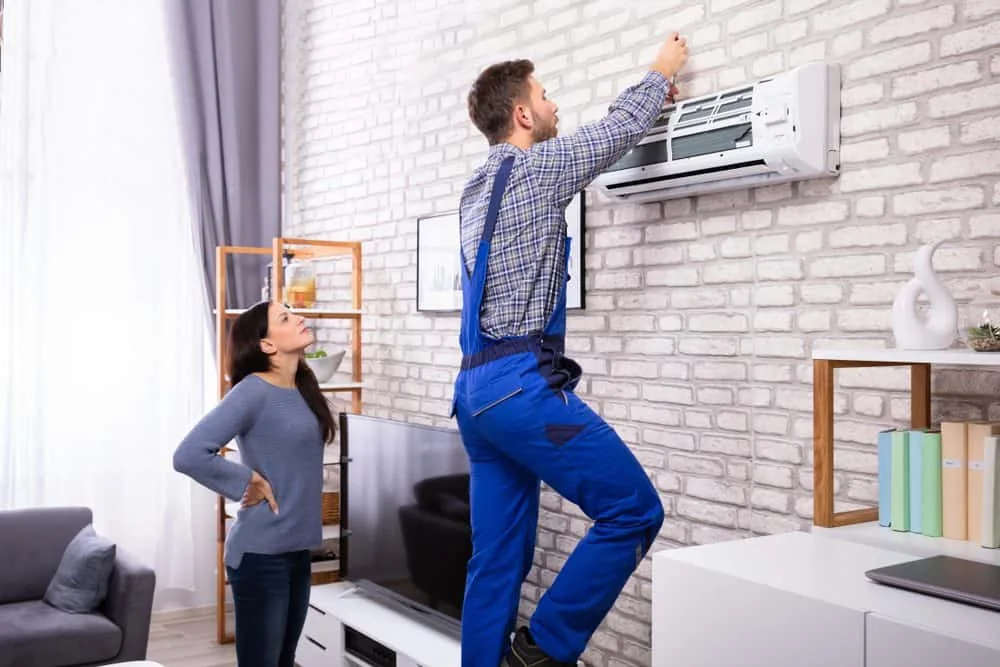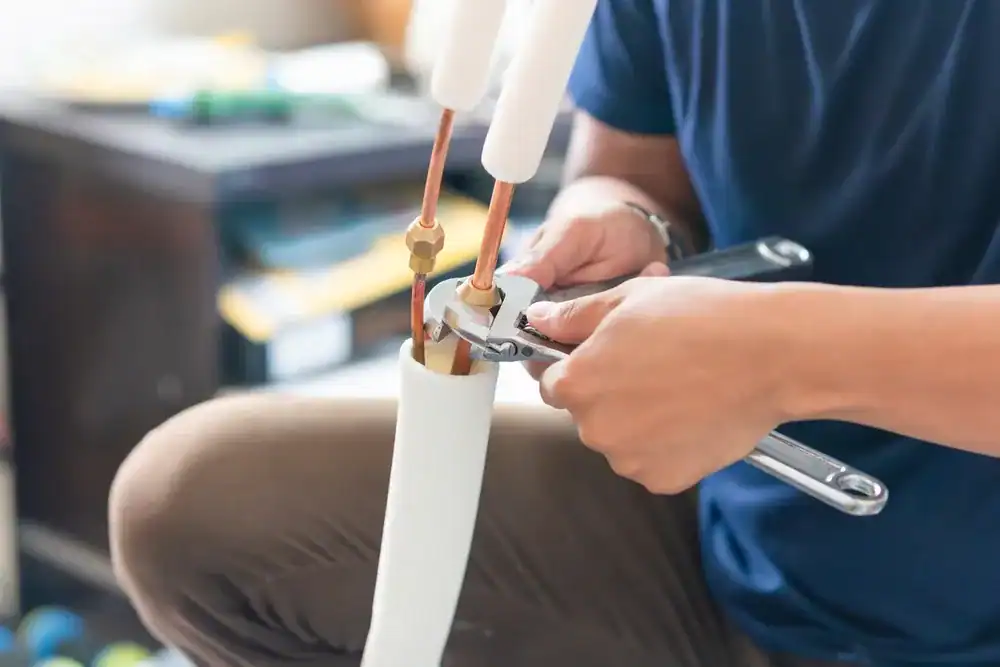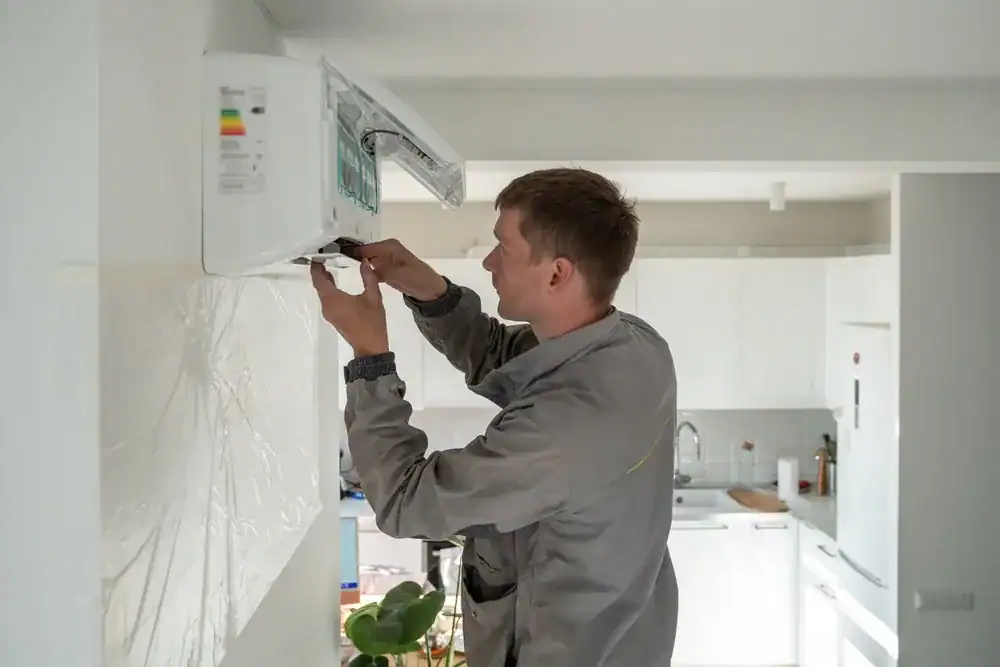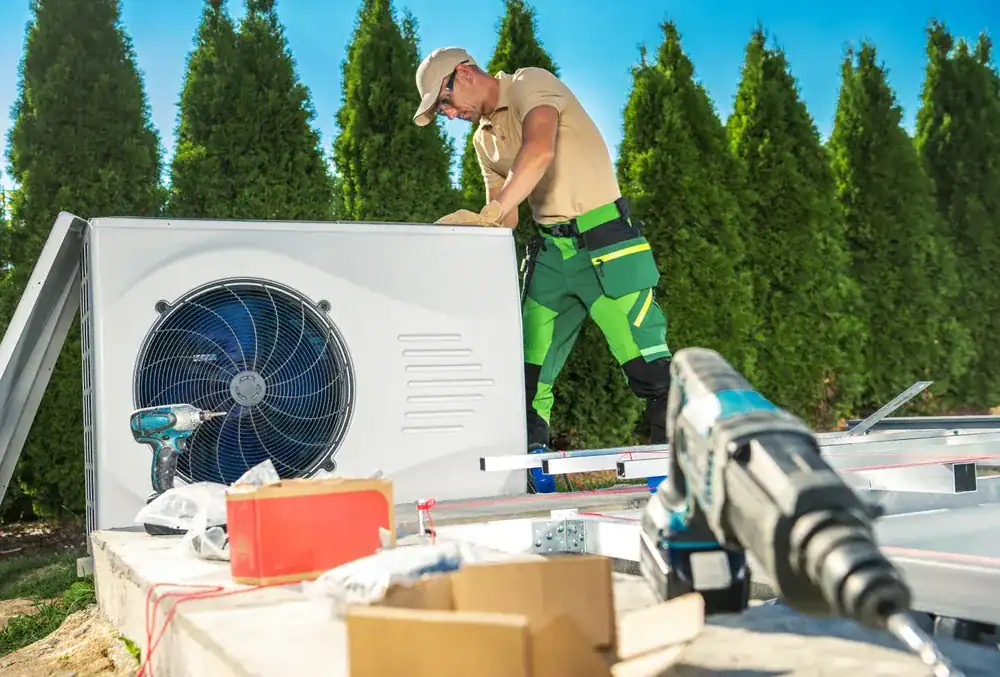
Here’s something most homeowners in Nassau County don’t know: New York State does not have a statewide HVAC license. There’s no single test, no unified standard, no state board verifying that the technician showing up at your door actually knows what they’re doing. That gap creates real risk — especially in a county where aging housing stock, salt-air corrosion, and extreme seasonal swings put serious demand on heating and cooling systems year-round.
This page breaks down what credentials actually matter, what the vetting process looks like, and what separates a contractor worth calling from one worth avoiding.
AC Repair and Installation: What Nassau County, NY Homeowners Should Know Before Hiring
The decision to repair or replace an AC system is rarely straightforward, and the contractor you hire shapes that decision more than most people realize. A technician who skips proper diagnostics — or who profits more from a full replacement than a repair — may not give you the most honest answer.
What separates a quality HVAC repair contractor isn’t the truck wrap or the number of brands they claim to carry. It’s whether they treat your specific home as the starting point. Nassau County’s housing stock is dominated by post-war ranches, split-levels, and colonials built in the 1940s through the 1960s — homes that were never designed with modern HVAC in mind.
A contractor who handles these homes well understands that retrofitting a high-efficiency system into a 1955 Levittown ranch is a different job than dropping one into new construction. The process requires real assessment, not assumptions.
Why Proper System Sizing Matters More Than the Brand Name
Research from Energy Star and the broader HVAC industry consistently finds that up to 50% of HVAC systems are improperly installed — and the most common cause isn’t faulty equipment. It’s improper sizing.
A system that’s too large for your home will short-cycle: it kicks on, cools the space down fast, and shuts off before it’s had a chance to dehumidify the air. You end up with a clammy, uncomfortable home even when the thermostat reads the right number. A system that’s too small just runs constantly, can’t keep up on the hottest days, and wears itself out years ahead of schedule.
The correct way to size any system is a Manual J load calculation — a detailed assessment that accounts for your home’s square footage, insulation levels, window count and orientation, ceiling height, and more. It’s not a square-footage estimate. It’s an actual engineering calculation. Quality contractors do this on every install. Many don’t — and homeowners rarely know to ask.
Nassau County’s climate makes this especially important. Summer afternoons here regularly push into the high 80s with dew points between 65 and 72 degrees, which means humidity is almost always a factor alongside temperature. Homes within a mile of the Atlantic or Long Island Sound face year-round salt-air corrosion that accelerates wear on coils and other components.
With climate projections showing the number of days over 90°F on Long Island increasing from roughly five per year today to potentially 15 to 24 per year by mid-century, a system that’s marginal now will be genuinely inadequate in ten years.
When we provide a free estimate on a new system, we run a Manual J load calculation as part of that process — not as an upsell, but because it’s the only honest way to recommend the right equipment. An improperly installed system can reduce efficiency by up to 30%, according to Energy Star. Over the life of a system, that’s a significant amount of money leaving your pocket through higher energy bills, more frequent repairs, and earlier replacement.
How to Read a Contractor’s Credentials Before They Arrive
Since New York doesn’t issue a statewide HVAC license, the burden falls on the homeowner to know what to look for — and most don’t. Here’s what actually matters in Nassau County.
**EPA Section 608 certification.** This is a federal requirement under the Clean Air Act. Any technician who handles refrigerants — which covers virtually every AC repair or installation job — must hold this certification. It is not optional. Without it, a technician cannot legally purchase, recover, or use refrigerants. There are different levels (Type I, II, III, and Universal), but for residential split systems and heat pumps, you want a technician with at least Type II or Universal certification. This is the absolute baseline. Any contractor who can’t confirm their technicians hold it should not be on your shortlist.
**Nassau County Home Improvement Contractor license.** Nassau County requires this license for any home improvement project over $200. It’s issued through the Nassau County Office of Consumer Affairs, and you can verify it there. This is a specific, checkable credential — not a vague claim. Ask for the license number and look it up. Our license number is H36422800.
**NATE certification.** The North American Technician Excellence certification is voluntary, but it’s the most respected independent credential in the HVAC industry. NATE-certified technicians have passed rigorous, exam-based assessments — not just manufacturer training sessions. It’s a meaningful signal of technical competence, and it’s worth asking about.
**Insurance.** New York requires residential contractors to carry a minimum of $1 million per occurrence in general liability insurance. Always ask for a certificate of insurance before work begins. We carry a $1 million liability policy and are happy to provide documentation. If a contractor hesitates to provide proof of insurance, that’s a clear red flag.
**Manufacturer dealer certification.** If a contractor is recommending a specific brand — say, American Standard or Amana — ask whether they’re a factory-authorized dealer. Installing through an unauthorized dealer can void the manufacturer warranty. We are an authorized American Standard dealer and an Amana Certified Dealer, which means our installs qualify for the full manufacturer warranty, including American Standard’s 10-Year Limited Warranty on qualifying equipment.
Heating Maintenance Services: The Part Most Nassau County, NY Homeowners Skip
Only about 30% of homeowners schedule preventative HVAC maintenance annually. The other 70% are reactive — they call when something breaks. In Nassau County, where winters bring an average of 23 inches of snow and Nor’easters can push older boilers and furnaces well past their limits, that’s a gamble with real consequences.
A heating system that hasn’t been serviced in two or three years doesn’t announce its problems in advance. It just fails — usually on the coldest night of the year, when every HVAC contractor in the county has a full schedule.
Regular maintenance doesn’t just extend equipment life. It’s what keeps a $415 tune-up from turning into a $1,200 emergency repair call.
What Heating Maintenance Services Actually Include — and Why It Matters for Long Island Winters
A proper heating maintenance visit isn’t a technician glancing at your thermostat and handing you an invoice. For a gas furnace or boiler, it should include a thorough inspection of the heat exchanger (a cracked heat exchanger is a carbon monoxide risk — faulty HVAC units contribute to more than 400 deaths annually in the U.S.), cleaning of burners and ignition components, a check of all electrical connections and controls, verification that the flue and venting system are clear, and a combustion analysis to confirm the system is burning efficiently.
For oil systems, which are still common in Nassau County’s older housing stock, it also includes nozzle and filter replacement.
For heat pumps — which are increasingly common as homeowners move away from fossil fuels — maintenance includes cleaning the coils, checking refrigerant charge, inspecting the reversing valve, and verifying defrost cycle operation. A heat pump that can’t defrost properly in a Nassau County winter will struggle to heat the home once temperatures drop below freezing.
What tends to get skipped when maintenance is deferred is the kind of incremental wear that’s invisible until it isn’t. A dirty flame sensor that causes intermittent ignition failures. A blower motor drawing slightly too much current. A heat exchanger with a hairline crack. None of these announce themselves loudly. They just get worse, season after season, until the system stops working at the worst possible time.
Nassau County’s older housing stock adds another layer of complexity. Many homes in communities like Hempstead, Long Beach, and Garden City still run on cast-iron boilers that were installed decades ago. These systems require a different kind of expertise than forced-air furnaces — and a contractor who primarily works on modern split systems may not be the right person for the job.
When we service a boiler in an older Nassau County home, we’re thinking about the specific demands that system faces: the age of the unit, the condition of the distribution pipes, the radiators, and whether the system is still operating within a safe and efficient range.
How Often Should You Schedule HVAC Maintenance in Nassau County?
The general industry standard is once a year for a heating-only system and twice a year for a combined heating and cooling setup — once in the fall before heating season and once in the spring before cooling season. For Nassau County homeowners, that cadence makes particular sense given the county’s climate demands. You’re asking your system to handle genuine summer heat and genuine winter cold, often within the same calendar year.
Systems that aren’t maintained for both seasons end up doing double duty without the preparation for either.
The timing matters too. Scheduling a heating tune-up in October — before the first cold snap — means you’re not competing with emergency calls when the temperature drops. Scheduling an AC check in April means you’re not the homeowner whose system fails on the first 90-degree day in June, waiting three days for a technician while the rest of the county is in the same boat.
Beyond the annual or semi-annual visit, there are specific situations that should prompt a call sooner. If your energy bills have climbed noticeably without a change in usage habits, that’s often a sign of declining system efficiency. If you’re noticing uneven temperatures between rooms, or if the system is cycling on and off more frequently than it used to, those are signs worth investigating before they become emergencies.
If your system is more than 10 to 15 years old, more frequent check-ins make sense — not because something is necessarily wrong, but because older systems benefit from closer monitoring as they approach the end of their typical service life.
We offer same-day service for non-emergency maintenance calls, and 24/7 emergency coverage for situations that can’t wait — nights, weekends, and holidays included. If something goes wrong with your heating system at 11 p.m. on a February Saturday, that’s a real emergency, and we treat it like one.
Finding HVAC Repair Contractors in Nassau County You Can Actually Trust
The right HVAC repair contractor isn’t the one with the most ads or the longest list of services on their website. It’s the one who shows up with verifiable credentials, does the diagnostic work before recommending a solution, and gives you a written estimate you can hold them to.
In Nassau County, that means EPA 608 certification, a Nassau County Home Improvement Contractor license, proof of insurance, and a track record of verified reviews from real homeowners in the area.
We’re a family-owned company based in Lynbrook, NY, and we’ve been doing this work in Nassau County for over eight years. Our technicians are NATE-certified and EPA-certified. We carry a $1 million liability policy, hold an A+ rating from the Better Business Bureau, and are authorized dealers for American Standard and Amana — which means the warranties on the equipment we install are actually valid.
If you’re trying to figure out whether your system needs repair, maintenance, or replacement — or if you just want to talk through what you’re seeing — reach out to COOL BROS CORP. We’ll give you a straight answer.
—
**FAQ**
**What licenses does an HVAC contractor need in Nassau County, NY?**
New York State does not issue a statewide HVAC contractor license — there’s no single credential that covers the whole state. What actually matters in Nassau County is a combination of requirements: a Nassau County Home Improvement Contractor license (required for any project over $200, issued through the Nassau County Office of Consumer Affairs), EPA Section 608 certification for any technician handling refrigerants (this is a federal requirement, not optional), and proof of general liability insurance with a minimum of $1 million per occurrence.
NATE certification is voluntary but worth asking about. If a contractor tells you they’re “licensed and insured” without being able to give you a license number you can verify through the Nassau County Office of Consumer Affairs, that’s worth pressing on.
**What is EPA Section 608 certification, and why does it matter for HVAC work?**
EPA Section 608 certification is required by federal law under the Clean Air Act. Any technician who purchases, recovers, or handles refrigerants must hold it — without it, they’re operating illegally. For most residential AC and heat pump work, you want a technician with at least Type II or Universal certification.
Refrigerant handling done improperly is both an environmental violation and a sign that a contractor is cutting corners on compliance. Always ask whether the technician coming to your home holds this certification before work begins.
**How do I know if an HVAC contractor is actually qualified to work on my Nassau County home?**
Ask for their Nassau County Home Improvement Contractor license number and verify it through the Nassau County Office of Consumer Affairs. Request a certificate of insurance before work begins. Confirm that the technicians are EPA 608 certified. Check their reviews on a third-party platform — not just the testimonials on their own website.
And ask whether they’ll perform a Manual J load calculation if you’re getting a new system installed. A contractor who can answer all of those questions clearly, without hesitation, is a contractor worth considering.
**What is a Manual J load calculation?**
It’s the engineering calculation used to properly size an HVAC system for a specific home. It accounts for square footage, insulation, window count and orientation, ceiling height, and local climate conditions — not just a rough square-footage estimate. Skipping it is one of the most common reasons HVAC systems underperform or fail early.
Up to 50% of HVAC systems are improperly installed, and improper sizing is the leading cause. If a contractor is quoting you a new system without mentioning a load calculation, ask why.
**Do HVAC contractors need to pull permits in Nassau County?**
Yes. Licensed contractors are required to pull the appropriate building permits for HVAC work in Nassau County. Unpermitted work can create complications when you sell your home and may affect your homeowner’s insurance coverage. If a contractor suggests skipping the permit to save time or money, that’s a red flag — not a convenience.