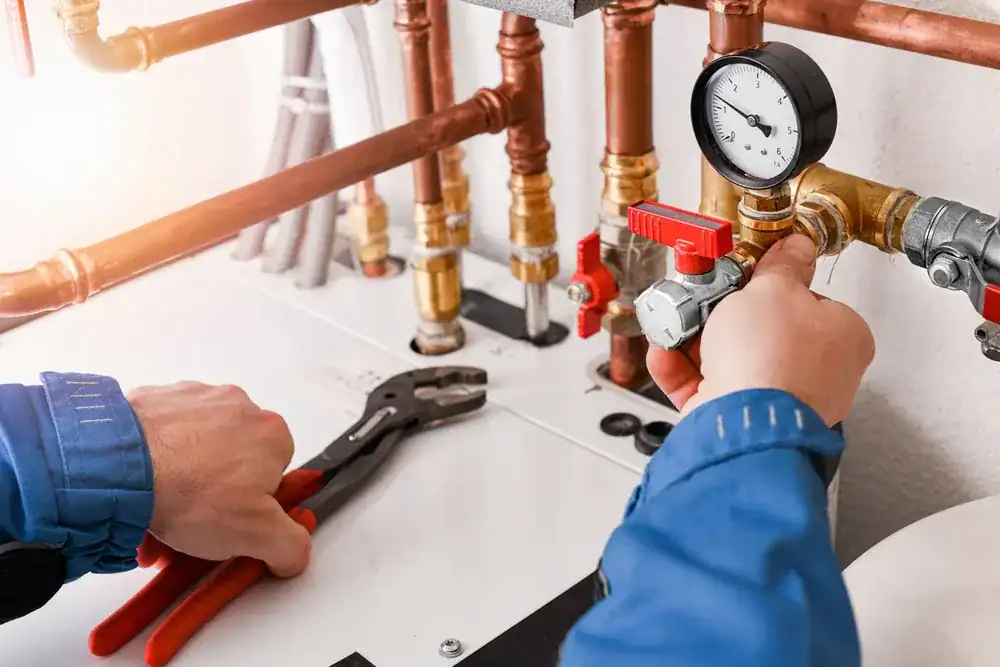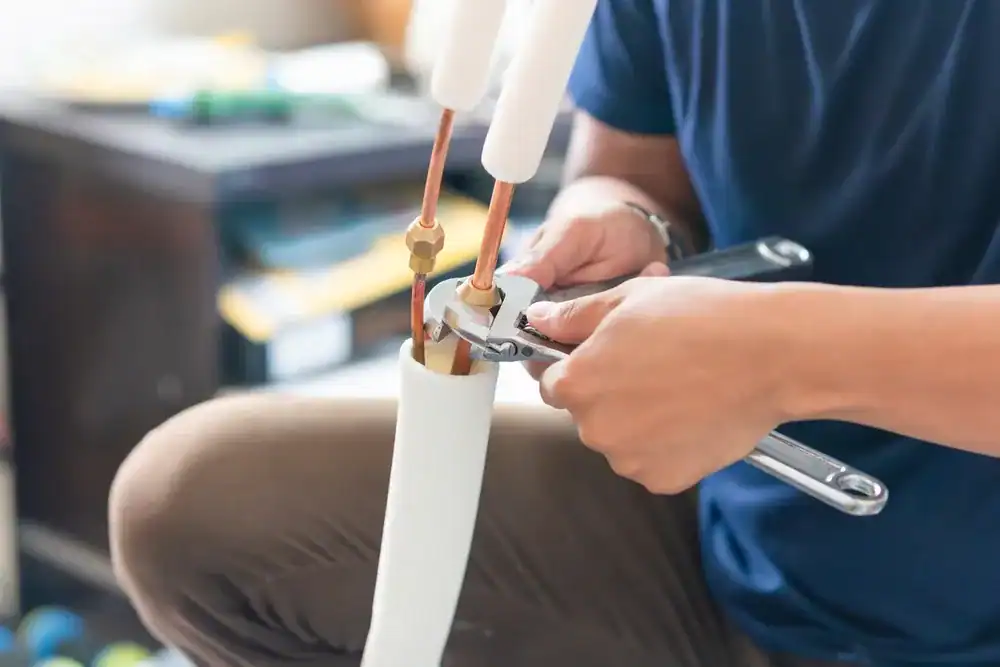
It’s 11pm. Your house is 85 degrees. The kids are sweating, the dog is panting, and your AC is running — but nothing coming out of the vents is cold. Or it’s January, the temperature outside is dropping toward the twenties, and your furnace just stopped. You search “HVAC emergency repair Nassau County” and get a wall of results, half of which are national chains and the other half are companies you’ve never heard of.
We built this page to cut through that. You’ll learn what’s likely wrong, what it costs to fix, when to repair versus replace, and what to expect when you call Cool Bros Corp. No fluff — just the information you actually need.
AC Not Working? Here’s What’s Actually Going On
When your air conditioner stops working — or keeps running but stops cooling — there are a handful of causes that cover the vast majority of emergency calls we respond to across Nassau County. A dirty or clogged air filter is the most overlooked culprit, and it’s the first thing worth checking before you call anyone. A severely restricted filter can cause the evaporator coil to freeze over, which cuts off airflow and leaves you with an AC unit blowing warm air even though the system is technically running.
If the filter is clean and the system still isn’t cooling, the next most likely causes are low refrigerant from a leak or a failed capacitor. A capacitor is a small electrical component that helps start and run your compressor and fan motors — it’s one of the most common single-component failures we see, especially in older Nassau County homes where systems have been running hard for years. A refrigerant leak is more involved, requires a licensed technician to diagnose and repair, and can cause your evaporator coil to ice up while the rest of the system keeps running.
Home AC Not Blowing Cold Air: The Three Most Common Causes
If your home AC is not blowing cold air but the system appears to be running, the problem almost always comes down to one of three things: a frozen evaporator coil, low refrigerant, or a failed compressor. Understanding which one you’re dealing with changes everything about what happens next — including what it costs.
A frozen evaporator coil is often the result of restricted airflow (that dirty filter again) or low refrigerant. When refrigerant levels drop, the coil gets too cold and ice builds up on the surface, blocking the heat exchange that actually cools your air. If you look at your indoor air handler and see frost or ice on the copper lines, that’s your sign. The fix depends on the cause — if it’s airflow, it’s relatively straightforward. If there’s a refrigerant leak, a technician needs to find it, repair it, and recharge the system.
Low refrigerant on its own is worth understanding. Your AC doesn’t “use up” refrigerant the way a car uses gas — if the level is low, there’s a leak somewhere in the system. Adding refrigerant without fixing the leak is a temporary patch, not a repair. Any technician who recharges your system without checking for a leak is not doing the job correctly. Our technicians diagnose the root cause before recommending any repair, which is the only way to make sure the same problem doesn’t show up again in three weeks.
A failed compressor is the most serious and most expensive of the three. The compressor is the heart of your air conditioning system — it pressurizes the refrigerant and drives the cooling cycle. When it fails, the system runs but produces no cooling. Compressor replacement averages around $1,200, with most repairs falling between $800 and $2,300 depending on the unit type and size. At that price point, the age of your system matters a lot — which brings us to the repair-versus-replace question we’ll cover later in this guide.
One thing worth knowing for Nassau County homeowners specifically: homes along the South Shore — Long Beach, Atlantic Beach, Lido Beach, Point Lookout — face accelerated corrosion of outdoor condenser coils from salt air. If your home is within a mile or so of the Atlantic, your outdoor unit is working in a harsher environment than a home in Garden City or East Meadow. Corrosion-related failures tend to show up earlier and more frequently in coastal communities, which is why regular maintenance matters more there — and why having a technician who knows the local conditions is worth more than a low quote from someone who doesn’t.
AC Running But Not Cooling: When to Turn It Off and Call
This is one of the most common scenarios we hear from Nassau County homeowners: the system is running, the air is moving, but the house won’t cool down. The instinct is to let it keep running and hope it catches up. In most cases, that’s the wrong call.
If your AC is running but not cooling because of a frozen evaporator coil, continuing to run the system can make things worse. Ice buildup on the coil restricts airflow further, puts additional strain on the compressor, and can eventually cause the compressor to overheat or fail — turning what might have been a $300 repair into a $1,200 one. If you notice the system is running constantly without cooling the house, or if you see ice on the refrigerant lines, turn the system off and call for emergency service.
If the issue is a refrigerant leak, running the system while it’s low on refrigerant puts stress on the compressor. The compressor is designed to operate within a specific pressure range — running it outside that range accelerates wear and shortens its life. Again, turning the system off and calling a technician is the right move.
The one exception: if the issue is simply a dirty filter and you’ve replaced it, you can turn the system back on once any ice has melted (usually a few hours with the system off and the fan running on “fan only” mode). But if you’re not sure what the cause is, the safest thing is to shut it down and get a diagnosis. A technician who can’t come out until tomorrow is not a 24/7 emergency service — we dispatch technicians for nights, weekends, and holidays, because that’s when most of these calls actually happen.
Nassau County summers are not mild. July highs regularly reach the mid-80s with dew points in the 65–72°F range, which means heat index conditions that can make indoor temperatures genuinely dangerous overnight — especially for elderly residents, young children, and pets. That’s not an exaggeration; it’s the reason emergency HVAC service exists. If the temperature in your home is climbing and you can’t cool it down, that’s a call worth making at midnight.
24/7 Emergency Heating and Cooling: What to Expect When You Call Cool Bros Corp
“24/7 emergency HVAC” means different things depending on who’s saying it. Some companies route after-hours calls to an answering service that takes a message and schedules you for the next morning. That’s not emergency service — that’s a scheduling line with a different hold message. When you call us after hours, a live person picks up and a technician is dispatched. Not a callback promise. An actual tech on the way.
Our technicians carry common parts on their trucks — capacitors, contactors, refrigerant, filters — because a diagnostic visit that ends with “we’ll have to order the part” doesn’t solve your problem tonight. First-visit resolution is the standard we hold ourselves to, and it’s one of the clearest ways to tell the difference between a company that takes emergency service seriously and one that doesn’t.
After-Hours AC Repair: What It Costs and What Drives the Price
Emergency HVAC repairs cost more than scheduled daytime service — that’s a reality worth knowing upfront. After-hours labor rates are typically 1.5 to 2 times higher than standard daytime rates, and some companies add a flat emergency service fee on top of that. In Nassau County, after-hours calls generally add $50 to $100 to the base service cost. For common repairs — a capacitor swap, a contactor replacement, a refrigerant recharge — total costs typically fall in the $150 to $500 range. Major component replacements like an evaporator coil or compressor run higher: $500 to $1,500 is the typical range for significant repairs, and air conditioner coil replacement can reach $1,900 to $3,000 depending on the system.
What drives the price? A few things. The type of repair matters most — a capacitor is a $20 part with an hour of labor; a compressor replacement is a half-day job with an expensive component. The age and brand of your system affects parts availability and cost. And the time of day, day of week, and whether it’s a holiday all affect labor rates.
What you should always know before a technician starts work is what you’re being charged. We provide upfront pricing after the diagnostic — you know what the repair costs before we touch anything. If the number doesn’t work for you, you’re not obligated to proceed. No one should be surprised by their invoice after an emergency repair, and that’s a standard we hold ourselves to on every call.
One thing worth flagging for Nassau County homeowners: if you’re getting quotes over the phone without a technician seeing your system, treat those numbers as rough estimates, not commitments. The actual cause of the problem, the condition of your equipment, and the specific parts needed can only be determined with a proper diagnostic. A technician who quotes a firm price before seeing the system is guessing — and you’re the one who pays if the guess is wrong.
New Furnace and AC Cost: When Repair Becomes the Wrong Answer
One of the most stressful moments in an HVAC emergency is when a technician tells you the repair cost is high enough that replacement starts to make sense. It’s a real conversation, and it deserves a straight answer — not a sales pitch.
The general rule of thumb is this: if the repair costs more than 50% of what a new system would cost, and your current system is 10 to 15 years old or older, replacement is usually the smarter financial decision. You’re not just paying to fix a broken part — you’re paying to extend the life of an aging system that’s likely to need another expensive repair within a few years. A new American Standard system with AccuComfort variable-speed technology and a 10-Year Limited Warranty is a different value proposition than patching a 17-year-old unit for the third time.
That said, replacement isn’t always the answer. If your system is 8 years old and the repair is a $400 coil replacement, fixing it makes complete sense. The age of the system, the nature of the repair, and how much life is realistically left in the equipment all factor into that decision. We’ll give you the honest analysis — not the one that maximizes the invoice.
HVAC coil replacement is a good example of a repair that sits in the gray zone. Nationally, evaporator coil replacement averages around $2,450, with most homeowners paying between $1,900 and $3,000 — the coil itself runs $400 to $1,900 and labor adds $150 to $600. On a newer system, that’s a reasonable repair. On a 15-year-old system, it’s worth asking whether you’re better off putting that money toward a new, more efficient unit. We offer free estimates on new systems, and we’ll walk you through both options so you can make the decision that actually makes sense for your home and your budget.
Nassau County’s older housing stock adds another layer to this conversation. A significant share of homes in communities like Levittown, East Meadow, Uniondale, and Elmont were built in the 1940s through the 1960s — and the HVAC systems in many of those homes are working around original ductwork, old electrical panels, and building constraints that weren’t designed with modern equipment in mind. Retrofitting a new system into a 1950s Levittown ranch is not the same job as installing one in a new build, and the technician doing that work needs to understand old-construction realities. That’s the kind of local experience that matters and that eight-plus years of working specifically in Nassau County homes gives us.
Best Heating and Air Company in Nassau County: How to Know You’re Calling the Right One
When your HVAC system fails, you’re not in a position to spend three hours researching companies. You need to know quickly whether the company you’re calling is legitimate, local, and actually available tonight. The signals worth looking for: a verified local address, a high volume of recent reviews from real Nassau County homeowners, BBB accreditation, and technicians who are licensed, EPA-certified, and background-checked.
Cool Bros Corp is based at 608 Merrick Rd in Lynbrook — the center of Nassau County’s South Shore. We have 142+ verified five-star reviews, an A+ rating from the BBB, and factory-trained technicians who carry the parts to fix most problems on the first visit. We offer 24/7 emergency service including nights, weekends, and holidays, with upfront pricing before any work begins and financing available through Wells Fargo and Synchrony for larger repairs or replacements.
If your system is down and you need same-day air conditioning repair or emergency heating repair tonight, give us a call or send a text. We’ll tell you exactly what’s wrong, what it costs to fix, and what your options are — and then we’ll get to work.