You found a national average somewhere — maybe $7,500 for a combined furnace and AC replacement — and then a local contractor quoted you something closer to $14,000. Now you’re wondering if someone’s trying to take advantage of you.
They probably aren’t. Nassau County, NY is just a more expensive market to operate in, and the homes here are more complicated to work in than the ones those national averages are built around. The number you saw online isn’t wrong — it’s just not yours.
Here’s what the real cost picture looks like for Nassau County homeowners, why it lands where it does, and how to make a confident decision without second-guessing every quote you get.
New Furnace and AC Cost in Nassau County, NY: What the Numbers Actually Look Like
Nationally, replacing both a furnace and central air conditioner at the same time runs roughly $5,000 to $12,500, with an average around $7,500. In Nassau County, NY, the realistic budget for a standard residential replacement is $10,000 to $20,000 or more — sometimes significantly more depending on your home, your equipment choices, and what your existing ductwork looks like.
That gap isn’t padding. It reflects higher local labor rates ($75 to $150 per hour is typical in this market), the complexity of working in homes that were largely built between the 1940s and 1970s, and the cost of pulling the permits Nassau County requires for new system installations. If you’re comparing a quote from us to a number you found on a national home improvement site, you’re comparing two different things.
Our crews work in everything from original Levittown capes in Uniondale to split-levels in Garden City, and the ductwork configurations in those homes weren’t designed for modern equipment. That complexity is real, and it’s reflected in what the work actually costs.
Air Conditioner Coil Replacement: When It’s Not a Full System Decision
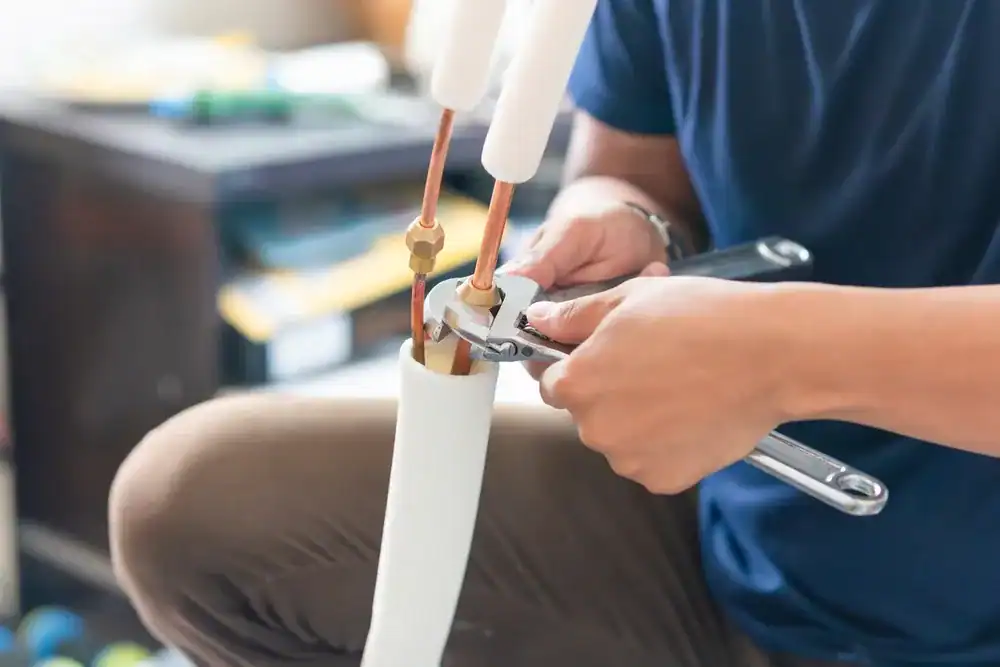
Sometimes the conversation isn’t about replacing the whole system — it’s about the evaporator coil. You’ve been told the coil is failing, and now you’re trying to figure out whether to replace just that component or go ahead and replace the entire AC unit.
It’s a legitimate crossroads, and the math isn’t always obvious. Nationally, evaporator coil replacement averages around $2,450, with a typical range of $1,900 to $3,000 for systems still under warranty. Out-of-warranty coil replacements can run $2,500 to $4,500 or more — and in Nassau County, NY, where labor rates sit at the higher end, you should expect to land toward the top of those ranges.
Here’s where it gets important: if your AC system is already 12 to 15 years old, replacing just the coil means you’re putting $3,000 or more into a system that may need full replacement within the next few years anyway. The coil is also a compatibility issue — older systems running R-22 refrigerant (which is no longer manufactured) can’t simply be retrofitted with a new coil designed for modern refrigerants. If your system is old enough to have that problem, coil replacement is often a short-term fix that delays an inevitable decision.
On the other hand, if your system is under 10 years old and otherwise in good shape, a coil replacement can absolutely make sense. Ask directly: what’s the age of the system, what refrigerant does it use, and is the coil the only issue? Those three questions will tell you most of what you need to know.
HVAC Coil Replacement Cost vs. Full System Replacement: How to Decide
The industry has a rough rule of thumb for repair-versus-replace decisions: multiply the repair cost by the age of the system. If the result exceeds $5,000, replacement tends to make more financial sense than repair. It’s not a perfect formula, but it gives you a starting framework when you’re staring at a quote and trying to figure out if you’re being pushed toward something you don’t need.
For coil replacement specifically, the calculation gets more nuanced in Nassau County, NY’s housing market. A lot of homes here — particularly in Uniondale, Westbury, and Garden City — were built with ductwork configurations that weren’t designed for modern high-efficiency systems. If your ducts are already undersized or leaky, replacing just the coil while leaving the rest of the system in place means you’re still losing 30 to 50 percent of your system’s efficiency through duct losses. That’s a real cost that doesn’t show up on the repair invoice but shows up on your energy bill every month.
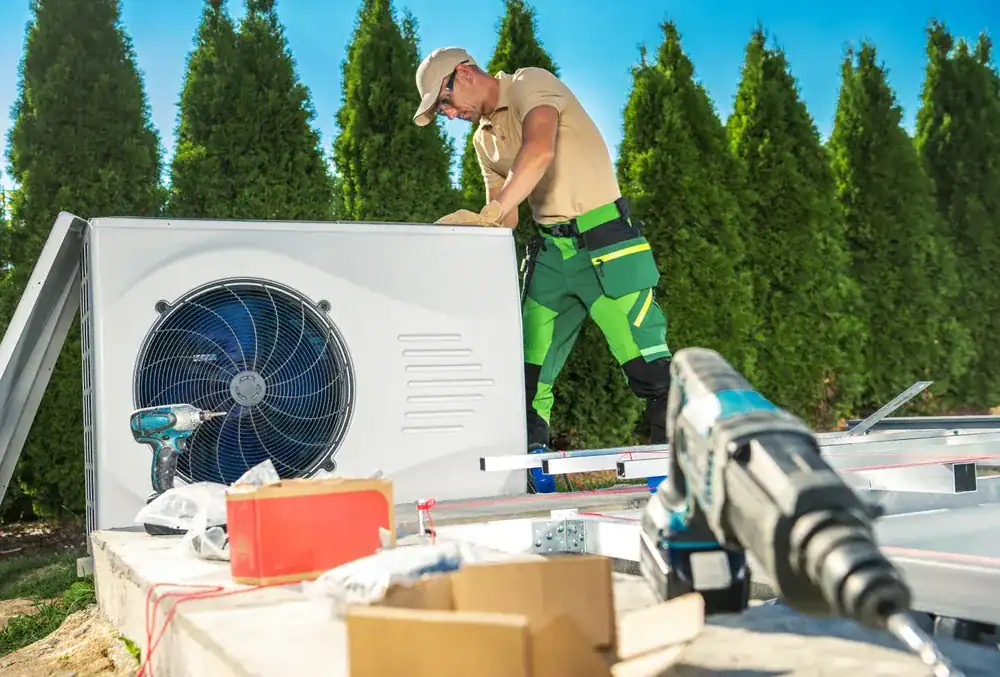
There’s also the coastal factor. Nassau County’s proximity to the Atlantic Ocean and Long Island Sound means outdoor HVAC components are exposed to salt air and higher humidity year-round. That accelerates corrosion on outdoor units in ways that inland markets don’t experience. A system that might last 18 to 20 years in a drier, inland climate may show meaningful wear at 12 to 15 years here.
When we assess a coil replacement situation, we’re looking at the full picture — refrigerant type, system age, duct condition, outdoor unit condition — before we give you a recommendation. That’s the only way the recommendation is actually useful to you.
Should You Replace Your Furnace and AC at the Same Time?
This is the question we hear most often from Nassau County, NY homeowners who’ve had one system fail. The AC dies in July, or the furnace gives out in January, and suddenly you’re wondering whether to replace just the broken unit or whether it makes more sense to do both at once.
The honest answer is: it depends on the age and condition of the system that’s still running. But there are some clear signals that point toward doing both at once — and understanding them can save you from making a decision you’ll regret in two or three years.
When Replacing Both at Once Actually Saves You Money
The most straightforward argument for replacing both systems simultaneously is labor cost. When our crew is already at your home to install a new furnace, the incremental labor to also replace the AC unit is significantly lower than scheduling a second full installation visit. The savings on combined labor alone can run $1,500 or more compared to two separate replacements done a year or two apart.
Beyond labor, there’s the refrigerant compatibility issue. Systems manufactured before 2010 often used R-22 refrigerant, which is no longer produced and has become extremely expensive to source. If your AC is old enough to use R-22 and your furnace is in similar shape, keeping the AC running on borrowed time means you’re one refrigerant leak away from an emergency replacement — at emergency pricing, with emergency scheduling. Doing it on your timeline, before something fails, is almost always cheaper than doing it under pressure.
There’s also the efficiency argument. A new high-efficiency furnace paired with an older, lower-SEER AC unit creates a mismatched system. The two components don’t communicate as effectively, which reduces the efficiency gains you’d otherwise get from the new furnace. Matching a new furnace with a new AC — particularly a variable-speed system — lets both units operate as a coordinated system rather than two independent pieces of equipment doing their best to work together.
For Nassau County, NY homeowners specifically, the dual-season load matters here more than in many other markets. Your AC runs hard from May through September, and your heating system runs hard from November through March. That’s a heavy annual cycle that wears systems down faster than the national averages suggest. If one system is already at or past the 15-year mark, the other is probably not far behind.
When Replacing Just One System Is the Right Call
Not every situation calls for a full replacement of both systems. If your furnace is 8 years old and in good condition and your AC fails, replacing only the AC is often the right financial decision — especially if the furnace is still under its original manufacturer warranty and hasn’t shown any signs of trouble.
The key variables are age, condition, and refrigerant compatibility. A furnace that’s 10 years old or younger, well-maintained, and running efficiently is not a candidate for premature replacement just because the AC gave out.
Where this gets more complicated is when the surviving system is in the 12-to-15-year range and you’re not sure of its maintenance history. In that case, it’s worth having a technician evaluate it honestly before you decide. If the furnace has a heat exchanger showing early signs of cracking, or if the AC coil is already showing corrosion consistent with coastal exposure, those are meaningful factors in the decision.
What we try to do in those conversations is give you a clear framework rather than a sales pitch. Here’s what the system looks like today. Here’s what we’d expect over the next five years. Here’s what replacing both now would cost versus replacing one now and one later. You make the call with real information in front of you, not pressure.
Nassau County, NY homeowners have options, and the right answer is different for every house. A 1950s Levittown cape with original ductwork has a different calculation than a 1990s colonial in Plainview with a newer mechanical room. We’ve worked in both, and the advice we give reflects the actual home — not a one-size-fits-all recommendation.
Getting a Straight Answer on HVAC Replacement Cost in Nassau County, NY
The short version: furnace and air conditioner replacement in Nassau County, NY costs more than the national numbers suggest, and the reasons for that are real — older homes, coastal conditions, local labor rates, and permit requirements that don’t exist in simpler markets. A quote in the $10,000 to $20,000 range for a full combined replacement isn’t a red flag. It’s what honest, complete work actually costs here.
What is a red flag is a quote that’s dramatically lower than everything else you’ve received, with no line items for permits, refrigerant recovery, or ductwork assessment. Low quotes that omit those details aren’t bargains — they’re setups for surprises later.
If you’re trying to figure out what your specific situation looks like — whether that’s a full replacement, a coil repair decision, or a replace-one-or-both question — we offer free estimates on new systems. No charge to get a real number, no pressure to decide on the spot. Call us, tell us what’s happening, and we’ll come take a look.