Every October, Nassau County homeowners flip on their heat for the first time since spring — and that’s when the surprises show up. A burning smell. A strange noise. A system that runs but doesn’t quite heat the way it used to. By then, every HVAC company in the county is fielding no-heat calls, and appointment wait times stretch from days into weeks.
The good news is that most of those surprises are preventable. A furnace tune-up done in September — before the rush, before the cold snap, before the Nor’easters roll in — is the single most effective thing you can do to protect your home’s heating system. Here’s what it actually involves, and why it matters more than you might think.
What a Furnace Tune-Up Actually Includes
A lot of homeowners picture a tune-up as a quick filter swap and a visual once-over. The reality is quite different. A proper furnace tune-up is a comprehensive inspection that covers the components your furnace relies on to run safely and efficiently — many of which you’d never check yourself, and some of which require calibrated diagnostic tools to evaluate at all.
The goal isn’t just to make sure the furnace turns on. It’s to verify that it’s burning cleanly, cycling correctly, moving air efficiently, and — most importantly — not producing carbon monoxide that could enter your living space. That last point tends to get buried in the checklist, but it’s the one that matters most.
What Gets Checked During a Furnace Tune-Up
When our NATE-certified technicians perform a furnace tune-up, we work through a systematic inspection that covers the entire system — not just the parts that are easy to reach. That means checking the heat exchanger for cracks, which is the most critical safety step in the entire process. A cracked heat exchanger allows combustion gases, including carbon monoxide, to mix with the air circulating through your home. CO is colorless and odorless. There are no symptoms until someone is already affected. It’s the kind of failure that a filter change will never catch.
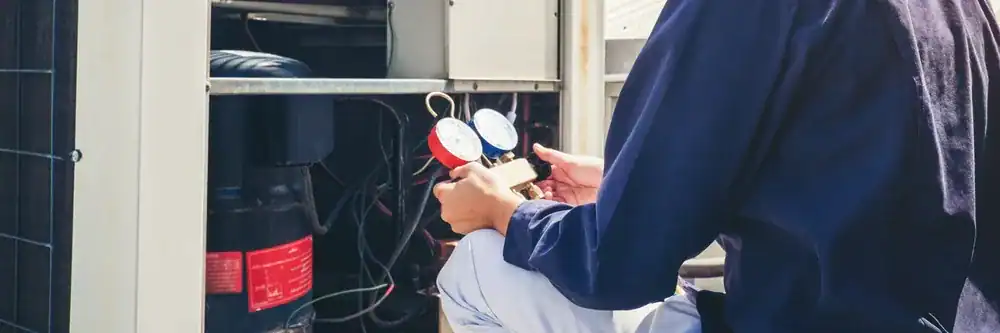
Beyond that, we inspect and clean the burners, test the ignition system, and verify gas pressure using proper diagnostic tools. We check all of the furnace’s safety limits and controls, inspect and clean the blower motor, and test electrical connections for voltage and tightness. The flue pipe gets checked for proper draft, the thermostat gets calibrated, and the system is cycled to confirm it’s starting, running, and shutting off the way it should.
The whole process takes roughly an hour to an hour and a half when done thoroughly. If a technician is in and out in 20 minutes, that’s not a tune-up — that’s a sales call looking for upsell opportunities. There’s a meaningful difference between the two, and it’s worth knowing before you schedule with anyone.
One more thing worth mentioning: if your furnace is newer and still under a manufacturer’s warranty, that warranty often requires documented annual professional maintenance. Skipping the tune-up doesn’t just risk a breakdown — it can void the coverage you’re counting on if something does go wrong.
Signs Your Furnace Needs Service Before Winter
Some furnaces give you warning signs. Others just stop working one January morning without any advance notice. That’s what makes the “my system is running fine” logic so risky — a furnace can appear to be functioning normally while quietly losing efficiency, wearing out key components, or developing a crack in the heat exchanger that won’t announce itself until it causes a problem.
If your heating bills have been creeping up without any obvious change in how much heat you’re using, that’s a red flag. An unmaintained furnace can use 20 to 30 percent more energy than one that’s been properly serviced — and that difference shows up on your National Grid or oil bill every month through the winter. If you’re noticing uneven heating from room to room, short cycling where the system turns on and off more frequently than it should, or unusual sounds like banging, rattling, or a persistent burning smell when the heat kicks on, those are all reasons to have someone take a look before the season starts.
Age is also a factor. A well-maintained furnace can last 15 to 20 years. One that’s been regularly skipped over tends to give out much sooner — closer to 8 to 10 years. If your system is pushing 12 or 15 years old and hasn’t been serviced in a while, you’re not just risking a breakdown. You’re risking an emergency breakdown in February, when technician availability is at its tightest and the stress on your system is at its highest.
Nassau County’s housing stock makes this especially relevant. A large share of homes here were built in the 1940s, 50s, and 60s — and many of them are running furnaces or boilers that were retrofitted into homes never designed for forced-air systems. Older equipment in older homes requires more attention, not less.
Furnace Repair vs. Heating Repair: Knowing When a Tune-Up Isn’t Enough
A tune-up is preventive. It’s designed to catch problems before they become failures. But sometimes you schedule service and our technician finds something that’s already gone wrong — or you’ve skipped the tune-up long enough that the system isn’t just due for maintenance, it actually needs repair.
Understanding the difference between routine maintenance and a furnace or heating repair helps you go into any service call with clear expectations. It also helps you make better decisions when a technician tells you what they’ve found.
When Furnace Repair Becomes Necessary
The most common furnace repairs we see in Nassau County homes follow a predictable pattern: a system that was never serviced, or that went several seasons without a tune-up, reaches a point where something fails. The igniter burns out. The heat exchanger cracks. The blower motor seizes. A gas valve stops responding. These aren’t random failures — they’re the predictable end result of components that were never inspected, cleaned, or tested while they still had time to be addressed.
The cost difference is significant. A professional tune-up runs $100 to $200. A furnace repair, depending on what’s failed, typically runs $450 or more — and complex gas heating system repairs can reach $375 to $1,200 or higher. That math isn’t complicated. The tune-up is the cheaper option by a wide margin, and it’s the one that gives you control over the timing. A repair happens on the furnace’s schedule, not yours — usually on the coldest night of the year, when you have the least leverage and the fewest options.
When a furnace breaks down mid-winter in Nassau County, you’re not just dealing with the repair cost. You’re dealing with the possibility of emergency service rates, a multi-day wait while we work through our backlog, and in the meantime, a home that’s dropping to 50 degrees with no heat. For families with young children, elderly relatives, or anyone with health conditions that make cold exposure risky, that’s not a minor inconvenience. It’s a serious problem.
The September scheduling window exists precisely because it’s the last calm period before all of that becomes the reality. Book a tune-up now, and you’re making a deliberate choice. Wait until December, and you’re reacting to whatever the furnace decides to do.
HVAC Service and Repair for Nassau County’s Mix of Heating Systems
Nassau County isn’t a one-system market. Drive through Levittown and you’ll find post-war ranches running gas furnaces. Head into Garden City or Hempstead and you’re looking at pre-war colonials and Tudors that have been heating with steam or hot-water boilers for decades. Plenty of homes across the county still run on oil — Nassau has historically high rates of oil-heated homes compared to most of the country, and while natural gas conversion has been ongoing, oil systems remain common throughout the area.
This matters because a furnace tune-up for a gas forced-air system and a boiler service for a cast-iron steam system are not the same thing. They involve different components, different failure patterns, and different diagnostic steps. A technician who only knows gas furnaces isn’t fully equipped to service the range of heating equipment that actually exists in Nassau County homes.
We service all of it — gas furnaces, oil furnaces, steam boilers, hot-water boilers, heat pumps, and ductless mini-splits. If you’re not sure what type of heating system you have, that’s fine. We’ll figure it out when we arrive. What matters is that the technician who shows up has the training and experience to handle whatever they find, not just the most common system type.
Our technicians are NATE-certified and EPA-certified, which means they’ve passed rigorous specialty exams and meet the federal standards required to work on heating equipment. They’re background-checked, factory-trained, and based right here in Lynbrook — not dispatched from a regional call center two counties away. When we say we know Nassau County’s homes, we mean it in the most literal sense. We’ve been working in them for over eight years.
Schedule Your Nassau County Furnace Tune-Up Before the Rush Starts
The window between now and the first hard freeze is shorter than it feels. Once October arrives and temperatures start dropping, HVAC companies across Nassau County shift into emergency mode — and routine tune-up appointments get pushed back as no-heat calls take priority. September is when you have the most options and the shortest wait times.
A furnace tune-up isn’t about fixing something that’s broken. It’s about making sure nothing breaks when you need your heat most. It’s about knowing your heat exchanger is intact, your burners are clean, your system is running efficiently, and your family isn’t relying on a furnace that’s one cold snap away from failing.
If you’re ready to get ahead of it this year, COOL BROS CORP is taking appointments now. Transparent pricing, no surprise quotes, and technicians who will tell you exactly what they find — nothing more, nothing less.