If you’ve been on the fence about heat pumps, you’ve probably heard conflicting things. A neighbor swears by theirs. A contractor told you they “don’t really work” once it gets cold. Someone online mentioned an $11,000 rebate. It’s a lot to sort through, especially when winter is a few weeks away and you just want to know if this is actually worth it.
The short answer is yes — modern cold-climate heat pumps work well in Nassau County winters. But the longer answer matters more, because it tells you what to look for, what to do before the season starts, and why fall is the right time to act.
Heat and Air Repair Myths That Are Costing Nassau County Homeowners Money
The biggest obstacle to heat pump adoption across Nassau County isn’t the technology — it’s a reputation built on systems that haven’t been manufactured in decades. The heat pumps people remember from the 1980s genuinely struggled once temperatures dropped below freezing. That’s not what’s being installed today.
Modern cold-climate systems maintain full heating capacity down to -15°F. Nassau County’s average January low sits around 23 to 24 degrees. That’s not even close to the edge of what these systems handle. You’re not pushing the limits — you’re operating well within them, even on the coldest nights the island typically sees.
What Heating and Air Contractors Should Tell You About Cold-Weather Performance
Here’s something worth knowing: not every HVAC contractor keeps up with how much cold-climate heat pump technology has changed. Some are still quoting performance numbers from systems that predate the current generation entirely. If a contractor tells you a heat pump “can’t keep up” in a Long Island winter without referencing specific equipment ratings or the NEEP Cold Climate database, that’s a signal to ask more questions.
The Northeast Energy Efficiency Partnerships — NEEP — maintains an independently verified list of cold-climate air source heat pumps tested and confirmed for Northeast winters. The systems we install are on that list. That’s not a marketing claim; it’s a verifiable fact you can look up. When evaluating any heat pump installer, asking whether the equipment they recommend is NEEP-listed is one of the most useful questions you can ask.
There’s also a common misconception about what happens when the outdoor unit runs in winter. If you’ve ever seen steam rising off a heat pump on a cold morning and assumed something was wrong, it wasn’t. That’s the defrost cycle — a normal, designed function that briefly reverses the system to clear frost buildup from the outdoor coil. It lasts a few minutes, happens automatically, and means the system is working exactly as it should.
One more thing worth addressing: the fear that your electric bill will spike. Heat pumps don’t generate heat the way a baseboard heater does — they move heat from outside air into your home, which takes far less energy than creating it from scratch. A high-efficiency system like the American Standard units we carry, reaching up to 22.0 SEER2, uses significantly less electricity than resistance heating. Whether your total energy costs go down depends on your current setup and local rates, but the efficiency gap between a modern heat pump and older electric heat is substantial.
Does Nassau County’s Housing Stock Affect Heat Pump Installation?
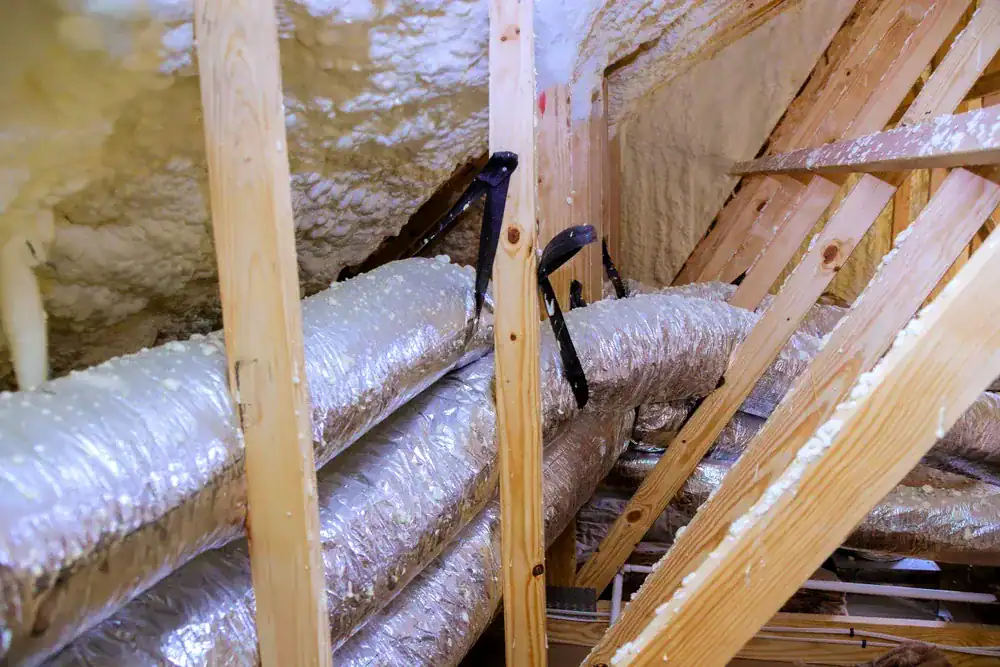
Nassau County has some of the oldest housing stock on Long Island. Homes in Levittown, Lynbrook, Hempstead, and surrounding communities built in the 1940s through 1960s were constructed before central air conditioning was standard. That matters for heat pump installation because the ductwork in those homes, if it exists at all, was often designed for heating only and may not be sized or sealed for a modern ducted system.
That doesn’t mean heat pumps are off the table. It means the assessment step matters more than it does in a newer home. A proper installation starts with understanding what you’re working with — the existing ductwork, insulation levels, square footage, and window area — before anyone recommends a system size. Skipping that step and sizing by rough estimate is how you end up with a system that short-cycles in summer or struggles to maintain temperature in February.
For homes without usable ductwork, ductless mini-split heat pumps are a strong alternative. They don’t require ducts, allow room-by-room temperature control, and are available in the same cold-climate configurations as ducted systems. We install both, and the right choice depends on your home’s layout and what you’re trying to accomplish.
One local factor that often goes unmentioned: if you’re in a South Shore community — Long Beach, Oceanside, Baldwin, Rockville Centre — salt air from the Atlantic accelerates corrosion on outdoor HVAC equipment. It’s not a dealbreaker, but it does affect which coil coatings and materials make sense, and it means the maintenance schedule for your outdoor unit should account for that exposure. A contractor who doesn’t know the difference between a home in Garden City and one two blocks from the water isn’t giving you the full picture.
Heat and Air Conditioning Repair vs. Replacement: What Fall Is Really For
Fall isn’t just about getting your system looked at before it gets cold. It’s the window where decisions made now determine how your winter actually goes — whether you’re comfortable, whether your system runs efficiently, and whether you end up calling for emergency service in January.
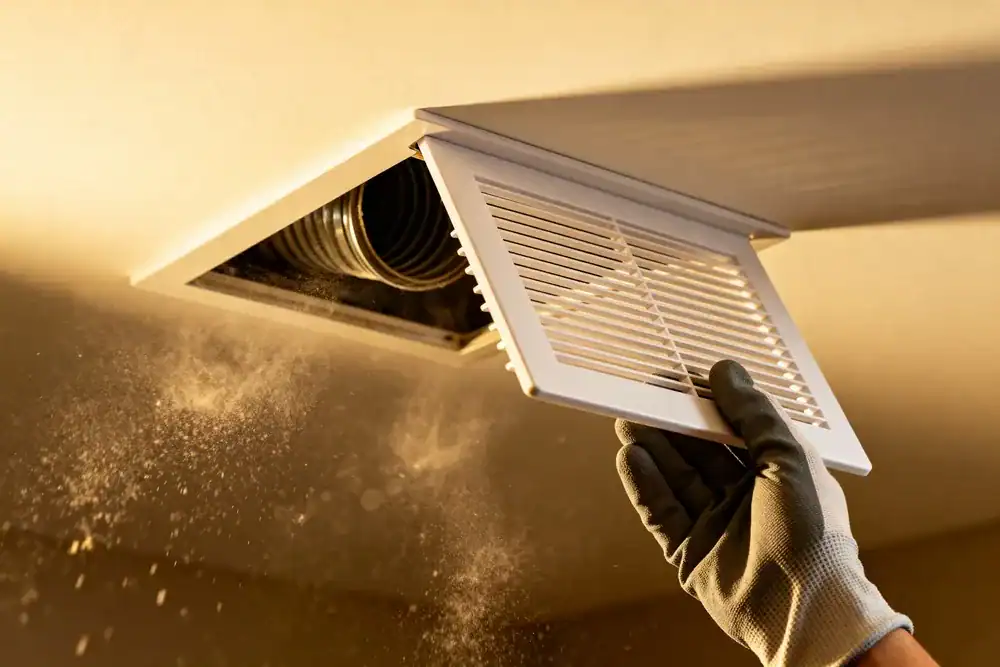
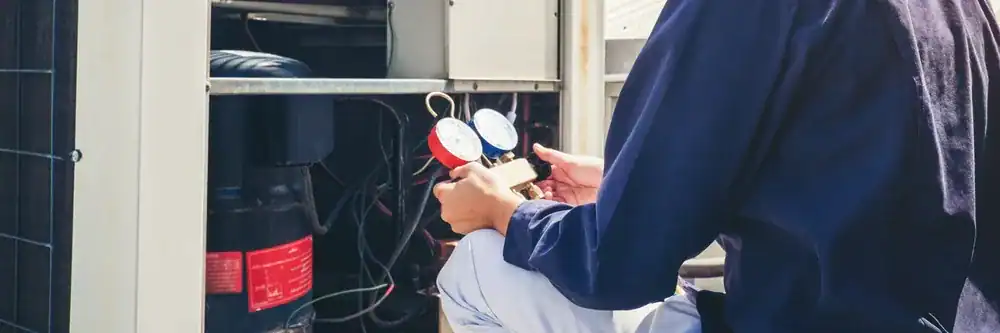
If you already have a heat pump, a fall inspection covers the things that tend to fail under heating load: refrigerant charge, coil condition, electrical connections, thermostat calibration, and airflow. Catching a low refrigerant charge in October costs a fraction of what an emergency heat and air conditioning repair call costs on a February weekend.
When Is the Right Time to Replace Instead of Repair?
This is the question most homeowners avoid asking until the system forces the issue. The honest answer depends on a few things: how old the system is, what’s failing, and what it would cost to repair versus what a replacement would save you over the next five to ten years.
As a general benchmark, if a heat pump is over 12 to 15 years old and you’re looking at a repair that costs more than a third of what a new system would cost, replacement usually makes more financial sense. That math changes dramatically when you factor in the incentives currently available to Nassau County homeowners.
PSEG Long Island offers rebates up to $11,000 for qualifying whole-house heat pump systems. New York State’s Clean Heat program through NYSERDA adds additional incentives on top of that. The federal Inflation Reduction Act Section 25C credit provides up to $2,000 for qualifying heat pump installations. These three sources can be stacked — meaning a homeowner who qualifies for all three isn’t paying the sticker price. Most people we talk to aren’t aware that the incentives can be combined, and that changes the conversation about what a replacement actually costs.
Fall is the optimal window to move on this. Installation lead times stretch in November and December when demand spikes. Homeowners who schedule in September or October get preferred availability, avoid the rush, and have their system running before the first real cold snap. Waiting until December to start researching means making a rushed decision under pressure — which is rarely how you end up with the right system at the right price.
What to Look for in a Heat Pump Installer in Nassau County
The installer matters as much as the equipment. A high-efficiency system installed poorly will underperform. A properly sized, correctly commissioned system from a reputable brand will run the way it’s supposed to for years. The difference usually comes down to a few things that are worth verifying before you sign anything.
First, licensing and EPA certification. New York State requires HVAC contractors to hold an active Home Improvement Contractor license for residential work. EPA 608 certification is federally required for any technician who handles refrigerants. These aren’t optional credentials — they’re the baseline. Any contractor who can’t confirm both isn’t operating legally.
Second, factory training. Brand-specific training matters because it covers the diagnostic procedures, refrigerant charge verification, and warranty-compliant installation steps that generic HVAC training doesn’t. If a contractor installs your American Standard or Mitsubishi system without factory training on that equipment, you may be voiding the manufacturer warranty without knowing it.
Third, transparent pricing. The most common complaint about HVAC contractors — across review platforms, consumer forums, and neighborhood conversations — is pricing surprises at completion. A legitimate contractor gives you a written proposal with model numbers, system specs, and a clear breakdown of what’s included before any work starts. Free estimates on new systems should be standard, not a favor.
We’ve been serving Nassau County homeowners since 2016. Our technicians are EPA certified, factory-trained on American Standard and Mitsubishi equipment, and background-checked. We carry a BBB A+ rating, hold a BuildZoom score of 108 — placing us in the top 5% of nearly 78,000 licensed New York contractors — and have 142 verified five-star reviews from homeowners across the county. We offer 24/7 emergency service, Wells Fargo and Synchrony financing, and free estimates on new installations. We don’t upsell equipment you don’t need, and we don’t quote one price and charge another.
Ready to Prep Your Heat Pump for a Nassau County Winter?
Modern cold-climate heat pumps work well in Long Island winters. The technology has changed dramatically, the incentives are real and stackable, and fall is genuinely the best time to act — before scheduling fills up and before the temperature decides the timeline for you.
If you’re not sure whether your current system needs a tune-up, a repair, or a full replacement, that’s exactly the conversation to have now rather than in January. The answer looks different for every home, and it depends on what you’re working with.
We serve Nassau County homeowners from our base in Lynbrook. If you have questions about heat pump installation, fall maintenance, or what the PSEG and NYSERDA incentives look like for your specific situation, reach out. We’ll give you a straight answer.