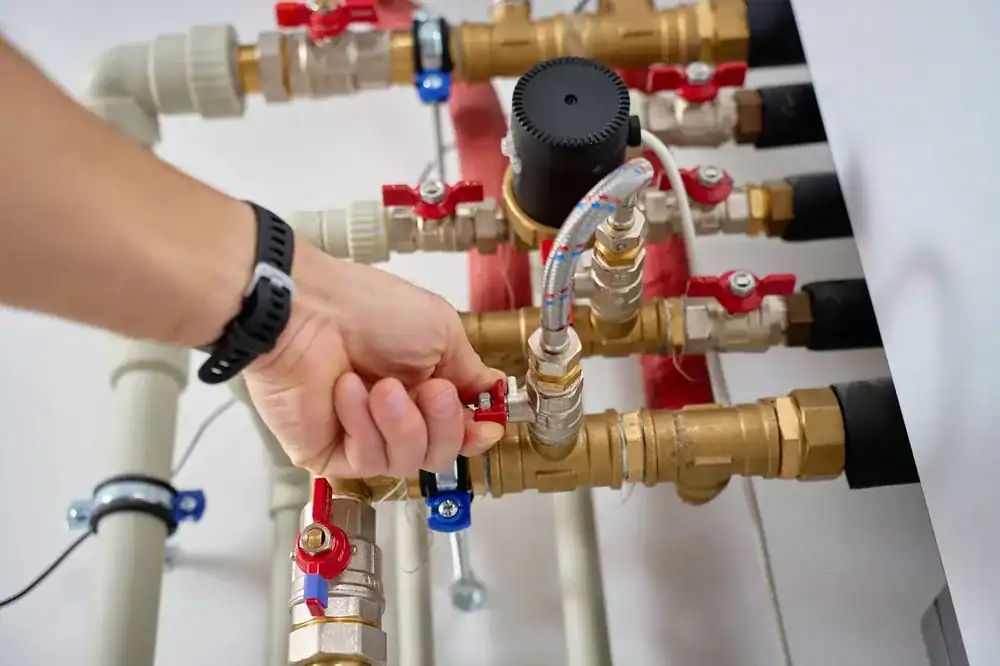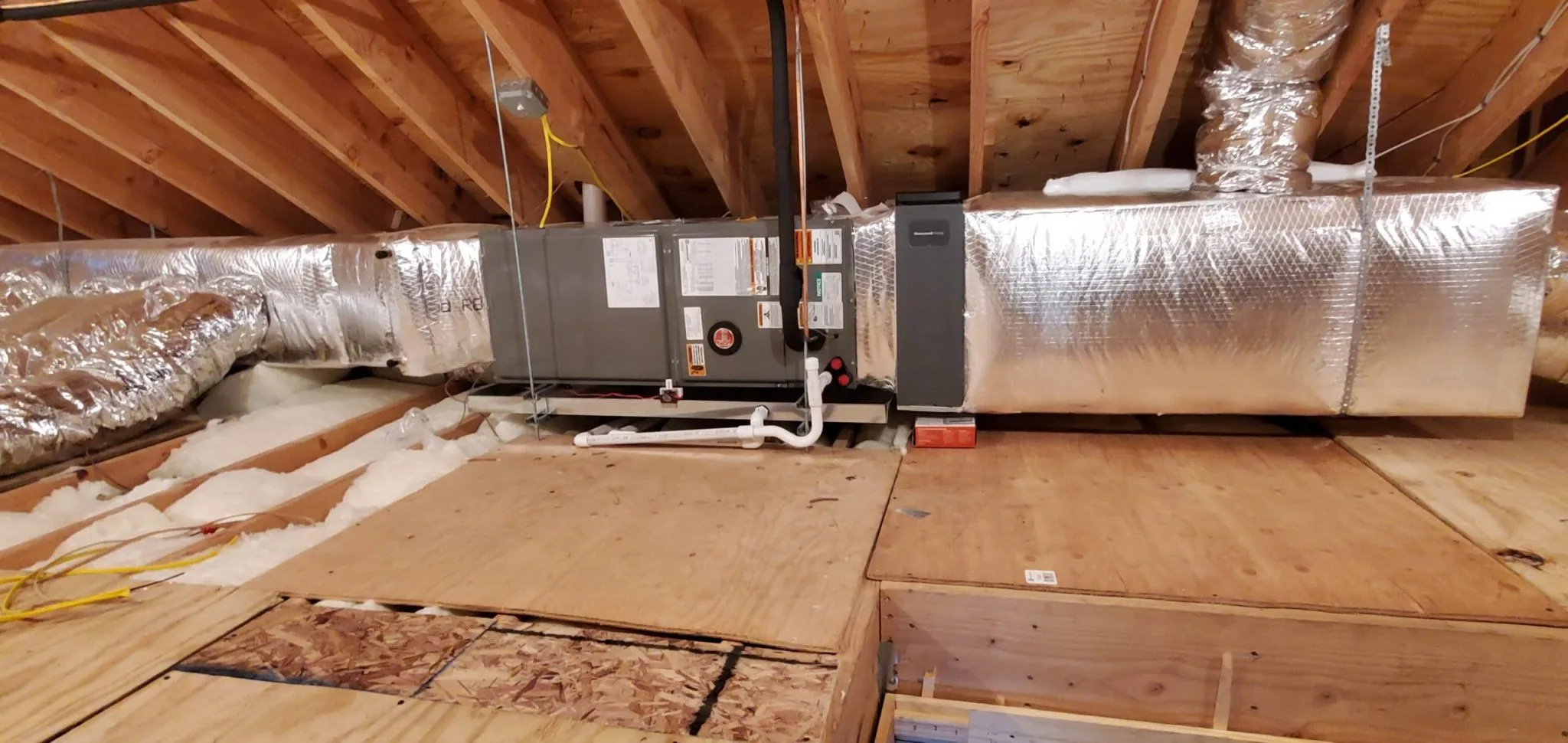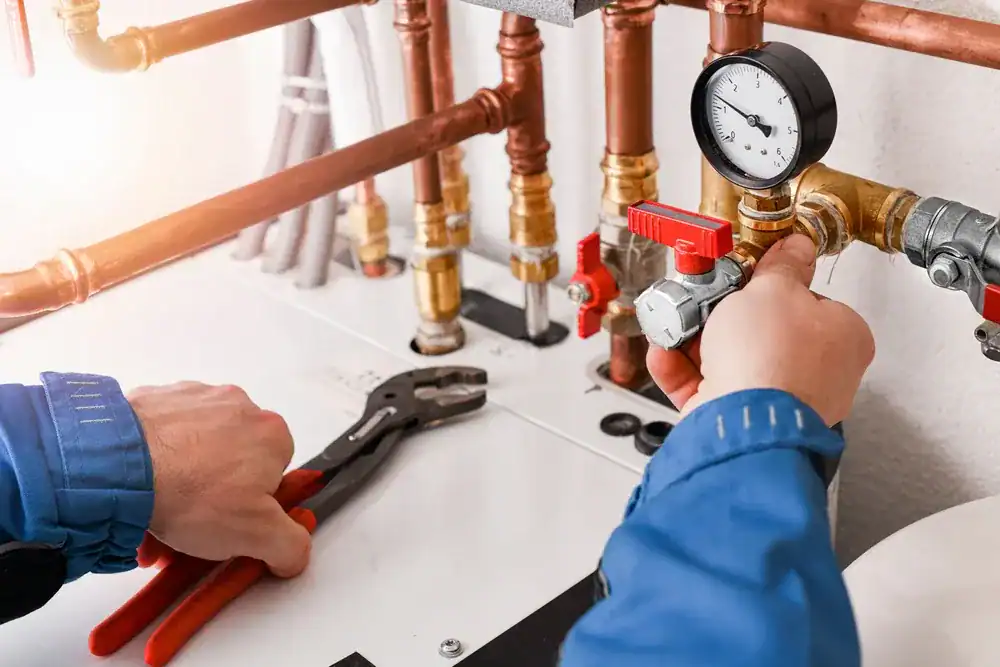
If you woke up to a cold house this morning and your first instinct was to Google what a new boiler costs, you’re in the right place. Or maybe your system is still running but you’ve been watching the heating bills climb and wondering how much longer you can hold off. Either way, you want a real number — not a national average that has nothing to do with Nassau County.
The truth is, boiler replacement costs here run differently than what you’ll see on most national cost guides. Local labor rates, older housing stock, and Nassau County’s permitting requirements all factor in. We’ve been installing boilers across Nassau County since 2016, and this breakdown gives you what you actually need to know.
What Boiler Replacement Actually Costs in Nassau County, NY
Nationally, the average boiler replacement runs around $5,912, with most homeowners landing somewhere between $3,604 and $8,445. In Nassau County, those numbers shift noticeably. A fully installed boiler typically falls between $5,500 and $15,000, depending on the type of system, the fuel source, and how complex the installation turns out to be.
Labor alone in Nassau County generally runs $1,500 to $3,500. That range reflects the reality of working in an older housing stock — many homes across Nassau County were built between the 1940s and 1970s, and what looks straightforward on paper can get complicated once a technician is actually in the basement. Piping configurations, venting setups, and the condition of existing infrastructure all affect how long the job takes and what it costs.
Gas Boiler Replacement Cost vs. Oil in Nassau County
A significant portion of Nassau County homes — particularly in older communities across the South Shore and central areas — still run on oil-fired boilers. That matters when you’re pricing a replacement, because your options aren’t limited to swapping one boiler for another. If natural gas service is available on your street, an oil-to-gas conversion might be worth running the numbers on at the same time.
For a straight gas boiler replacement, you’re generally looking at standard-efficiency models (80% to 89% AFUE) in the $2,200 to $7,000 range for equipment, with high-efficiency condensing units (90%+ AFUE) running $6,000 to $11,000 before labor. Add Nassau County installation costs on top of that, and a high-efficiency gas boiler replacement typically lands between $7,500 and $14,000 all-in, depending on the scope of work.
Oil boiler replacements follow a similar equipment cost curve, but the total can climb if the job involves converting fuel lines, updating venting, or addressing components that haven’t been touched in decades. That’s not a reason to avoid the upgrade — it’s just a reason to get a proper assessment before anyone quotes you a number over the phone.
Long Island has some of the highest energy costs in the continental United States. That changes the math on high-efficiency equipment. A Nassau County home spending $2,800 a year on heating fuel could realistically save $420 to $560 annually by upgrading from an 80% AFUE system to a 95% AFUE unit. Over a 15 to 20-year boiler lifespan, that adds up to real money — and it’s a factor that national cost guides rarely account for when they talk about whether the premium for high-efficiency equipment is “worth it.”
Why Nassau County Boiler Costs Run Higher Than the National Average
There are a few things about Nassau County specifically that push boiler replacement costs above what you’d see quoted on a national cost aggregator site, and it’s worth understanding them before you start collecting quotes.
The housing stock is the biggest factor. Levittown-era homes — built rapidly after World War II across communities like Levittown itself, Wantagh, Seaford, and much of the South Shore — were not designed with modern HVAC systems in mind. Basements are tight, original piping is often undersized or poorly routed, and what looks like a routine swap can turn into a half-day of additional work before the new boiler even goes in. We price this reality in because we know Nassau County’s housing stock. Out-of-area contractors who don’t often underestimate the work — until they’re already on the job.
Hard water is another factor that doesn’t show up in national guides. Nassau County’s water supply has high mineral content, and over time that mineral buildup accumulates inside boiler heat exchangers, reducing efficiency and accelerating wear. A boiler that might last 20 years in a market with softer water may show significant degradation here in 12 to 15 years. That’s just a locally specific reality that affects both how you evaluate your current system and how you think about the replacement.
Then there’s permitting. Nassau County requires permits for boiler replacements, and those permits must be pulled by a licensed contractor. The inspection process adds time and cost that don’t exist in every market. Any quote that doesn’t include permit fees should raise a question — and any contractor who suggests skipping the permit to save money is creating a liability problem for you at resale and potentially voiding your homeowner’s insurance.
New Boiler Cost vs. Repair: How to Know Which Way to Go
This is the question most Nassau County homeowners are actually wrestling with when they start searching boiler costs. The boiler isn’t dead — it’s struggling. Maybe it’s making noise, maybe the heat is uneven, maybe a technician just handed you a repair quote that made you pause.
The most useful framework here is straightforward: if the repair cost is more than 50% of what a new boiler would cost, replacement is almost always the better financial decision. You’re spending half the money to extend the life of a system that’s already proven it needs work — and will likely need more.
Signs Your Nassau County Boiler Is Past the Point of Repair
Age is the first thing to look at. If your boiler has been running for more than 15 years, the calculus shifts toward replacement even before you factor in repair costs. Parts for older systems become harder to source over time, which adds both expense and delays to any repair job. A system that old is also likely running at significantly reduced efficiency — possibly 60% to 70% AFUE — compared to the 90% to 95% you’d get from a modern high-efficiency unit.
A steady rise in your heating bills is one of the clearest signals that a boiler is losing efficiency. If your usage hasn’t changed and your bills keep climbing, the boiler is working harder to deliver the same amount of heat — and that gap between what it’s burning and what it’s producing is money leaving your pocket every month.
Other signs worth taking seriously: inconsistent heat from room to room, water pooling around the base of the unit, unusual sounds during operation, or a carbon monoxide detector triggering near the boiler area. That last one is not a “call us when you get a chance” situation — it’s a same-day call. Older boilers with cracked heat exchangers can allow combustion gases to enter the living space, and that’s a safety issue that goes beyond comfort or cost.
If you’re in a waterfront community like Long Beach, Freeport, or Atlantic Beach, there’s an additional factor: coastal salt air accelerates corrosion on metal components. Boilers in these areas often show wear faster than the same unit installed five miles inland, and that’s worth factoring into any repair-vs.-replace conversation.
Rebates, Financing, and What Can Actually Lower Your Out-of-Pocket Cost
A boiler replacement is a significant expense, and in Nassau County there are real programs designed to reduce what you pay out of pocket — but they require some navigation.
PSEG Long Island and NYSERDA (New York State Energy Research and Development Authority) both offer financial incentives for energy-efficient heating system upgrades. The specific amounts and eligibility requirements change periodically, so the most reliable way to find out what’s currently available is to ask your contractor before you commit to a system. We can walk you through which equipment qualifies and how to apply — that’s part of what you’re paying for when you hire someone who actually knows the Nassau County market.
On the federal side, qualifying high-efficiency heating system installations can be eligible for tax credits up to $2,000 under current energy efficiency incentive programs. Combined with available state and utility rebates, the effective cost of upgrading to a high-efficiency boiler can be meaningfully lower than the sticker price suggests.
Financing is the other piece. A boiler failure is not a planned expense, and not everyone has $7,000 to $10,000 sitting in a checking account waiting for the heating system to give out in January. We offer financing options that let you move forward with the right replacement — not just the cheapest one you can afford today — without draining your savings. When you factor in monthly energy savings from a high-efficiency system, the math often works out better than most homeowners expect.
We provide free estimates on new systems with transparent, upfront pricing. No surprise line items after the job starts. What we quote is what you pay. If you’re looking at broader home comfort upgrades — whether that’s addressing cooling inefficiencies or planning ahead for summer — we handle affordable AC repair and full system replacements as well. Having one local contractor who knows your home’s full HVAC setup makes future service calls faster and more straightforward.
Getting an Honest Boiler Replacement Quote in Nassau County, NY
The bottom line is this: boiler replacement costs in Nassau County are real, they’re higher than national averages for legitimate reasons, and the right decision for your home depends on factors that a cost guide alone can’t fully answer. How old is the system, what’s it actually running at, what does the existing infrastructure look like, and what programs are available to offset the cost right now?
Those are questions that require someone who’s been in Nassau County basements — not someone reading from a national pricing database.
COOL BROS CORP has been doing this work across Nassau County since 2016. Our technicians are NATE-certified, our pricing is upfront, and we’re available 24/7 for the situations that can’t wait until Monday morning. If you’re trying to figure out whether to repair or replace, or you just want a straight answer on what a new boiler would cost for your specific home, reach out for a free estimate. We’ll give you the information you need to make the right call.