Your AC has been sitting idle through winter and early spring. Now summer’s coming, and you’re about to ask it to run for months straight through Nassau County’s heat and humidity. That’s a lot to expect from a system that hasn’t been touched since last year.
Here’s what most homeowners don’t realize until it’s too late: skipping ac preparation doesn’t just risk a breakdown. It guarantees higher energy bills, shorter equipment life, and a much better chance you’ll be calling for emergency service on the hottest day of summer when every technician is booked solid and rates are premium.
This checklist gives you the exact steps to get your cooling system ready—what you can do yourself, what needs professional attention, and when to schedule everything so you’re not scrambling when temperatures hit the 90s.
Summer AC Maintenance: Why It Matters in Nassau County
Nassau County weather doesn’t do your AC any favors. Summers here aren’t just hot—they’re humid, unpredictable, and long. Your air conditioner has to remove moisture from the air on top of cooling it, which is extra work that systems in drier climates don’t face.
Add in coastal salt air if you’re near the water, and you’ve got conditions that accelerate wear on outdoor units. Dirt and debris build up faster in humid environments. Your coils get coated, filters clog quicker, and when airflow drops, your system compensates by running longer cycles just to hit the temperature you set.
Longer cycles mean higher energy use. Clean systems use 15-25% less electricity than dirty, unmaintained ones. Over a Nassau County summer, that difference shows up on your utility bill every single month.
AC System Check: What Happens During Professional Maintenance
A professional ac system check covers the components you can’t safely access or properly evaluate on your own. Our technicians inspect electrical connections, test capacitors and contactors, and check refrigerant levels with EPA-certified equipment.
Refrigerant doesn’t just run low on its own. If levels are down, there’s a leak somewhere, and simply topping it off is a temporary fix that wastes refrigerant and harms the environment. The leak needs to be found and repaired. Handling refrigerant requires EPA certification, and doing it wrong can damage your compressor—a $1,500 to $3,000 repair.
Coil cleaning is one of the most impactful parts of a tune-up. Your AC has two sets of coils: the evaporator coil inside and the condenser coil outside. Both need to be clean to transfer heat effectively. When coils get coated with dirt, dust, or pollen, they can’t do their job. Your system has to run longer to cool your home, which wastes energy and puts stress on the compressor.
In humid areas like Nassau County, coils get dirty faster, so this step matters even more. Professional cleaning immediately improves efficiency and reduces strain on your system. Airflow optimization goes hand-in-hand with coil cleaning. We check your blower motor, inspect ductwork for leaks or blockages, and make sure air is moving freely through your system.
Poor airflow is one of the top causes of AC problems. It leads to uneven cooling, higher energy bills, and frozen coils. Catching these issues during maintenance prevents the kind of breakdowns that happen on the hottest day of summer when you can least afford downtime.
Thermostat calibration ensures your system is responding accurately to temperature settings. If your thermostat is reading incorrectly, your AC might be cycling on and off too frequently or struggling to maintain comfortable temperatures. Testing and calibrating during your tune-up prevents that frustration.
Cooling System Preparation: DIY Tasks You Can Handle
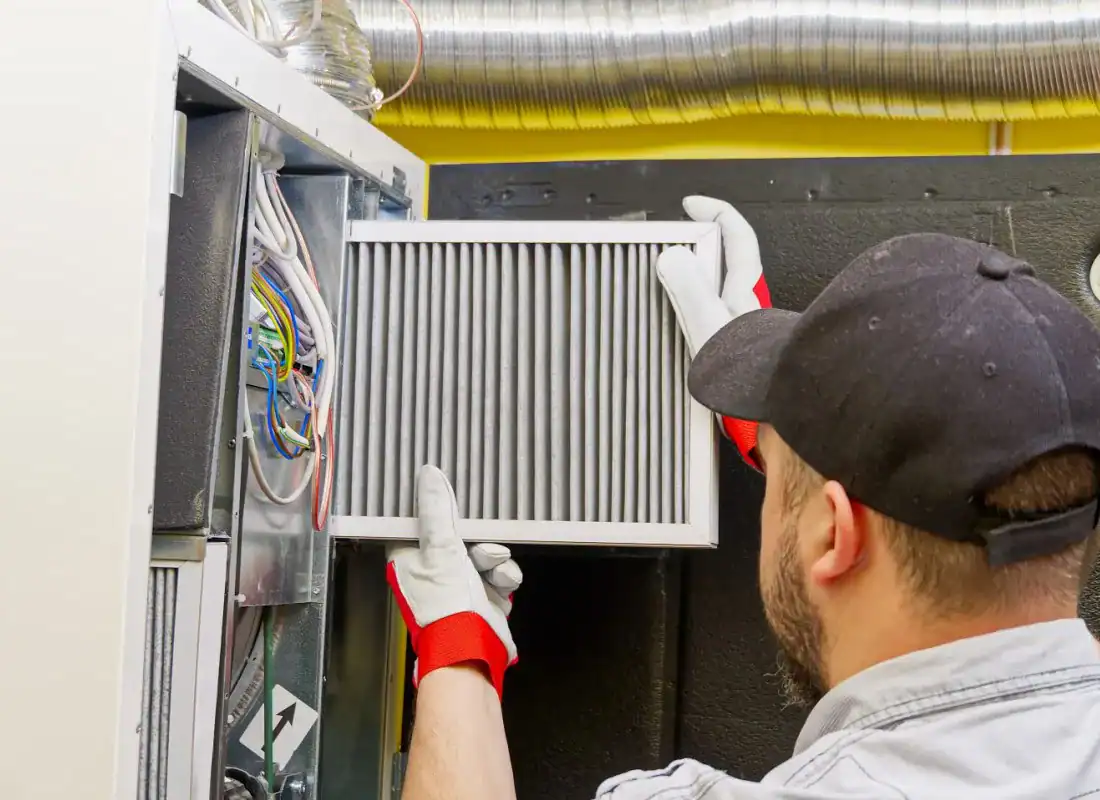
Between professional visits, there are maintenance tasks you should handle yourself. The most important one is checking your air filter monthly and replacing it when it’s dirty. During heavy-use months, most homes benefit from changing filters every 30 to 90 days, depending on pets, allergies, and household dust levels.
A clogged filter forces your system to work harder, increasing energy use and putting unnecessary strain on the blower motor. Replacing or cleaning your filter improves airflow and helps maintain indoor air quality. It’s the single most cost-effective thing you can do to protect your system.
Keep the area around your outdoor unit clear—at least two to three feet of space on all sides. Trim back any plants or shrubs and gently remove debris from the surface. Leaves, grass clippings, and other debris can accumulate around the unit during the off-season and restrict airflow. Keeping the area clean allows your system to release heat efficiently and prevents overheating during hot weather.
Before turning your system on for the season, check your thermostat settings. Make sure it’s set to cool and adjust the temperature to your preferred comfort level. If your thermostat uses batteries, consider replacing them to avoid interruptions. This is also a great time to upgrade to a programmable or smart thermostat if you haven’t already.
Pay attention to how your system sounds and performs once you turn it on. If you notice weak airflow, strange noises, or rooms that won’t cool evenly, don’t wait for your next tune-up. Call for service. Catching problems early saves you money. A small issue addressed now stays small. The same problem left unattended has a way of turning into a compressor replacement or a full system failure.
Test your system early in the season, before you actually need it. Turn it on when outdoor temperatures are still moderate and see if it can handle the load. If it struggles during a test run, you’ll have time to get it fixed before the first heat wave hits.
The Real Cost of Skipping AC Preparation
Preventive maintenance typically runs between $150 and $300 in Nassau County. Emergency repairs start at $150 for minor issues and climb to $2,500 or more for major component failures. Emergency service fees add another $100 to $300 just for after-hours calls, and some companies charge double or triple their normal rates for weekend or holiday service.
That math matters. A single avoided emergency repair can pay for several years of maintenance. Studies show proper maintenance prevents up to 80% of repairs. The U.S. Department of Energy confirms this—regular maintenance eliminates four out of five emergency repairs before they happen.
Beyond repair bills, unmaintained systems cost you money in ways you might not immediately see. A system that’s 20% less efficient due to dirty coils and low refrigerant costs an extra $30 to $60 per month in electricity. Over a Nassau County summer, that’s $360 to $720 per year in wasted energy.
When Emergency Repairs Cost 3-4 Times More Than Maintenance
Emergency AC repairs don’t just cost more because of after-hours fees. They cost more because you’re dealing with a breakdown at the worst possible time, with no ability to shop around or plan financially. When your AC fails at 9 PM on a Saturday during a heat wave, you’re not in a position to negotiate or wait for a better price.
Compressor replacements run $1,500 to $3,000. Refrigerant leak repair and recharge costs $400 to $800, though small leaks caught during maintenance only cost $200 to $400 to fix. Leaks that worsen over months cause compressor damage and complete refrigerant loss, tripling the repair cost.
Blower motor replacement costs $400 to $600. Dirty filters and lack of lubrication—both addressed in routine maintenance—cause most blower motor failures. Capacitor replacement runs $150 to $400. Capacitors wear out faster when systems are dirty or low on refrigerant, both issues identified during routine maintenance.
Evaporator coil replacement costs $1,000 to $2,000. Coils fail when they’re never cleaned and corrosion builds up from trapped moisture and debris. Complete system replacement runs $4,000 to $8,000. Systems that receive no maintenance fail five to seven years sooner than maintained systems, forcing premature replacement.
The pattern is clear: small problems caught during maintenance stay small and affordable. Small problems ignored turn into major failures that cost thousands and happen at the worst possible time. Maintenance isn’t an expense—it’s insurance against the much larger costs that come when preparation gets skipped.
How Maintenance Extends Your System’s Life by 5-10 Years
Well-maintained systems last 15 to 20 years. Neglected systems fail at 10 to 12 years. That five to ten year difference represents thousands of dollars in avoided replacement costs and years of reliable comfort you wouldn’t otherwise get.
Your AC works hard during Nassau County summers. The humidity alone puts stress on every component, and when temperatures climb into the 90s, your system runs for hours without a break. That kind of sustained demand accelerates wear on every moving part, every electrical connection, and every component that transfers heat.
Regular maintenance keeps those components clean, lubricated, and operating within normal parameters. Clean coils transfer heat efficiently, so your compressor doesn’t have to work as hard. Proper refrigerant levels mean your system can cool effectively without straining. Tight electrical connections prevent arcing and component failure.
Each maintenance visit catches the kind of wear that would otherwise go unnoticed until something fails. A capacitor showing early signs of weakness gets replaced before it leaves you without cooling. A small refrigerant leak gets repaired before it damages your compressor. A dirty coil gets cleaned before it causes your system to overheat.
This proactive approach doesn’t just prevent breakdowns—it fundamentally extends how long your equipment lasts. You’re not asking a stressed, dirty system to keep running year after year. You’re maintaining a system that operates the way it was designed to, with components that stay within their normal operating range and don’t experience the kind of stress that causes premature failure.
The investment in annual maintenance is small compared to the cost of replacing a system years earlier than you should have to. Equipment lifespan isn’t just about luck or brand quality—it’s about how well you take care of what you have.
Get Your AC Ready Before Nassau County’s Summer Heat Arrives
AC preparation isn’t complicated, but it does require action. The tasks you can handle yourself—changing filters, clearing debris, testing your system early—take minimal time and cost almost nothing. The professional maintenance that covers what you can’t safely do yourself costs a fraction of what you’ll pay for emergency repairs.
Schedule your tune-up in early spring, before technicians get booked solid and before you’re relying on your system every day. Early scheduling gives you time to address any issues that come up without the pressure of an approaching heat wave.
If you’re in Nassau County and want your AC ready for summer without the stress of wondering if it’ll make it through, we handle everything from routine maintenance to emergency repairs. We know exactly what Nassau County’s climate does to AC systems, and we’ve built our service around preventing the breakdowns that happen when preparation gets skipped.