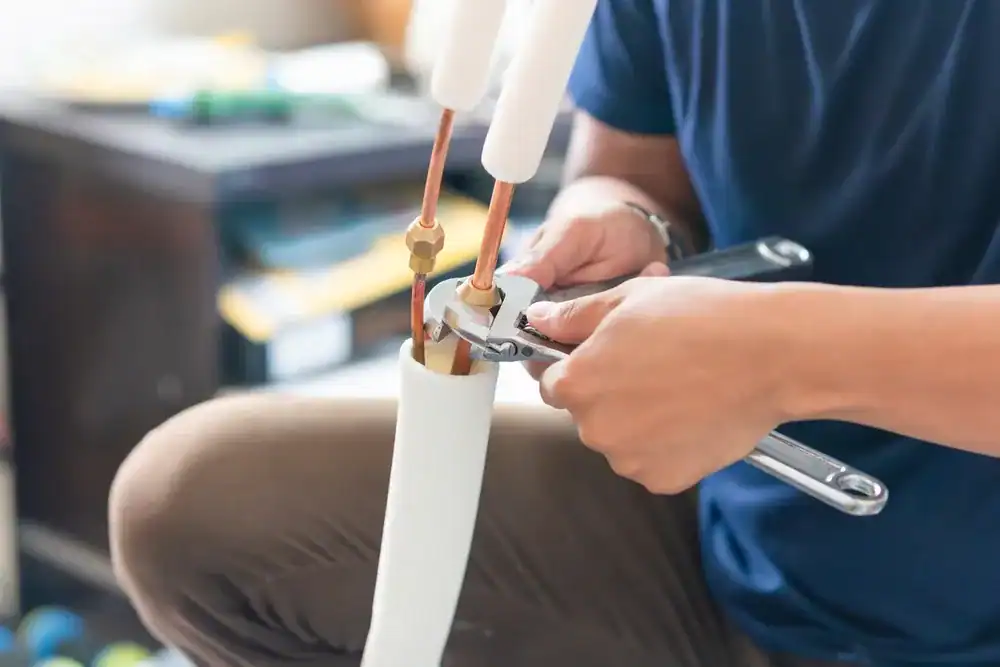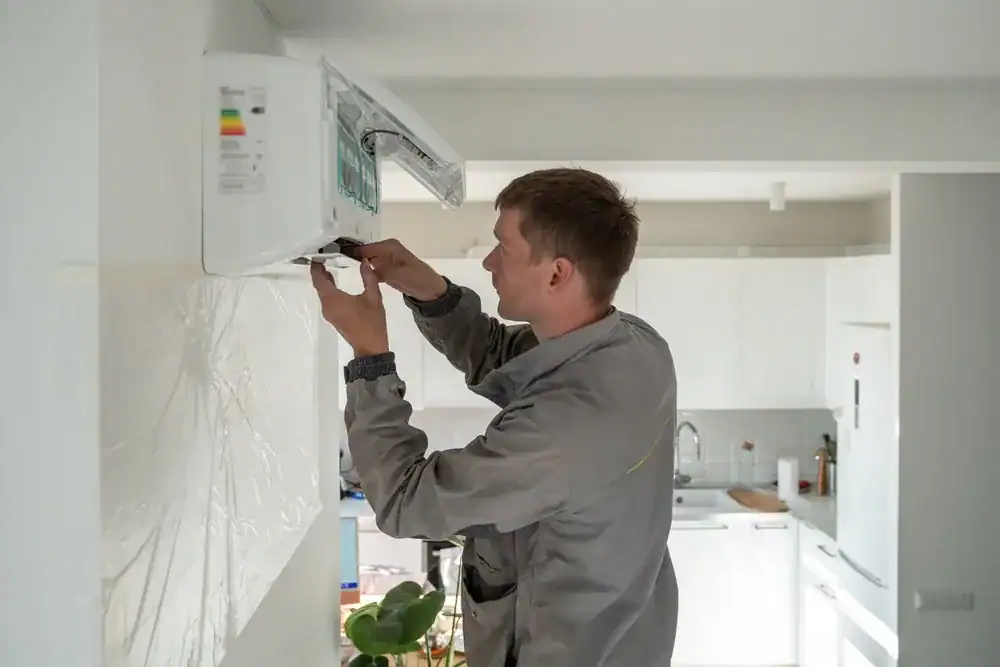
Most HVAC systems either work or they don’t. Heat pumps are different — and that difference is exactly why diagnosing one requires more than a standard AC checklist.
If you’ve been getting lukewarm air in February, noticed your energy bill creeping up without any obvious reason, or found your outdoor unit buried in ice, you’re probably wondering what’s actually wrong. The answer might surprise you — because heat pump failures don’t always show up the way you’d expect. This page walks you through what makes heat pump diagnosis different, what technicians should actually be checking, and what Nassau County homeowners tend to get wrong before they call for help.
Why Heat Pump Repair Isn’t the Same as Air Conditioner Repair
A standard air conditioner does one thing: it cools. A heat pump does two things — it cools in summer and heats in winter — and that distinction changes everything about how a technician needs to approach a diagnosis.
The component that makes this possible is called the reversing valve. It controls the direction refrigerant flows through the system, which is what allows the same equipment to heat your home in January and cool it in July. When that valve fails — or when the controls that operate it fail — the system loses one mode entirely while the other may keep working just fine.
That’s the part most homeowners don’t realize. Your heat pump can cool perfectly all summer and still fail to heat when the weather turns cold. It’s not a contradiction. It’s a predictable consequence of how these systems are built.
What Is a Reversing Valve and How Do You Know If It’s Bad?
The reversing valve sits at the center of what makes a heat pump unique. Think of it as a switch inside the refrigerant circuit — when the system gets the signal to shift from cooling to heating, the valve moves to redirect refrigerant flow in the opposite direction. That reversal is what extracts heat from outdoor air and moves it inside your home, even when it’s cold outside.
When the reversing valve fails, it can do so in one of two ways. The first is an electrical failure — the solenoid that sends the signal to shift the valve stops working, so the valve never gets the message to move. The second is a mechanical failure — the internal component gets physically stuck and won’t shift even when the signal is sent correctly. These two failure types look similar from the outside but require completely different repairs. Distinguishing between them is one of the reasons heat pump diagnosis takes more expertise than a standard AC call.
Here’s where it gets tricky for homeowners: a bad thermostat, loose low-voltage wiring, or a failing defrost board can all block the signal that tells the reversing valve to shift — which means the valve itself may be perfectly fine. A technician who jumps straight to replacing the valve without tracing the full control circuit can easily misdiagnose the problem, charge you for a part you didn’t need, and leave you with the same issue.
The symptoms of a reversing valve problem are worth knowing. If your system is blowing cool air when it’s set to heat, if you hear an unusual hissing or clicking sound near the outdoor unit, or if your energy costs jumped 20–30% without any obvious explanation, the reversing valve — or the controls that operate it — is a reasonable place to start looking. But the only way to know for certain is a proper diagnostic, not a guess.
The Frozen Outdoor Unit Problem Nassau County Homeowners Run Into Every Winter
Every winter, Nassau County homeowners call about an outdoor unit that’s completely encased in ice. The instinct is to assume something is broken. Sometimes that’s true — but not always in the way people expect.
Heat pumps run a normal defrost cycle during cold weather. A thin layer of frost on the outdoor coil is expected and the system is designed to melt it periodically on its own. What’s not normal is when that defrost cycle stops working — which is when the ice builds up, accumulates across the coil, and eventually starts reducing airflow and system efficiency to the point of failure. The component responsible for triggering the defrost cycle is the defrost board, and when it fails, the system can no longer clear the ice on its own.
The distinction matters because the fix is completely different depending on what’s actually happening. If the defrost board has failed, replacing it solves the problem. If the ice is the result of a refrigerant leak or a blocked coil, the defrost board is fine — but the underlying issue will keep causing problems until it’s addressed.
Nassau County’s winters add a layer of complexity here. Coastal communities like Long Beach, Oceanside, Freeport, Merrick, and Bellmore deal with salt air that accelerates corrosion on outdoor components, including the electrical connections and coil surfaces that are central to defrost system function. A system that’s been exposed to salt air for several years may develop defrost problems earlier than the same system installed further inland. That’s a local factor that affects both diagnosis and repair timelines, and it’s worth factoring in when you’re evaluating the overall condition of your equipment.
Running a heat pump through an iced-over winter without addressing the defrost issue isn’t just an efficiency problem — it puts real stress on the compressor, which is the most expensive component in the system. Catching a defrost board failure early is one of those situations where a $300 repair genuinely prevents a $2,000+ problem down the road.
How a Proper Heat Pump Diagnosis Should Actually Work
A thorough heat pump diagnosis isn’t just about finding the part that broke. It’s about understanding the full system — the refrigerant circuit, the electrical controls, the defrost logic, and the thermostat wiring — before drawing any conclusions.
The right approach starts with a complete evaluation, not a parts swap. Technicians who skip the diagnostic process and go straight to replacing components are guessing, and guessing gets expensive fast. By the time a homeowner has paid for two or three service calls that didn’t fix the problem, they’ve often spent more than a proper diagnosis would have cost in the first place.
Why Testing Both Heating and Cooling Modes Matters After Any Heat Pump Repair
Here’s a step that most homeowners don’t know to ask for — and that separates a complete heat pump repair from an incomplete one.
After any repair is finished, a technician should verify that the system operates correctly in both heating mode and cooling mode before the job is considered done. This isn’t standard practice for a regular air conditioner, because a standard AC only runs in one direction. But a heat pump is a two-mode system, and confirming that both modes work after a repair is the only way to know the fix actually addressed the root cause rather than just the symptom that was most obvious.
If a technician repairs a reversing valve issue and only tests the mode that was failing, there’s no way to confirm the repair didn’t introduce a new problem on the other side of the circuit. It sounds like a small detail, but it’s the kind of thing that separates a technician who genuinely knows heat pumps from one who’s treating it like a standard AC call.
This two-mode verification step is also relevant when you’re evaluating any heat pump repair quote. It’s a reasonable question to ask before work begins: will you verify both heating and cooling function when you’re done? A technician who’s done this work before will know exactly what you’re talking about. One who hasn’t may not.
For Nassau County homeowners, this matters even more during seasonal transitions — particularly in October and November when systems get switched from cooling to heating for the first time since spring. That’s when reversing valve issues that were dormant all summer tend to surface, and it’s also when demand for heat pump repair services spikes across the county. Getting the diagnosis right the first time, with full verification at the end, means you’re not starting the heating season with a callback scheduled.
How to Decide Whether to Repair or Replace a Heat Pump
This is the question almost every Nassau County homeowner eventually asks, and the honest answer is that it depends on more than a single dollar figure.
The general industry guideline — that you should replace rather than repair if the cost exceeds 50% of the cost of a new system — is a reasonable starting point, but it doesn’t account for everything. The age of the system matters. A heat pump that’s 8 years old and needs a reversing valve is probably worth repairing. The same repair on a 17-year-old system with a history of refrigerant issues and a compressor that’s already been serviced once is a different conversation.
The specific component being repaired also matters. Refrigerant leaks, defrost board failures, and reversing valve issues are all repairs that make sense on a system that’s otherwise in good shape. A failed compressor on an older system is where the math usually tips toward replacement — because the compressor is the most expensive component in the system, and replacing it on aging equipment often doesn’t make financial sense when you factor in the remaining lifespan of everything else.
For Nassau County homeowners, the replacement conversation has an added layer worth knowing about. PSEG Long Island offers rebates on qualifying heat pump installations, and federal tax credits provide up to $2,000 for eligible systems. We handle all the PSEG Long Island and NYSERDA paperwork on our end, so you’re not navigating that process alone. If replacement does turn out to be the right call, those incentives can meaningfully change what the decision actually costs you out of pocket.
The most useful thing we can do during a service call is give you a straight answer — here’s what’s wrong, here’s what it costs to fix it, here’s what a replacement would look like, and here’s our honest read on which makes more sense for your situation. That’s the conversation you should be having with any HVAC contractor before any money changes hands.
Getting Heat Pump Repair Right the First Time in Nassau County
Heat pump repair isn’t complicated when the person diagnosing it actually knows what they’re looking at. The reversing valve, the defrost board, the two-mode verification — these aren’t obscure details. They’re the fundamentals of working on a system that heats and cools, and they’re what separate a real heat pump diagnosis from a guess dressed up as one.
If your system stopped heating, if your outdoor unit iced over, or if your energy bill jumped without explanation, those are all signs worth taking seriously — and worth getting diagnosed properly rather than patched over.
COOL BROS CORP serves Nassau County homeowners with 24/7 availability, upfront pricing, and technicians who are EPA certified, factory trained, and familiar with the specific conditions — salt air, aging housing stock, seasonal transition failures — that affect heat pump systems in this area. If you’re ready to find out what’s actually going on with your system, give us a call.