You got a quote. Maybe two or three. And now you’re staring at numbers that vary by thousands of dollars, wondering which one is actually fair — and which contractor you can actually trust to show up, do the work right, and not hit you with surprise charges at the end.
This is exactly where most Nassau County homeowners get stuck. The HVAC industry has a well-documented trust problem, and the comparison phase is where it shows up most. This guide is built to help you cut through it — what drives cost, what credentials actually matter, and what separates a contractor worth hiring from one worth avoiding.
Why HVAC Quotes in Nassau County Vary So Much
If you’ve gotten multiple quotes for HVAC work in Nassau County and they don’t line up, that’s not unusual — it’s actually the norm. The range can be dramatic, and without context, there’s no easy way to know if the lowest number is a bargain or a warning sign.
Equipment brand and efficiency tier make a significant difference. Labor rates vary based on whether a company employs its own NATE-certified technicians or relies on subcontractors. Permit costs, warranty terms, and whether the contractor actually sizes the system correctly for your home all factor in too. The cheapest quote often skips one or more of these — and that’s where the real cost shows up later.
What’s Actually Included in an HVAC Price Quote
A quote that just says “install new AC system — $X” is not a quote. It’s a number. And in Nassau County, where a lot of homes were built in the 1940s, 50s, and 60s, that number can change fast once a contractor actually looks at what they’re working with.
Older homes in communities like Lynbrook, Valley Stream, and Rockville Centre were never designed with central air in mind. Retrofitting a modern HVAC system into a 1950s ranch means dealing with limited attic space, no existing ductwork, undersized electrical panels, and boiler-based heating systems that have been running for decades. A contractor who doesn’t account for those realities upfront is either inexperienced or giving you a number they plan to revise once they’re already on the job.
A legitimate, itemized quote should break out equipment costs, labor, any necessary modifications, permit fees, and warranty terms. If a contractor can’t or won’t give you that level of detail, that’s your first red flag.
The equipment tier matters more than most buyers realize. An American Standard system rated at 22.0 SEER2 with AccuComfort variable-speed technology and a 10-year limited warranty is a fundamentally different product than a builder-grade unit from a brand you’ve never heard of. The higher-efficiency system costs more upfront — but it runs quieter, uses less energy, and is built to last. Over the life of the system, the math usually favors the better equipment.
Coastal humidity is also a factor that doesn’t show up in most quotes but absolutely affects long-term performance. Nassau County sits between the Atlantic Ocean and Long Island Sound. Salt air and persistent moisture accelerate corrosion on outdoor units and refrigerant components. A contractor who installs systems across Long Island regularly will account for this. One who doesn’t work this market won’t even think to mention it.
How to Tell If an HVAC Company in Nassau County Is Actually Qualified
Credentials in the HVAC industry exist on a spectrum. Every contractor will tell you they’re “licensed and insured” — that’s the floor, not the ceiling. What you want to know is what’s behind that claim.
NATE certification — North American Technician Excellence — is the most recognized independent credential in the industry. It requires technicians to pass rigorous exams covering installation, service, and repair across system types. It’s verifiable, it’s meaningful, and it’s not something every company can claim. When a company tells you their technicians are NATE-certified, that’s a specific, checkable fact — not marketing language.
EPA Section 608 certification is a federal requirement under the Clean Air Act for any technician who services equipment containing regulated refrigerants. It’s not optional. If a contractor can’t confirm their technicians hold this certification, walk away.
Beyond certifications, look at how the company presents itself. Do they give you a written, itemized estimate before any work starts? Do they pull permits for installations? Do they answer questions directly, or do they deflect and push you toward a decision? BBB Accreditation with an A+ rating is another signal worth checking — it requires the business to meet standards for transparency, honesty, and complaint resolution. It’s not a guarantee, but it’s a meaningful filter.
Review volume and consistency matter too. A contractor with 150 verified reviews averaging 4.9 stars has a track record that’s hard to fake. Look for verified third-party platforms — Google, Yelp, Trustindex — and pay attention to what customers actually say, not just the star count. Phrases like “no upselling,” “showed up on time,” and “price matched the quote” are the details that tell the real story.
Factory dealer certification is another differentiator that’s easy to overlook. Being an authorized American Standard or Mitsubishi dealer means technicians receive factory training, have access to genuine parts, and can offer factory-backed warranties — not just a contractor’s word. That distinction matters when a system fails five years from now and you need warranty support.
Local vs. Franchise HVAC Companies in Nassau County: What the Difference Actually Costs You
Nassau County has no shortage of HVAC options. You’ll find national franchise brands with local landing pages, large regional companies that have been around for decades, and smaller locally owned operations. The choice between them isn’t just about preference — it can affect your price, your service experience, and who’s actually accountable when something goes wrong.
National franchises offer brand recognition and standardized processes. What they often can’t offer is genuine local knowledge — the kind that comes from spending years working inside the specific housing stock that defines Nassau County. A franchise technician following a corporate checklist is not the same as someone who’s retrofitted central air into dozens of Lynbrook ranches and knows exactly what to expect when they open the walls.
Why Family-Owned HVAC Companies Operate Differently in Nassau County
A locally owned HVAC company has its reputation on the line in a way a national franchise simply doesn’t. When the owner lives and works in the same community — when their name is attached to every job — the accountability is different. There’s no corporate buffer between a bad review and the person who has to answer for it.
For Nassau County homeowners, that accountability shows up in practical ways. Local companies are more likely to give you a straight answer about whether you need a repair or a replacement — because they’re not hitting a corporate sales quota. They’re more likely to answer the phone at 11 PM when your furnace goes down in January, because their business runs on word-of-mouth from neighbors who expect that kind of service. And they’re more likely to know that the pre-war colonial on your street has a boiler system that needs a specific approach, because they’ve worked on three others just like it in the past year.
That said, “local” alone isn’t enough. A small company with no certifications, no verifiable reviews, and no clear licensing is not a better option than a well-run franchise just because they’re based nearby. What you want is a company that combines local knowledge and accountability with the credentials, equipment access, and operational capacity to back it up.
Financing is another area where local companies can surprise you. The assumption is that big national brands have better financing options, but that’s not always true. Working with authorized dealers for brands like American Standard and Mitsubishi means access to financing through Wells Fargo and Synchrony respectively — the same institutional lenders a franchise would use. For a full system replacement, that can make a significant difference in how manageable the project feels financially.
The bottom line: when you’re comparing heating and air conditioning companies in Nassau County, the question isn’t just “who’s cheapest” or “who’s been around longest.” It’s who can show you the credentials, the reviews, the equipment, and the local knowledge to back up what they’re promising.
Emergency HVAC Service in Nassau County: What to Expect When You Can’t Wait
Nassau County winters regularly drop below 16°F. Summer heat and humidity push AC systems hard, especially in July and August when the coastal air sits heavy and systems that haven’t been maintained start showing their age. When a system fails in those conditions, the urgency is real — and the contractor you call needs to be able to respond, not just promise they’ll “get back to you within 24 to 48 hours.”
True 24/7 emergency service means nights, weekends, and holidays — not just extended weekday hours. It means someone answers the phone at 10 PM on a Saturday and gives you a real timeline, not a voicemail. In a county with over 470,000 homes and peak demand that hits all at once during heat waves and cold snaps, the companies that can actually deliver on that promise are fewer than you’d expect.
For homeowners in older Nassau County homes — the 1940s and 50s builds that make up so much of the housing stock in communities like Hempstead, Garden City, and Massapequa — an emergency call often involves more complexity than a straightforward repair. A boiler that’s been running since the Eisenhower administration doesn’t fail the same way a modern forced-air system does. A technician who’s familiar with that equipment, who carries the right parts, and who can make a sound judgment call about repair versus replacement on the spot — that’s worth a lot more than a fast response time alone.
Same-day service availability matters too, particularly during shoulder seasons when you’re trying to get ahead of a potential problem before peak demand hits. Scheduling a spring AC checkup in April is a very different experience than trying to book one in the middle of a July heat wave when every HVAC company in Nassau County has a two-week backlog. The companies that offer same-day availability — and actually deliver on it — earn that trust over time through consistent follow-through.
One thing that often gets overlooked in emergency situations: transparent pricing holds even more weight when you’re stressed and making a fast decision. A contractor who shows up at 9 PM and hands you a written estimate before touching anything is operating at a different standard than one who starts working and presents the bill at the end. That upfront approach — no surprise charges, no pressure — is what separates a service call that leaves you feeling relieved from one that leaves you feeling like you got taken advantage of.
Choosing the Right HVAC Company in Nassau County
The information gap in this market is real. Most homeowners comparing heating and air conditioning companies in Nassau County are doing it without a reliable benchmark — no easy way to know if a quote is fair, no simple checklist for what credentials actually matter, and no clear picture of what separates a contractor worth trusting from one who’ll disappear after the check clears.
What we’ve covered here gives you that framework. Look for NATE certification and EPA credentials — not just “licensed and insured.” Demand an itemized written estimate before any work begins. Check verified third-party reviews for volume and specifics, not just star ratings. And ask whether the company has real local experience with Nassau County’s housing stock, not just a local phone number.
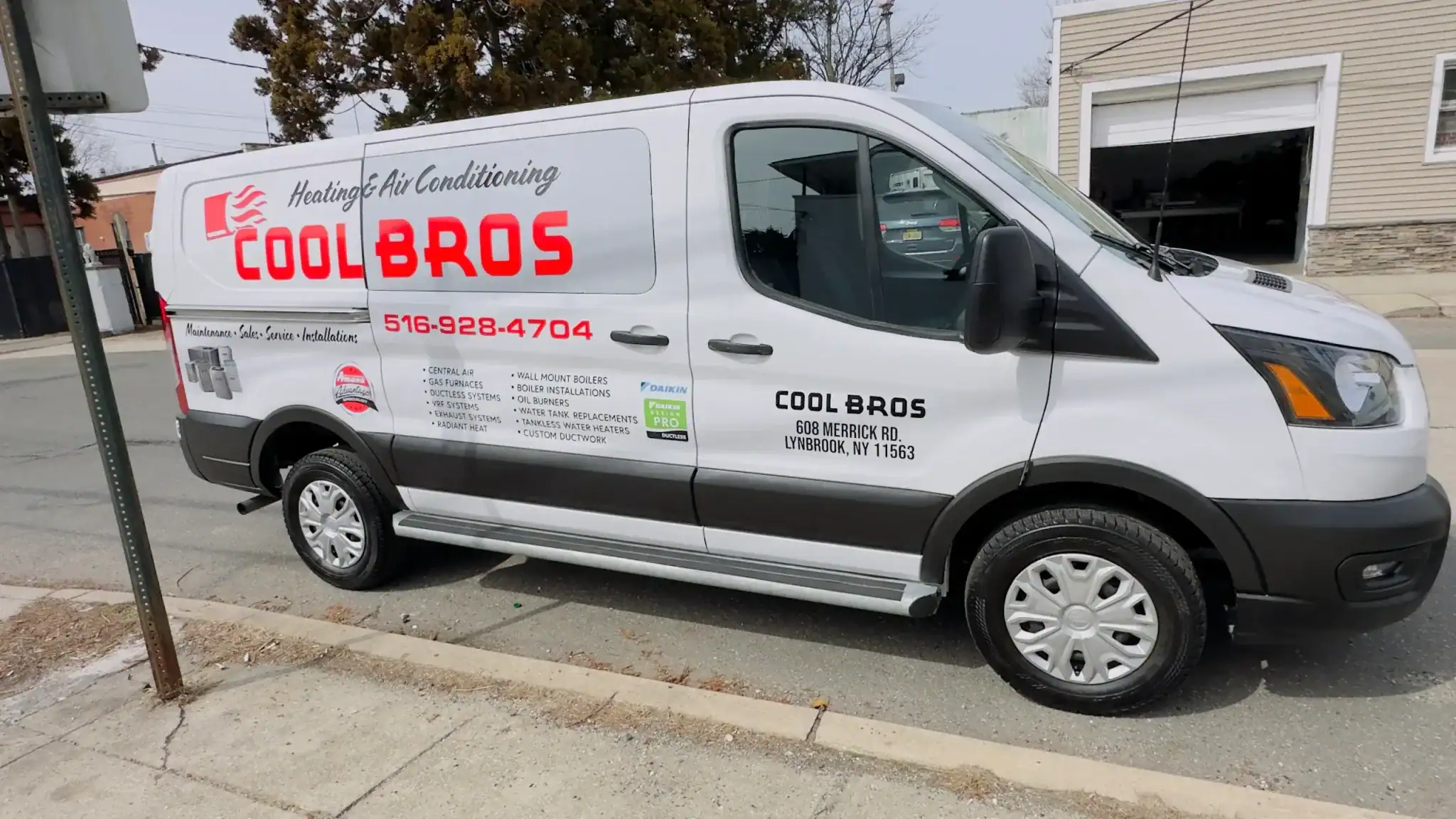
We’re COOL BROS CORP, based right here in Lynbrook, and we serve Nassau County homeowners and businesses every day. Reach out for a free estimate — and expect a straight answer.