If your HVAC system just stopped working — or you’re finally replacing one that’s been limping along for years — you already know the pressure of finding someone you can trust quickly. Nassau County has no shortage of contractors, but that doesn’t make the decision easier. Most companies say the same things. Most websites look the same. And most homeowners have no idea what actually separates a contractor who does the job right from one who just does the job.
This guide breaks down what you actually need to know before you hire anyone — including what credentials matter, what questions to ask, and what the Nassau County market specifically demands from an HVAC professional.
What to Look for When Hiring AC Contractors in Nassau County
The basics matter more than most people realize. A contractor should hold a Nassau County Home Improvement Contractor license — issued through the Nassau County Office of Consumer Affairs — and any technician handling refrigerants is legally required to carry EPA Section 608 certification. These aren’t differentiators. They’re the floor. If a contractor can’t confirm both, move on.
Beyond the legal minimums, NATE certification is the most credible voluntary credential in the industry. It requires technicians to pass rigorous exams on HVAC systems, installation, and service practices. It’s not required, but it signals that a technician has been tested — not just trained on the job.
Pair that with a verifiable BBB rating and a track record of recent reviews, and you’re starting to build a picture of a company worth calling.
Why Local HVAC Contractors Know Nassau County Homes Better Than Anyone Else
Here’s something that rarely comes up in HVAC marketing: Nassau County’s housing stock is old. The average single-family home in Nassau County is 73 years old. That’s not a minor detail — it’s the defining challenge of almost every HVAC job in this market.
A 1950s ranch in Levittown or a pre-war colonial in Garden City wasn’t designed with modern HVAC in mind. The ductwork is often undersized, the return-air paths are frequently too narrow, and the infrastructure that a new system needs to perform correctly may not exist yet. A contractor who works primarily in newer construction — or who doesn’t do a proper load calculation before recommending equipment — will almost certainly get the sizing wrong.
An oversized system doesn’t just waste energy. It short-cycles, creates humidity problems, and wears out faster than a correctly sized one.
This is why Manual J load calculations matter, and why they should be standard on every new system estimate — not an optional add-on. Proper sizing depends on your home’s square footage, insulation, window count, ceiling height, and several other factors specific to your property. A contractor who skips this step is guessing. In a 73-year-old Nassau County home, guessing is expensive.
There’s also the coastal dimension. If you’re in Long Beach, Atlantic Beach, Freeport, Baldwin Harbor, or Island Park, your condenser is fighting salt air every day. Accelerated corrosion is real in these communities, and a contractor with genuine Nassau County experience accounts for it — specifying coated coils and elevated pads as a matter of course, not as an upcharge. A contractor from outside the area often won’t even think to ask where your home sits relative to the water.
Local knowledge also means knowing the permit landscape. Hempstead, North Hempstead, Oyster Bay, Long Beach, and Glen Cove each run their own building departments with different requirements and inspection timelines. A local contractor handles that paperwork as part of the job. An out-of-county shop frequently won’t.
How to Evaluate a Heating and Cooling Company Before You Commit
The most reliable way to evaluate any heating and cooling company isn’t to read their website — it’s to look at what their actual customers say, consistently, over time. A handful of five-star reviews from three years ago tells you very little. A sustained pattern of recent, verified reviews tells you a lot more.
Review volume matters because it’s hard to fake at scale. A company with 142 verified five-star reviews and a 5.0 average isn’t having a lucky streak — that’s a pattern of showing up, doing the work correctly, and communicating clearly. Pay attention to what people actually say in the reviews, not just the star rating. Do customers mention that the technician explained things in plain terms? That the price matched the quote? That someone actually answered the phone? Those are the details that tell you whether a company operates the way it claims to.
Pricing transparency is another real differentiator in Nassau County. The most common complaint across HVAC reviews isn’t about the work itself — it’s about prices that changed between the estimate and the invoice. We provide clear, written, upfront pricing before any work begins, which removes the most common source of post-job frustration.
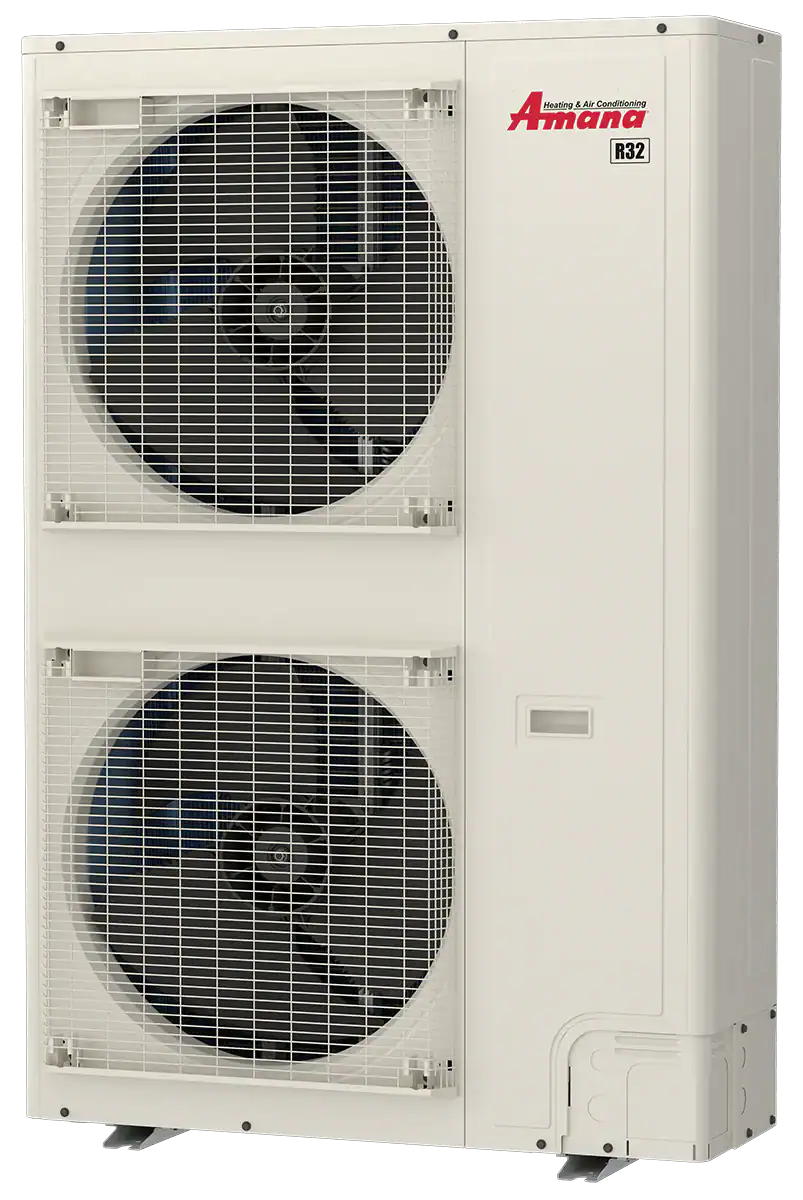
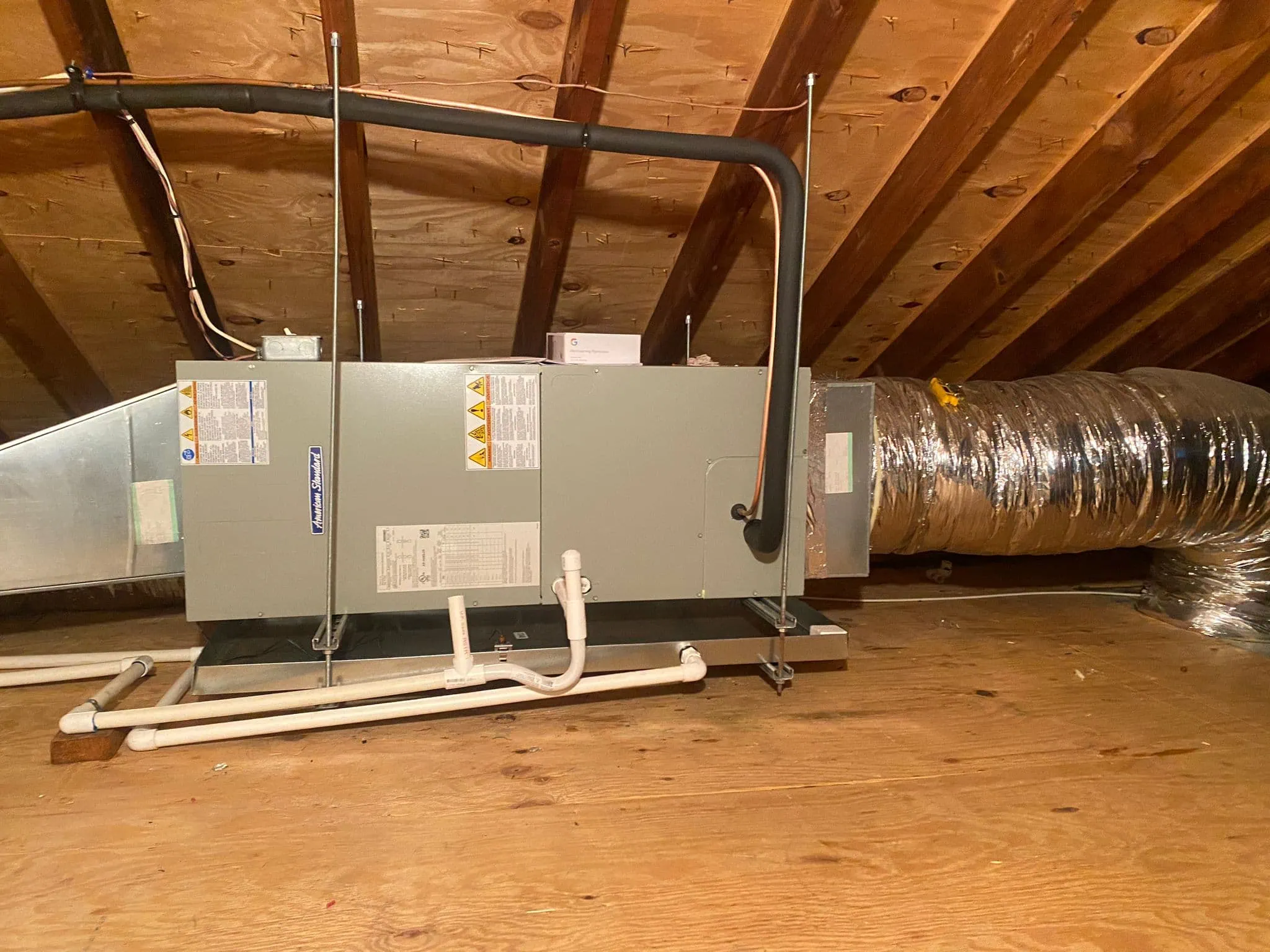
You should also ask whether the contractor is a factory-authorized dealer for the equipment they’re recommending. Authorization matters because it validates the warranty. An Amana system installed by an unauthorized contractor may not carry the manufacturer’s warranty. An American Standard system installed by an authorized dealer comes with a 10-Year Limited Warranty — and systems up to 22.0 SEER2, which is more than 60% above New York’s legal minimum of 13.4 SEER2. That gap in efficiency translates directly to lower energy bills over the life of the system.
Finally, ask whether they offer financing. A new HVAC system is a significant investment, and a company that offers financing options — for both equipment and installation — is making it easier for you to get the right system rather than the cheapest one you can pay for today.
Common Questions Nassau County Homeowners Ask About HVAC Contractors
Most homeowners come into this process with a short list of practical questions — and most HVAC websites don’t answer them directly. Here are the ones we hear most often, answered plainly.
The goal isn’t to overwhelm you with information. It’s to give you enough context to make a confident decision — whether that means calling us or calling someone else. An informed homeowner is a better customer for everyone.
Do I Need to Repair or Replace My HVAC System?
This is the question most homeowners dread, because the answer has real financial weight either way. Here’s a straightforward framework: if your system is under 10 years old and the repair costs less than half the price of a new unit, repair usually makes sense. If your system is over 15 years old, needs frequent repairs, or the repair cost is more than 50% of what a replacement would cost, you’re almost certainly better off replacing it.
The math gets clearer when you factor in energy costs. Older systems run less efficiently, and in Nassau County — where summers are humid and winters are consistently cold — your HVAC system works hard for a long stretch of the year. A system that’s limping along at 10 SEER2 is costing you meaningfully more to run than a properly sized modern system at 16 or 18 SEER2.
Regular maintenance can extend a system’s life and cut energy costs by up to 30%, according to the U.S. Department of Energy — but maintenance can’t reverse 20 years of wear.
One thing worth knowing: the way efficiency is measured changed in 2023. All new equipment is now rated using SEER2, which uses tougher real-world testing conditions than the old SEER standard. A unit that was rated 14 SEER under the old test might only achieve 12 or 13 SEER2 under the new one — not because the equipment changed, but because the test got more realistic. When you’re comparing quotes, make sure you’re comparing SEER2 ratings, not a mix of old and new numbers.
If you’re genuinely unsure whether to repair or replace, a free in-home estimate that includes a proper assessment of your current system — not just a sales pitch for new equipment — is the right first step. A contractor who walks through your home, looks at what you have, and gives you honest options is worth more than one who shows up with a brochure.
Are HVAC Contractors in Nassau County Required to Be Licensed?
Yes — and the licensing requirement is local, not just state-level. Any contractor performing home improvement work valued at more than $200 in Nassau County must hold a license from the Nassau County Office of Consumer Affairs. This is separate from New York State licensing and is specific to Nassau County’s jurisdiction.
This matters for a few reasons. First, it’s a basic consumer protection — a licensed contractor has gone through a verification process and is accountable to a local regulatory body. Second, unpermitted HVAC installations can void your homeowner’s insurance, create complications when you sell the property, and leave you without recourse if something goes wrong.
When you’re vetting any HVAC contractor for work in Nassau County, ask for their license number and verify it through the Nassau County Office of Consumer Affairs. A legitimate contractor will give you that number without hesitation. Beyond the county license, confirm that their technicians hold EPA Section 608 certification — which is federally required to handle refrigerants — and look for NATE certification as a signal of technical competency.
We hold Nassau County Home Improvement Contractor license H36422800. Our technicians are EPA-certified, NATE-certified, factory-trained, and background-checked. We’re also BBB Accredited with an A+ rating — which means there’s a public, verifiable record of how we handle our business. None of that is unusual for a serious contractor. But it’s worth confirming before anyone starts work on your home.
Finding the Right HVAC Contractor in Nassau County Starts Here
At the end of the process, choosing an HVAC contractor comes down to one thing: can you trust this company to do the job right, charge you what they said they would, and stand behind the work? Everything else — the certifications, the reviews, the brand partnerships, the local experience — is evidence for or against that answer.
Nassau County’s older homes, varied coastal conditions, and fragmented permit landscape make local experience genuinely valuable here, not just a marketing talking point. A contractor who has worked in these homes, in these towns, for years, brings context that a franchise or out-of-county operation simply doesn’t have.
We offer free estimates on new systems, 24/7 emergency service, and the kind of upfront pricing that means no surprises when the job is done. Call us at 516-646-2260 — we’re based in Lynbrook and we know this market.