Most homeowners don’t think about permits until something goes wrong. A system gets installed, everything seems fine, and then years later — during a home sale, an insurance claim, or a follow-up inspection — the unpermitted work surfaces and becomes a very expensive problem. In Nassau County, NY, the permit process for HVAC work is specific, multi-layered, and easy to misunderstand. This guide is here to clear that up. By the end, you’ll know exactly what permits are required, what your contractor is legally responsible for, and what red flags to watch for before you sign anything.
What Licensed HVAC Contractors Are Required to Pull in Nassau County
New York State does not issue a statewide HVAC license. That surprises a lot of people. Licensing authority sits at the county and municipal level, which means a contractor can technically claim to be “licensed” without holding the specific credential required to work legally on your home in Nassau County, NY.
The license that matters here is the Home Improvement Contractor (HIC) license, issued by the Nassau County Department of Consumer Affairs under Nassau County Administrative Code Title D 21-10 through 21-11.16. Any contractor performing HVAC work on a residential property in Nassau County must hold this license — and the license number must appear on every written estimate and every contract. If it doesn’t, that’s a problem worth taking seriously before work begins.
Which HVAC Jobs Require a Permit in Nassau County, NY?
The short answer: most of them. Routine maintenance — a seasonal tune-up, a filter swap, a coil cleaning — typically doesn’t trigger a permit requirement. But once you cross into installation, replacement, or significant modification territory, you’re in permit territory.
Installing a new central air conditioning or heating system requires a permit. Replacing an existing furnace or central AC unit requires a permit. Adding or modifying ductwork requires a permit. Installing a mini-split system requires a permit. If the system runs on oil or gas, a permit is required for installation and repair of the central unit.
Nassau County’s building departments process a high volume of applications, and standard residential HVAC permits typically take four to eight weeks to process. That timeline matters. If you’re planning to have a new system installed before the summer heat hits, you need to start the process in early spring — not the week temperatures spike. We’ll tell you this upfront and plan accordingly when you work with us. A contractor who doesn’t mention it at all is worth questioning.
There’s also a plan review fee of $300 that Nassau County charges to review specifications for each project. This is a real cost that gets built into the process. If a contractor’s quote seems unusually low and they’re not mentioning permits, it’s worth asking directly whether permit fees are included — and whether they’ll be the ones pulling them.
The permit process also involves inspections. After the work is done, a municipal inspector verifies that the installation meets New York State energy codes and safety standards. This step isn’t bureaucratic red tape — it’s the checkpoint that confirms your system was installed correctly and that the manufacturer’s warranty remains intact. Skipping it doesn’t just create legal exposure. It can void the warranty on the equipment itself.
How Licensed Heating Contractors Navigate Nassau County’s Permit Requirements
Nassau County’s permit landscape is more fragmented than most homeowners realize. The county contains dozens of incorporated villages and towns, each with its own building department. The Town of Hempstead — which encompasses Lynbrook, Merrick, Massapequa, and many of the county’s most densely populated communities — is the largest jurisdiction and issues its own building permits separately from the county level. What applies in one municipality doesn’t always apply the next town over.
On top of the municipal layer, homeowners in communities with a homeowners association need written HOA approval before a permit application can even be submitted. Some Nassau County neighborhoods also fall within designated historic districts, where an architectural committee may hold approval authority over visible HVAC installations — including outdoor condenser placement and line set routing. These aren’t edge cases. They’re real factors that affect a meaningful number of Nassau County homes, particularly in older, established communities along the south shore and in the county’s historic village centers.
We know how to navigate all of this because we work regularly in Nassau County. We know which building department to contact, what documentation the application requires, how to handle HOA coordination, and what the inspection process looks like in your specific municipality. For a homeowner trying to manage this alone — or working with a contractor from outside the area who isn’t familiar with Nassau County’s specific requirements — the process can become a genuine obstacle.
Nassau County now processes permits through an online e-Permitting portal, which requires digital blueprints in PDF format and electronic fee payment. We’re already set up for this system. If a contractor suggests that you, the homeowner, handle the permit application, ask why. The permit is the contractor’s responsibility. If they’re trying to hand it off to you, that’s a signal worth paying attention to.
What Happens When HVAC Work Gets Done Without a Permit in Nassau County
The consequences of unpermitted HVAC work aren’t always immediate. That’s part of what makes it feel low-risk in the moment. But the downstream effects are real, and they tend to surface at the worst possible times — when you’re trying to sell your home, when something goes wrong with the system, or when an inspector notices that a previous installation doesn’t appear in any permit records.
In the Town of Hempstead, fines for unpermitted work start at $500 and can escalate to $10,000 or more depending on the scope of the violation. When a homeowner applies retroactively for a permit on work that’s already been completed, the permit fee is doubled. That’s before any remediation costs if the installation doesn’t pass inspection.
How Unpermitted HVAC Work Affects Your Home Sale and Insurance
Home sales are where unpermitted HVAC work tends to surface most visibly. When a buyer’s inspector reviews the property, they look for permit records on major systems — and a central AC or furnace replacement that doesn’t appear in the permit history raises immediate questions. Some buyers walk. Others demand that the seller remediate the issue before closing, which means pulling a retroactive permit, paying doubled fees, scheduling an inspection, and potentially opening walls or ceilings if the inspector needs to verify the installation. What looked like a money-saving shortcut can cost far more than the original permit would have.
The insurance angle is less discussed but equally serious. Homeowner’s insurance policies typically include language that limits or voids coverage for damage caused by work that wasn’t properly permitted and inspected. If an unpermitted HVAC installation causes a fire, a carbon monoxide leak, or water damage — and the insurer’s investigation reveals the work wasn’t permitted — you may find yourself without coverage at exactly the moment you need it most.
There’s also the matter of the Nassau County Home Improvement Trust Fund, which provides a legal recourse mechanism for homeowners who were harmed by a licensed contractor’s work. That protection is only available if the contractor held a valid HIC license. If you hired someone without one, that avenue doesn’t exist. The licensing requirement isn’t just bureaucratic — it’s the mechanism that gives homeowners legal standing when things go wrong.
How to Verify an HVAC Contractor’s License in Nassau County Before You Hire
Verification is simpler than most homeowners expect, once you know where to look. The Nassau County Department of Consumer Affairs maintains records of all active HIC licenses. You can contact them directly to confirm that a contractor’s license number is valid, current, and issued to the entity — not just a salesperson’s name — listed on the estimate you received. That last point matters more than it might seem. A license issued to an individual rather than the business entity is a red flag that the company may be operating in a gray area.
When you receive a written estimate from any HVAC contractor in Nassau County, the HIC license number should appear on the document. If it doesn’t, ask for it. A legitimate licensed contractor will have no hesitation providing it. If the response is vague, if the contractor says they’ll “get you that information later,” or if the number they provide doesn’t match the business name on the estimate, keep looking.
Beyond the HIC license, there are a few other credentials worth confirming. EPA Section 608 certification is the only federally required HVAC credential — it authorizes technicians to handle refrigerants under the Clean Air Act, and without it, a technician cannot legally work on refrigerant-containing systems. NATE certification, recognized by the U.S. Department of Energy as the leading technical credential in the HVAC industry, indicates that a technician has passed rigorous testing on real-world diagnostics and installation — not just accumulated hours on the job. Neither of these replaces the HIC license, but together they give you a clear picture of whether the people doing the work are actually qualified to do it.
Insurance is the final piece. Ask for certificates of both general liability and workers’ compensation coverage, and call the insurer listed on the certificate to confirm the policy is active. A contractor who carries only one or neither of these is leaving you exposed. If a technician is injured on your property and the contractor doesn’t carry workers’ comp, the liability can fall to you as the homeowner.
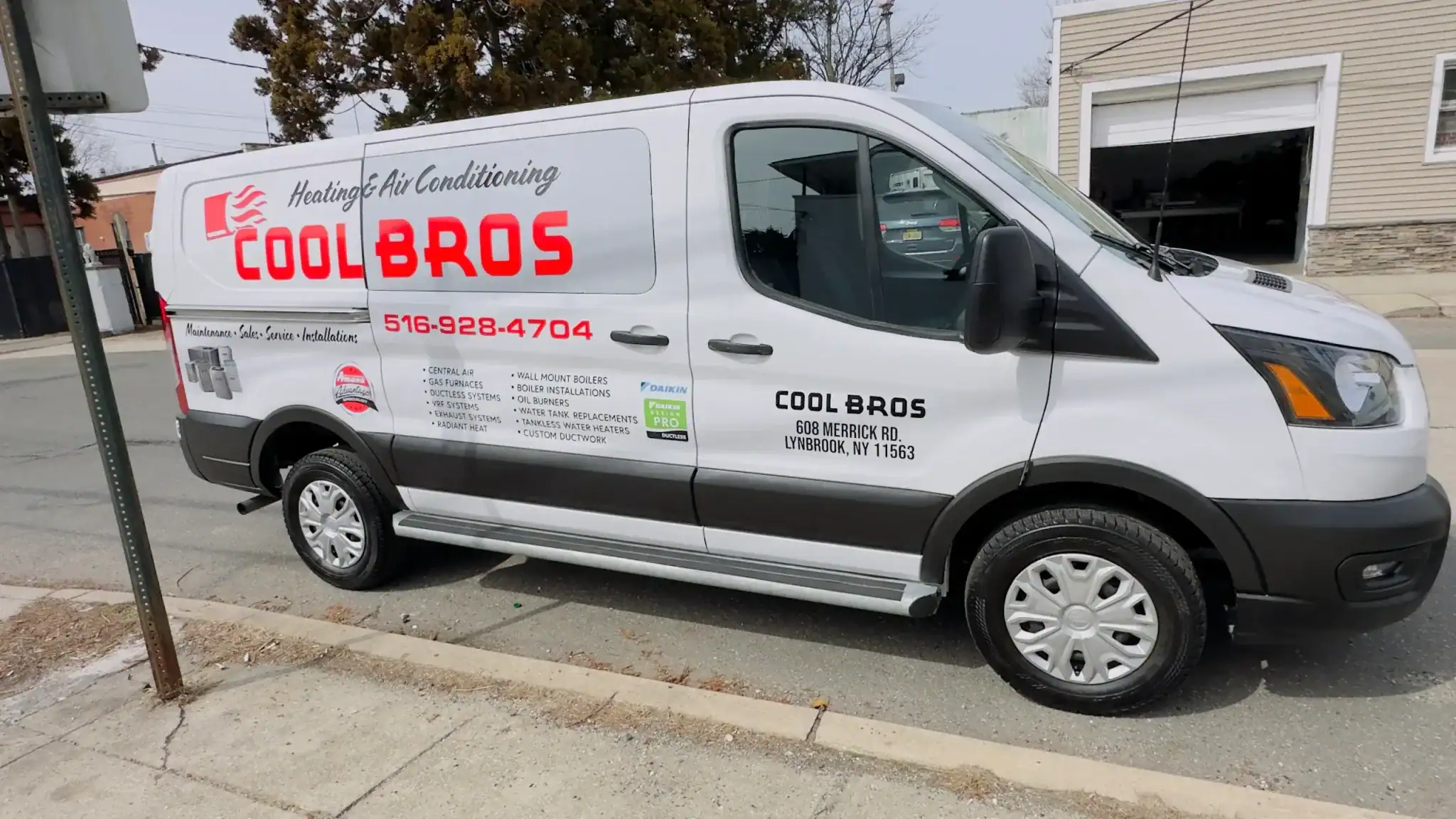
At COOL BROS CORP, our HIC license number is H36422800 — verifiable with the Nassau County Department of Consumer Affairs, with a current expiration date. Our technicians are NATE-certified and EPA Section 608 certified. We carry full general liability and workers’ compensation coverage, and we handle every permit, application, and inspection ourselves so you don’t have to navigate the process alone.
Working With a Licensed HVAC Contractor in Nassau County: The Bottom Line
Permits aren’t the exciting part of an HVAC project. But they’re the part that protects you — from fines, from insurance gaps, from complications when you sell, and from the kind of shoddy work that only gets discovered when it’s already caused damage. In Nassau County, NY, where the permit process involves multiple municipalities, HOA layers, and a building department that processes high volumes of applications, working with a contractor who knows the local landscape isn’t a luxury. It’s the practical choice.
The right contractor pulls their own permits, provides their HIC license number upfront, and doesn’t suggest cutting corners to move faster. If you’re planning HVAC work on your Nassau County home — whether it’s a new system, a replacement, or a mini-split installation — COOL BROS CORP is ready to walk you through the process from estimate to final inspection. Reach out to us directly, and we’ll make sure the job gets done right, documented, and built to last.