
You’re not looking for an HVAC company in The Terrace because everything’s working perfectly. Something’s off. Maybe your AC can’t keep up during July heat. Maybe one room stays hot while the rest freeze. Maybe your energy bills jumped and you don’t know why.
Here’s what changes when your system actually works: your utility bills drop because the unit isn’t fighting itself. Temperature stays consistent room to room. You’re not adjusting the thermostat every hour trying to find the sweet spot.
That’s what proper HVAC maintenance and installation get you. Not a sales pitch about efficiency ratings. Real comfort that doesn’t cost a fortune to maintain. Systems sized correctly for your home, installed by certified technicians who’ve done this across Nassau County for years, and serviced before small issues turn into expensive emergencies.
We’ve been handling HVAC services in Nassau County since 2016. We’re based in Lynbrook, fully licensed and insured, and we’ve earned our BBB A+ rating by showing up when we say we will and doing the work right the first time.
The Terrace sits in one of Nassau County’s most established residential areas, where homes range from post-war builds to newer construction. That means HVAC systems vary widely—and so do the problems. Our technicians are certified to work on everything from older central air units to modern heat pumps and ductless mini-splits.
You’re not getting a national franchise that subcontracts the work. You’re getting a local HVAC company that knows Nassau County homes, understands the climate demands, and stands behind every installation and repair we complete.
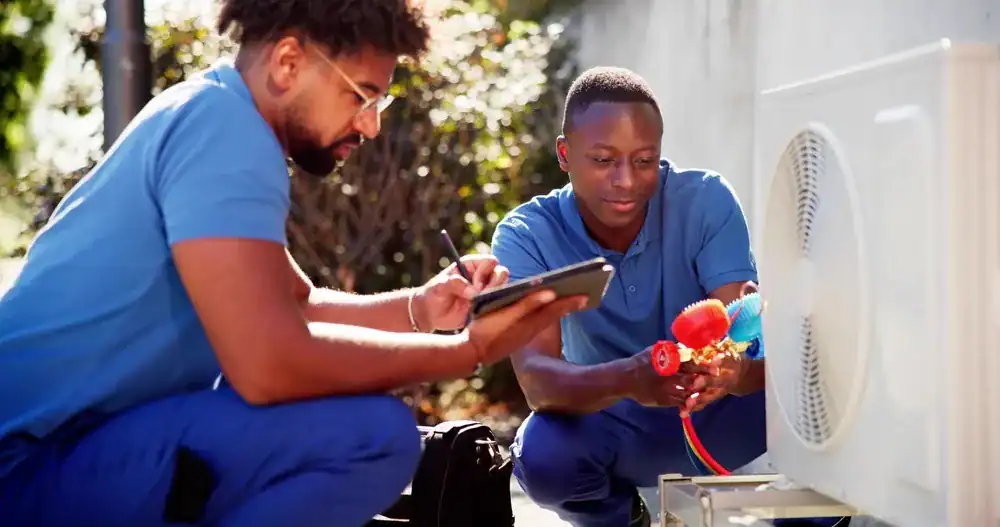
You call or submit a request. We ask a few questions about what’s happening—what you’re noticing, when it started, what you’ve already tried. That helps us come prepared.
We schedule a time that actually works for you, usually within 24 hours for repairs. Our technician shows up, assesses the system, and explains what’s wrong in plain terms. No jargon. No upselling. If it’s a simple fix, we handle it on the spot. If you need a part or a bigger repair, we walk through your options with transparent pricing before any work starts.
For installations, we take measurements, evaluate your home’s layout and insulation, and recommend the right size unit. Oversized systems waste energy and cycle too often. Undersized systems run constantly and never catch up. We size it correctly, install it properly, and test everything before we leave. Then we show you how to use it and what to watch for.
After the job’s done, you get documentation of the work, warranty info, and a direct line if something comes up. That’s it. No mystery fees. No callbacks to fix what should’ve been handled the first time.
Ready to get started?
Twice a year is the standard—once before cooling season, once before heating season. That’s spring and fall for most homeowners in Nassau County.
Why twice? Because your system works hardest during summer and winter. A spring checkup catches issues before your AC has to run daily in July heat. A fall checkup makes sure your heating system fires up correctly when temperatures drop. Skipping maintenance doesn’t save money. It just moves the cost to a bigger repair later, usually at the worst possible time.
During maintenance, we’re checking refrigerant levels, cleaning coils, inspecting electrical connections, testing airflow, and replacing filters. Small issues—like a loose wire or a dirty coil—get handled before they cause a breakdown. If your system is older or running harder than it should, we’ll flag it so you can plan ahead instead of dealing with an emergency replacement in the middle of summer.
For a standard 3-ton unit in The Terrace, you’re looking at $5,000 to $8,000 installed, depending on the brand, efficiency rating, and whether ductwork needs modification. Higher-efficiency models cost more upfront but lower your energy bills long-term.
That price includes the outdoor condenser, indoor evaporator coil, refrigerant lines, electrical work, and labor. If your ductwork has leaks or your home needs better insulation, those add to the cost—but they also determine whether your new system actually performs the way it should. Installing a high-efficiency AC in a poorly insulated home just wastes the efficiency.
We don’t give ballpark estimates over the phone because every home is different. A 1,200-square-foot ranch needs a different setup than a two-story colonial with finished attic space. We measure, assess, and give you an accurate number based on your specific situation. Then you decide. No pressure. No bait-and-switch pricing.
If your system is under 10 years old and the repair costs less than half the price of a new unit, repair usually makes sense. If it’s over 15 years old and you’re looking at a major component failure—compressor, condenser, evaporator coil—replacement is often the smarter move.
Here’s why: older systems use R-22 refrigerant, which is being phased out and getting expensive. A refrigerant recharge on an old system can cost $1,500 or more, and that’s just a temporary fix if there’s a leak. Newer systems use R-410A, which is cheaper and more efficient. They also meet updated efficiency standards, so your energy bills drop after installation.
We’ll walk through both options with real numbers. If repair makes sense, we’ll tell you. If you’re throwing money at a system that’s going to fail again in six months, we’ll tell you that too. The goal is to help you make the right call for your situation, not push the most expensive option.
Yes, especially with New York’s building codes moving toward all-electric systems. Modern heat pumps handle both heating and cooling efficiently, even in cold weather. They’re not the heat pumps from 20 years ago that struggled below 40 degrees.
Today’s cold-climate heat pumps work down to -15°F, which covers anything Nassau County throws at you. They pull heat from outdoor air even when it’s cold outside—sounds strange, but the technology works. You get year-round comfort from one system, lower energy bills compared to oil or gas heating, and eligibility for federal tax credits up to $2,000.
The upfront cost is higher than a standard AC unit, but you’re replacing both your cooling and heating systems. For homes in The Terrace without natural gas lines or with aging oil boilers, heat pumps make financial sense. We’ll evaluate your home’s insulation, existing ductwork, and heating needs to determine if a heat pump is the right fit. If it’s not, we’ll recommend what is.
Usually it’s an airflow problem, a ductwork issue, or an undersized system. Sometimes it’s all three.
Airflow problems happen when vents are blocked, dampers are closed, or return air isn’t balanced. If one room has weak airflow, it won’t cool or heat properly no matter how hard your system runs. Ductwork issues—leaks, poor insulation, disconnected sections—mean conditioned air never makes it to certain rooms. You’re paying to heat or cool your attic or crawl space instead of your living space.
An undersized system can’t keep up with your home’s square footage, especially if you’ve added rooms or finished a basement since the original installation. The system runs constantly, some rooms stay comfortable, and others never reach the target temperature. Oversized systems cause the opposite problem—they cool or heat too quickly, shut off before humidity is removed, and leave the air feeling clammy.
We diagnose the actual cause. Sometimes it’s a $50 fix like adjusting dampers. Sometimes it requires duct sealing or adding a zone system. We’ll show you what’s happening and what it takes to fix it.
First, check your thermostat settings and make sure it’s set to cool. Check your circuit breaker—sometimes a tripped breaker is the only issue. Look at your air filter. If it’s clogged, airflow drops and the system can freeze up or shut down to protect itself.
If those aren’t the problem, call us. We prioritize emergency AC repair during heatwaves because we know you’re not just uncomfortable—depending on your age and health, you could be at risk. We’ll get someone to your home as quickly as possible, usually same-day during summer.
While you wait, close blinds and curtains to block direct sunlight. Use fans to circulate air. Avoid using heat-generating appliances like ovens or dryers. Stay hydrated. If the house gets dangerously hot and you have vulnerable family members, consider staying with friends or in a public cooling center until we can restore your AC. Don’t try to repair the system yourself—you can cause more damage or void your warranty.
Local Resources
Other Services we provide in The Terrace
