

Your energy bill stops climbing every month. Your house stays the temperature you set it to. You’re not adjusting the thermostat three times a day trying to find the sweet spot that doesn’t exist because something’s wrong with your system.
That’s what happens when your HVAC company in Rockville Centre, NY actually diagnoses the problem instead of guessing. When we stock the parts on the truck instead of making you wait another week. When the install is done right the first time so you’re not calling someone else to fix it six months later.
Most people don’t realize their system is underperforming until they see what normal actually looks like. Rooms that used to be too hot in summer or freezing in winter suddenly match the rest of the house. The unit isn’t running constantly trying to keep up. You’re not hearing strange noises at 2 a.m. wondering if it’s about to die.
Cool Bros has been handling HVAC maintenance in Rockville Centre, NY and across Nassau County since 2016. We’re based in Lynbrook, so we’re not driving in from two counties over when you call.
Our techs are certified, licensed, and they’ve seen what happens to systems in this area. The salt air, the humidity swings, the way older homes were built without proper ductwork. They know what breaks, what lasts, and what you actually need versus what someone’s trying to upsell you on.
We’re BBB accredited with an A+ rating because we show up when we say we will, we tell you the real cost before we start, and we don’t leave until it’s done right. That’s not marketing talk—it’s just how we run the business.

You call or submit a request. We ask a few questions about what’s going on—what you’re hearing, what’s not working, how old the system is. Then we schedule a time that actually works for you, not just whatever slot we have open.
Our tech shows up and runs a full diagnostic. Not a quick glance and a guess—actual testing to figure out what’s failing and why. Then they explain what they found in plain terms, what it’ll cost to fix, and how long it’ll take. If it’s a repair, they handle it that day in most cases because the parts are already on the truck.
If it’s a replacement, we walk through your options based on your home’s size, your budget, and what’ll actually save you money long-term. No pressure to go bigger or fancier than you need. We install it, test everything, show you how it works, and make sure you’re comfortable before we leave. Then we follow up to make sure it’s still running the way it should.
Ready to get started?
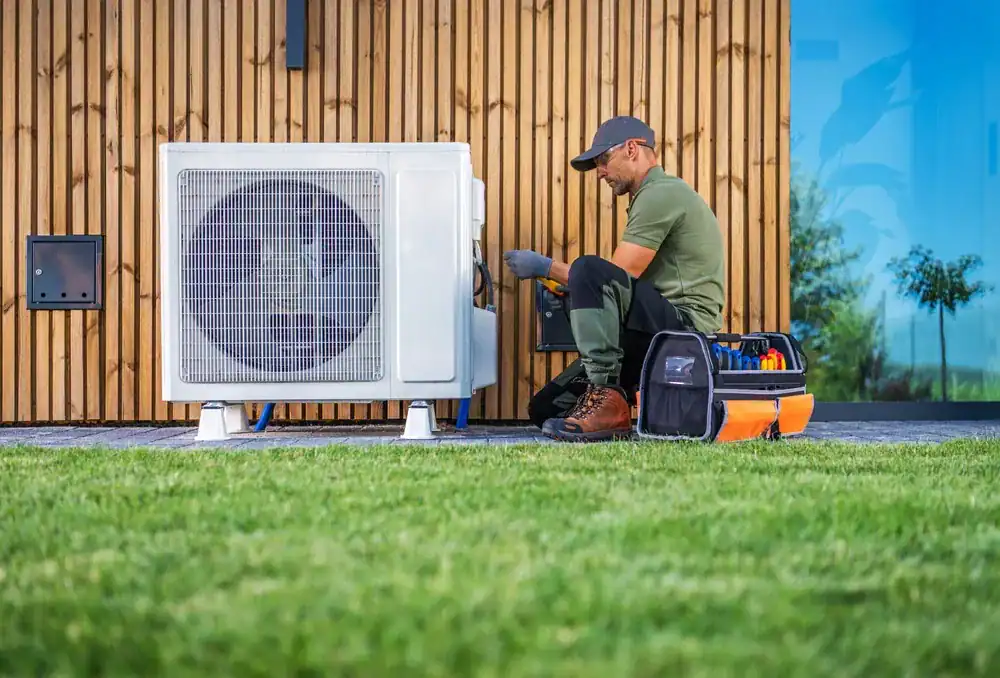
We handle central AC installation in Rockville Centre, NY, heat pump setups, ductless mini-splits, boiler service, and full system replacements. If it heats or cools your home or business, we install it, fix it, or maintain it.
Maintenance means we’re checking refrigerant levels, cleaning coils, testing airflow, inspecting electrical connections, and catching problems before they turn into expensive failures. Most breakdowns don’t just happen—they build up over time. A dirty coil makes your compressor work harder. A slow refrigerant leak drops your efficiency by 20% before you even notice. We find that stuff early.
Rockville Centre homes deal with humidity in summer and drafts in winter, especially older builds near the water. A system that works fine in a newer development might struggle here if it’s not sized right or if your ductwork is leaking. We account for that during installation so you’re not calling us back in a year wondering why your bills are still high. And if you’re in a commercial space—retail, office, restaurant—we handle that too. Different load requirements, different schedules, same expectation that it works when you need it to.
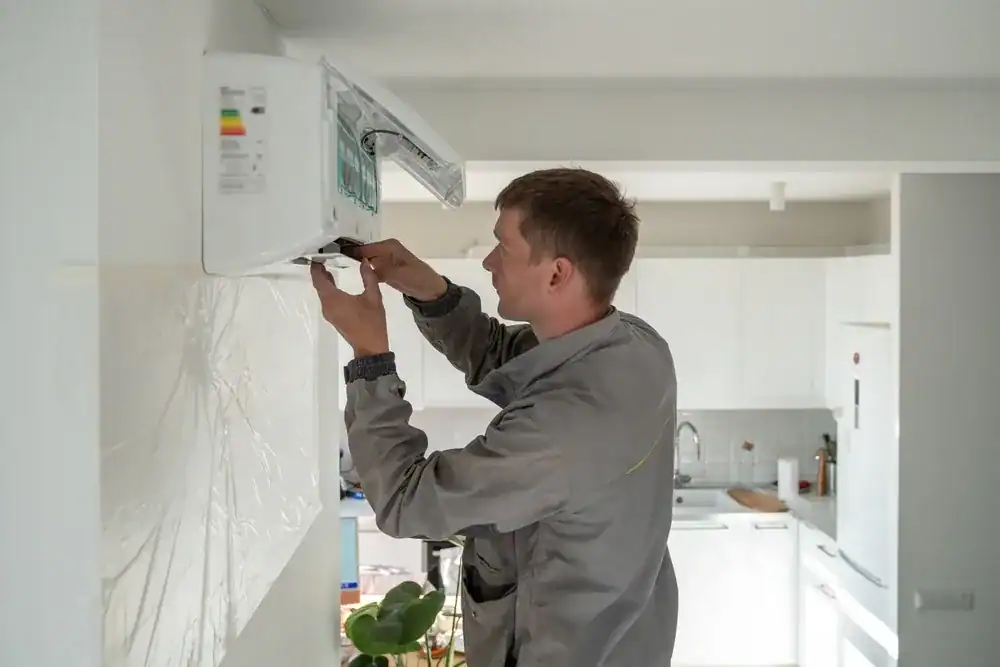
Depends on the size of your home, the type of system, and what condition your ductwork is in. For a standard residential setup, you’re typically looking at $8,000 to $15,000. That includes removal of the old system, installation of the new one, and any modifications needed to make it work properly.
If your ducts are shot or you’re switching from baseboard heat to central air, that adds to the cost. Same if you’re going with a high-efficiency heat pump or adding zones. We don’t give ballpark numbers over the phone because they’re usually wrong—we’d rather come out, look at your setup, and give you an actual price based on what you need.
There are federal tax credits available right now—30% back on qualifying heat pumps, up to $2,000. That’s through the end of 2025, so if you’re on the fence about replacing an old system, the timing’s decent. We’ll walk you through what qualifies and how to claim it.
Once a year minimum, ideally twice—spring for your AC, fall for your heat. That’s when we catch the small stuff before it becomes a middle-of-July breakdown or a no-heat situation in January.
During a maintenance visit, we’re cleaning components that get dirty, checking parts that wear out, and testing system performance. Dirty coils, clogged filters, low refrigerant, failing capacitors—these are the usual suspects that kill efficiency and lead to bigger repairs. Most of them are easy fixes if we catch them early.
If you skip maintenance, your system works harder, costs more to run, and dies sooner. The average HVAC system lasts 15 to 20 years with regular service. Without it, you’re looking at 10 to 12, and you’re paying more in energy costs the whole time. It’s not a scare tactic—it’s just how the equipment works. Maintenance pays for itself in avoided repairs and lower bills.
If your system is under 10 years old and the repair costs less than half of a new system, repair usually makes sense. If it’s over 15 years old and you’re looking at a major component failure—compressor, evaporator coil, condenser—replacement is usually the smarter move.
Here’s why: older systems use R-22 refrigerant, which is being phased out and expensive to refill. Parts are harder to find. Efficiency standards have improved, so even a mid-tier new system will use 30% less energy than what you’re running now. And if you’re repairing something major, there’s no guarantee another part won’t fail next season.
We’ll tell you honestly which way makes more sense for your situation. Sometimes a $600 repair buys you another three years. Sometimes it’s throwing money at a system that’s going to nickel-and-dime you until you replace it anyway. We’re not in the business of selling you a new system if a repair will actually hold up—but we’re also not going to let you waste money on a patch job that won’t last.
Yes. If your heat goes out in the middle of winter or your AC dies during a heatwave, we respond the same day in most cases. We keep common parts stocked so we’re not making you wait three days for an order to come in.
Emergency calls get priority scheduling. We’re not going to tell you to tough it out until next week when it’s 90 degrees or your pipes are at risk of freezing. HVAC failures don’t happen on a convenient schedule, and we get that.
That said, a lot of emergency calls are preventable. A system that’s maintained rarely fails without warning. If you’re hearing strange noises, noticing weak airflow, or seeing your energy bill climb for no reason, that’s your system telling you something’s wrong. Catching it then means you’re scheduling a repair on your terms instead of ours, and you’re not paying emergency rates to fix it on a Sunday.
That depends on your square footage, insulation, window quality, ceiling height, and how much sun your house gets. A 1,500-square-foot ranch with good insulation needs a different setup than a 1,500-square-foot two-story with old windows and no attic insulation.
Bigger isn’t better. An oversized system cools or heats too fast, shuts off before it dehumidifies properly, and cycles on and off constantly. That wears out components faster and leaves your house feeling clammy in summer. An undersized system runs nonstop trying to keep up and never quite gets there.
We do a load calculation before recommending a system size. That’s a formula that accounts for all the variables in your home so you’re getting a system that matches your actual needs. It takes about 20 minutes and it’s the difference between a system that works and one that costs you money for the next 15 years. Most companies skip this step and just guess based on square footage. We don’t.
Yes, and they’re often a better fit than trying to retrofit central air into a house that was never designed for it. Older homes in Rockville Centre don’t always have the space for ductwork, and cutting into walls to add it gets expensive fast.
Ductless mini-splits don’t need ducts. You’ve got an outdoor unit and one or more indoor units mounted on the wall or ceiling. They’re efficient, quiet, and you can control each room separately instead of heating or cooling the whole house to make one room comfortable.
Installation is less invasive than central air—we’re running a small line through the wall, not tearing up your ceilings. And because you’re not losing energy through leaky ducts, they’re often cheaper to run. If you’ve got a home with radiators or baseboard heat and no existing ductwork, a mini-split system is worth considering. We’ll walk you through whether it makes sense for your layout and your budget.
Local Resources
Other Services we provide in Rockville Centre
