

You’ve dealt with it before. The AC repair that works for three days, then quits again. The furnace that rattles all winter because the fix was temporary. The energy bills that keep climbing because your system is working twice as hard as it should.
Here’s what changes when your HVAC system actually gets fixed right. Your home stays the same temperature in every room. You’re not adjusting the thermostat every hour trying to find the sweet spot. Your energy bills drop because the system isn’t fighting itself to keep up.
When we handle your air conditioning repair or central AC installation in Great Neck, NY, the work holds. You’re not calling us back in a week. Your system runs quieter, uses less energy, and keeps your family comfortable without the constant babysitting. That’s the difference between a quick patch and a real solution.
Cool Bros has been serving Nassau County since 2016. We’re based in Lynbrook, and our certified technicians work across Great Neck, Garden City, Port Washington, and the surrounding North Shore communities. We hold a BBB A+ rating because we show up on time, explain what’s wrong in plain terms, and give you upfront pricing before any work starts.
Great Neck homes range from waterfront properties to Tudor-style houses to older colonials, and each one has different HVAC needs. We’ve worked on all of them. Whether you’re in Great Neck Plaza dealing with humidity issues in a coastal home or managing an older heating system in a historic property, we know what works in this climate and what doesn’t.
You’re not getting a sales pitch. You’re getting a certified technician who’s seen your exact problem before and knows how to fix it without upselling you on equipment you don’t need.
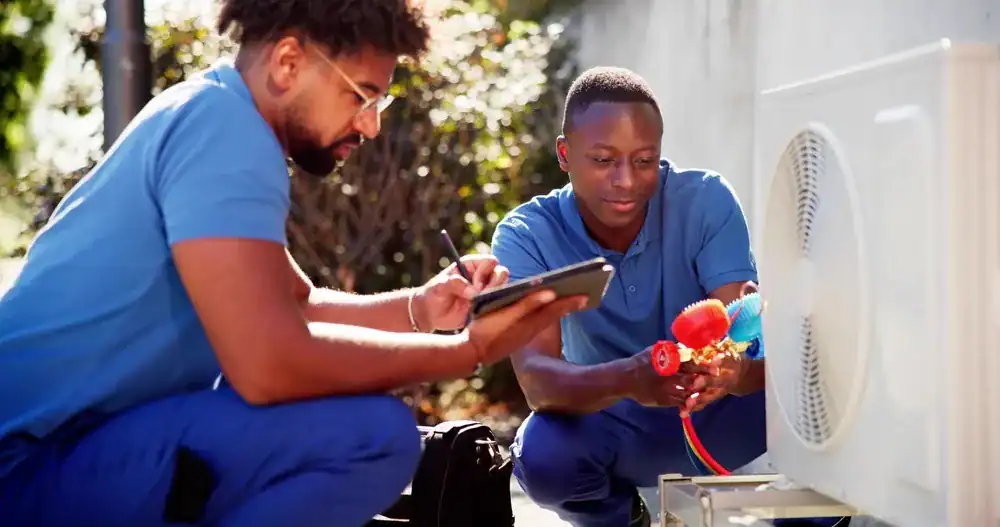
First, you call or contact us with the issue. We ask a few questions to understand what’s happening with your system—strange noises, inconsistent temperatures, complete failure, whatever it is. If it’s an emergency, we prioritize same-day service.
When our technician arrives, they’ll inspect your system and diagnose the actual problem. Not the symptom—the root cause. You’ll get a clear explanation of what’s wrong, what it takes to fix it, and what it costs. No surprises, no pressure. If it’s a simple repair, we handle it on the spot. If you need a new system or a major component, we walk through your options based on your home’s size, your budget, and your energy goals.
Once you approve the work, we complete it on schedule. For installations, that means proper sizing, clean line work, and testing every function before we leave. For repairs, it means fixing the issue so it doesn’t come back next month. After the job, we clean up, answer any questions about operation or maintenance, and make sure your system is running exactly how it should. You’ll know how to reach us if anything changes.
Ready to get started?
Our HVAC maintenance in Great Neck, NY covers the full system. We inspect and clean your air filters, check refrigerant levels, test thermostat accuracy, and examine all electrical connections. For furnaces and boilers, we inspect the heat exchanger, burner assembly, and ventilation. For central AC and heat pumps, we clean coils, check airflow, and test the compressor.
Nassau County’s climate puts real stress on HVAC systems. Humid summers mean your AC works overtime managing moisture, not just temperature. Cold winters require reliable heat without the risk of a breakdown at 2 a.m. We see this across Great Neck—older systems struggling to keep up, newer systems installed incorrectly, and homeowners stuck with high energy bills because their equipment isn’t matched to their home’s actual needs.
When we install a new system, we calculate the load requirements for your specific square footage and insulation. Oversized units cycle on and off too frequently, wearing out components faster. Undersized units run constantly and never quite get the job done. We size it right the first time. If you’re upgrading to a high-efficiency heat pump or mini-split system, we’ll walk you through the federal tax credits available through 2025—up to 30% back on qualifying equipment. That’s real money back in your pocket, and we make sure you get it.
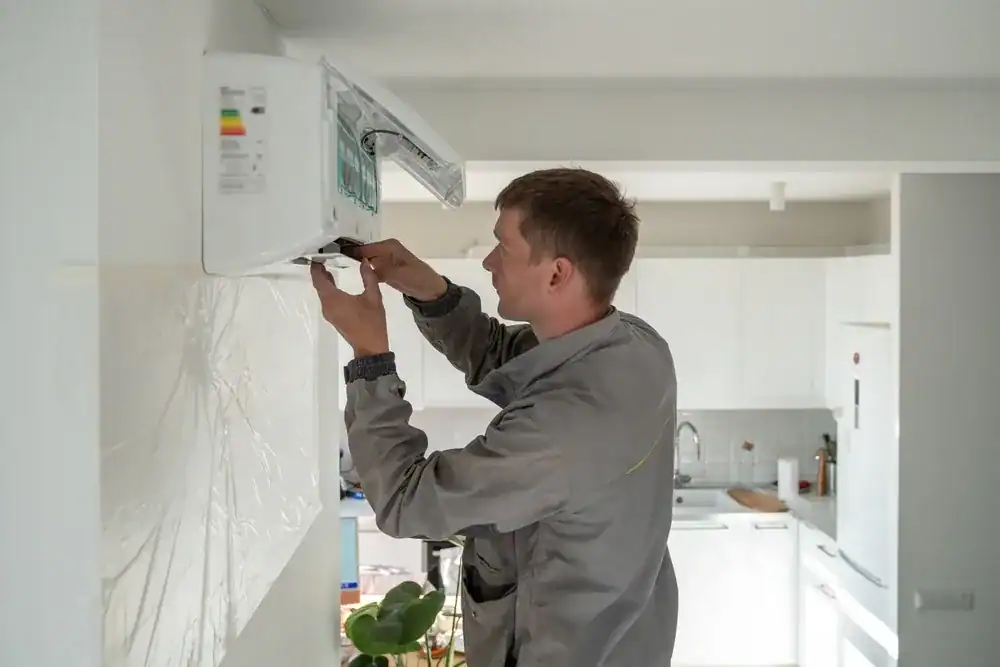
Twice a year is the standard—spring for your cooling system, fall for your heating system. This isn’t about upselling you on service visits. It’s about catching problems before they become expensive emergencies.
Spring maintenance prepares your AC for Nassau County’s humid summers. We clean the coils, check refrigerant levels, and make sure airflow is where it should be. A dirty coil or low refrigerant forces your system to work harder, which spikes your energy bill and shortens the system’s life. Fall maintenance does the same for your furnace or boiler—inspecting the heat exchanger, testing the ignition system, and making sure carbon monoxide isn’t a risk.
If your system is over 10 years old, maintenance becomes even more important. Older systems have more wear, and small issues turn into big failures faster. Regular checkups extend the life of your equipment and keep your energy costs predictable. Most breakdowns happen on the hottest or coldest days of the year because that’s when your system is under the most stress. Maintenance reduces that risk significantly.
If your system is under 10 years old and the repair costs less than half the price of a new unit, repair usually makes sense. If your system is over 15 years old and you’re looking at a major component failure—compressor, heat exchanger, or evaporator coil—replacement is often the smarter move.
Here’s why. Older systems use more energy, even when they’re working fine. A 15-year-old AC might have a SEER rating of 10, while new systems start at 14 and go up to 20+. That difference shows up on your energy bill every month. Add in the cost of a major repair, and you’re paying twice—once for the fix, and again in higher energy costs for a system that’s still inefficient.
Replacement also gets you access to newer technology. Heat pumps can handle both heating and cooling with a single system, cutting your energy use significantly. Smart thermostats let you control temperatures remotely and track energy usage in real time. And if you’re replacing an old system with a high-efficiency model, you can claim up to 30% back in federal tax credits through 2025. We’ll run the numbers with you so you can see the actual payback period and make the call that fits your budget.
Your system might be running, but that doesn’t mean it’s running efficiently. High energy bills usually point to one of a few issues: dirty filters, refrigerant leaks, duct leaks, or an oversized system that’s short-cycling.
Dirty filters restrict airflow, forcing your system to work harder to move air through your home. That extra effort uses more electricity and puts strain on the blower motor. Refrigerant leaks mean your AC can’t absorb heat effectively, so it runs longer to reach the set temperature. Duct leaks are common in older Nassau County homes—conditioned air escapes into your attic or crawlspace before it ever reaches your living areas, and your system compensates by running nonstop.
An oversized system is less obvious but just as costly. If your AC or furnace is too powerful for your home’s square footage, it reaches the thermostat setting quickly, shuts off, then kicks back on a few minutes later. This constant cycling uses more energy than a properly sized system running steadily. We can perform an energy audit to pinpoint where you’re losing efficiency and give you a clear fix—whether that’s sealing ducts, replacing filters, repairing leaks, or right-sizing your equipment.
Most residential installations take one to two days, depending on the system type and your home’s setup. A straightforward central AC replacement in a home with existing ductwork usually wraps up in a day. If we’re installing a new heat pump system, adding ductwork, or working in a home with challenging access, it might take two days.
We don’t rush installations. Proper sizing, clean line sets, correct refrigerant charge, and thorough testing all take time. Cutting corners speeds up the install but leads to problems down the road—uneven temperatures, higher energy bills, and premature system failure. We’d rather take the extra hours to do it right than leave you with a system that underperforms from day one.
Before we start, we’ll give you a clear timeline based on your specific project. If we run into anything unexpected—old wiring that needs updating, ductwork that needs repair—we’ll let you know immediately and explain your options. Once the installation is complete, we test every function, walk you through the new system’s operation, and make sure you’re comfortable with the controls before we leave.
First, check your thermostat settings and make sure it’s set to cool, not heat or fan only. Check your circuit breaker to see if it tripped. If the breaker is fine and the thermostat is set correctly, check your air filter—a completely clogged filter can shut down airflow and cause the system to overheat and shut off.
If those basics don’t solve it, call us for same-day emergency service. AC failures during Nassau County heatwaves are common because systems are running at full capacity for days straight. The most frequent culprits are capacitor failures, refrigerant leaks, or frozen evaporator coils. All of these need a technician to diagnose and repair safely.
While you’re waiting for service, close your blinds or curtains to block direct sunlight, avoid using heat-generating appliances like ovens, and stay hydrated. If you have a basement or lower level, spend time there since heat rises. Don’t try to fix refrigerant leaks or electrical issues yourself—refrigerant requires certified handling, and electrical work on HVAC systems can be dangerous without proper training. We’ll get your system back up as quickly as possible so you’re not stuck in the heat any longer than necessary.
Yes, and they’re becoming more popular across Nassau County for good reason. Heat pumps handle both heating and cooling with one system, and they’re significantly more energy-efficient than traditional furnaces and air conditioners. They work by transferring heat rather than generating it, which uses less electricity.
The concern people have is whether heat pumps work in cold weather. Older models struggled when temperatures dropped below freezing, but modern cold-climate heat pumps perform well even in the teens. Great Neck winters rarely stay that cold for extended periods, so a heat pump can handle your heating needs without a backup system in most cases. If you want extra peace of mind, a dual-fuel system pairs a heat pump with a furnace that kicks in only during the coldest days.
The upfront cost for a heat pump is higher than a standard AC unit, but the energy savings add up quickly. You’re also eligible for federal tax credits of up to 30% on qualifying high-efficiency heat pumps through 2025, which offsets a significant portion of the cost. We’ll calculate your potential savings based on your home’s size, insulation, and current energy usage so you can see the real payback period. For most Great Neck homeowners, heat pumps make financial sense within a few years and provide reliable comfort year-round.
Local Resources
Other Services we provide in Great Neck
