
Your energy bills drop. Not by some vague amount—by up to 30% when the system’s sized right and installed correctly. That’s real money back in your pocket every month, especially during Nassau County summers that are only getting hotter.
You get consistent cooling in every room. No more hot spots upstairs or freezing out the living room while the bedrooms stay warm. Proper load calculations and ductwork design mean the air goes where it needs to go.
Your system lasts longer. When installation’s done right, you’re not calling for repairs every season or replacing the unit years early. You’re protecting a significant investment in a home that’s worth protecting—median home values in Nassau County sit above $700,000, and your cooling system should match that standard.
We’ve spent over eight years installing central AC systems across Nassau County. We’re locally owned, based in Lynbrook, and we know The Terrace’s housing stock—the split-levels, the colonials, the ranches that need different approaches to cooling.
Our technicians are certified and EPA-licensed. We maintain an A+ rating with the Better Business Bureau because we show up on time, price everything upfront, and don’t leave until the job’s done right.
You’re not getting a national chain that rotates crews through every few months. You’re getting people who live here, work here, and stake their reputation on every installation in The Terrace, NY.
First, we calculate your actual cooling load. That means measuring your home’s square footage, checking insulation levels, counting windows, and accounting for sun exposure. This determines the right system size—not guesswork, not rules of thumb.
Next, we walk you through equipment options. You’ll see energy efficiency ratings, warranty coverage, and what each system costs upfront. No pressure, no upselling to features you don’t need.
Installation day, our crew arrives on schedule. Most residential central AC installations in The Terrace wrap up in a single day. We install the outdoor condenser, connect it to your indoor air handler or furnace, run refrigerant lines, wire everything to your thermostat, and test the whole system under load.
Before we leave, you’ll know how to operate everything, what maintenance looks like, and how to reach us if something seems off. You get documentation, warranty information, and a system that’s ready to handle whatever summer throws at it.
Ready to get started?
You get a complete load calculation specific to your home. This isn’t optional—it’s how we determine whether you need a 2-ton, 3-ton, or larger system. Undersized units run constantly and fail early. Oversized units short-cycle and waste energy.
Your installation includes the outdoor condensing unit, indoor evaporator coil, refrigerant lines, electrical connections, thermostat wiring, and startup testing. If your ductwork needs modification or repair, we’ll tell you before we start—not after.
We’re installing systems in a county where temperatures are projected to increase 4-7°F by the 2050s, with extreme heat days jumping 128% over the next 30 years. That means your cooling system isn’t a luxury—it’s essential infrastructure for your home and your family’s safety.
Energy efficiency matters more in Nassau County than almost anywhere else. Your cost of living runs 49% higher than the national average. An ENERGY STAR-certified system installed correctly can cut cooling costs by 30%, which adds up fast when you’re running AC from May through September.

System size gets determined by a load calculation, not square footage alone. A proper calculation factors in your home’s insulation, window count and placement, ceiling height, sun exposure, and even how many people typically occupy the space.
In The Terrace, where you’ll find everything from 1,200-square-foot ranches to 3,000-square-foot colonials, there’s no one-size-fits-all answer. A 1,800-square-foot home with poor insulation and west-facing windows might need a larger system than a 2,200-square-foot home with good insulation and mature tree coverage.
We run these calculations on every job because the consequences of getting it wrong are expensive. An oversized system costs more upfront, cycles on and off too frequently, never properly dehumidifies your home, and wears out faster. An undersized system runs nonstop on hot days, never quite catches up, and burns out early from overwork.
Central AC installation in New York typically runs between $2,500 and $3,300 for straightforward residential jobs, but your actual cost depends on system size, efficiency rating, and whether your existing ductwork needs work.
A basic 2.5-ton system with standard efficiency will cost less than a 4-ton high-efficiency unit with a variable-speed air handler. If your ductwork is undersized, leaking, or poorly designed, that adds to the project—but it’s also not optional if you want the system to work correctly.
We price everything upfront after seeing your home and running the load calculation. You’ll know what the equipment costs, what labor costs, and what any ductwork modifications will run before we start. No surprises, no “unforeseen complications” that magically appear on the final bill.
Most residential central AC installations in The Terrace, NY finish in one day. We typically start in the morning and have you cooling by late afternoon.
That timeline assumes your ductwork is in decent shape and your electrical panel can handle the new system’s load. If we need to run new ducts, upgrade your electrical service, or make structural modifications, that extends the timeline—but we’ll tell you that during the estimate, not on installation day.
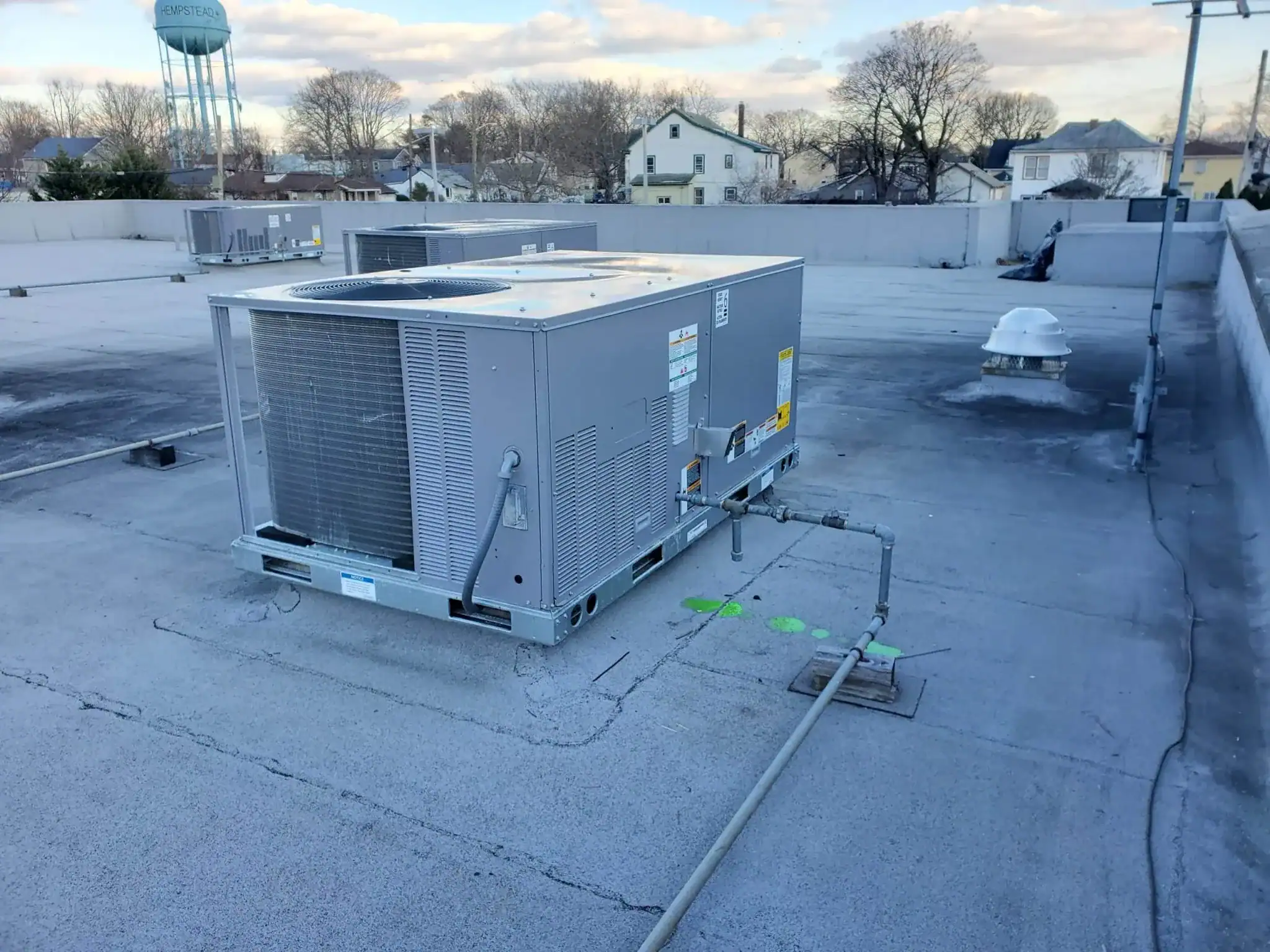
The actual work involves mounting the outdoor condenser on a pad, installing or connecting to your indoor air handler, running refrigerant lines between the two units, making electrical connections, connecting to your thermostat, charging the system with refrigerant, and testing everything under operating conditions. Rushing any of those steps leads to problems later, so we don’t.
If you’re replacing a system that’s 10-15 years old, yes—you’ll see lower bills. ENERGY STAR-certified systems use up to 30% less energy than older standard-efficiency models, and that gap widens if your old system was poorly maintained or incorrectly sized.
But the equipment is only half the equation. Installation quality determines whether you actually capture those efficiency gains. Refrigerant charge has to be exact—too much or too little kills efficiency. Ductwork can’t leak—studies show that typical duct systems lose 20-30% of cooled air through leaks and poor connections. Airflow has to match manufacturer specifications.
In Nassau County, where your cost of living runs nearly 50% above the national average, efficiency isn’t just an environmental talking point. It’s money. A system that saves you $50-75 per month in cooling costs pays for itself faster and keeps paying you back for 15-20 years.
Your system needs annual professional maintenance before cooling season starts—typically in April or early May. That service includes cleaning the outdoor coil, checking refrigerant charge, testing electrical connections, inspecting the condensate drain, and verifying airflow across the indoor coil.
Between professional visits, you need to change your air filter every 1-3 months depending on the filter type and how much your system runs. A clogged filter restricts airflow, makes your system work harder, and can cause the indoor coil to freeze.
Keep the area around your outdoor unit clear—no plants within two feet, no debris blocking airflow. Hose off the outdoor coil once or twice per summer if you notice it collecting dirt or cottonwood seeds.
That’s it. Central AC systems are relatively low-maintenance compared to other home systems, but skipping that annual service is how small issues become expensive repairs. We’d rather catch a failing capacitor during a maintenance visit than have your system quit on the hottest day in July.
Yes, but it depends on whether your home has existing ductwork. If you have a forced-air furnace, you already have ducts—we just need to add the outdoor condensing unit, indoor evaporator coil, and connect everything to your existing duct system.
If you don’t have ductwork, you’re looking at either installing a complete duct system or considering a ductless mini-split system instead. Full duct installation adds significant cost and complexity—we’re talking about running supply and return ducts through walls, attics, or basements throughout your home.
Many older homes in The Terrace were built with boiler heat and no ductwork. For those homes, ductless mini-splits often make more sense—you get efficient cooling without tearing up walls to install ducts. We’ll walk you through both options and price them out so you can make an informed decision based on your home’s layout and your budget.
Local Resources
Other Services we provide in The Terrace
