It’s the middle of summer, the AC is humming along, and then you notice it — the air coming through the vents isn’t cold anymore. The system sounds like it’s working. The fan is spinning. But the house just keeps getting warmer. That combination of confusion and frustration is something Nassau County homeowners know well, especially when the first real heat wave of the season hits and an AC that was fine last fall suddenly isn’t. This guide covers the most common reasons your air conditioner isn’t cooling, what you can realistically check on your own, and when it’s time to stop guessing and call someone who can actually fix it.
Most Common Reasons Your AC Isn’t Blowing Cold Air
Most cases of an air conditioner not blowing cold air come down to a handful of issues — and they’re not all equally serious. Some you can address yourself in five minutes. Others require a licensed technician with the right equipment and certifications. The tricky part is knowing which situation you’re in before you spend an afternoon troubleshooting something that needs a professional, or worse, call someone out for a filter that needed a swap.
The good news is that the causes tend to follow a pattern. Starting with the simplest and working toward the more complex is the right approach — and it’s exactly what we do on a diagnostic visit anyway.
What to check before you call for air conditioner repair
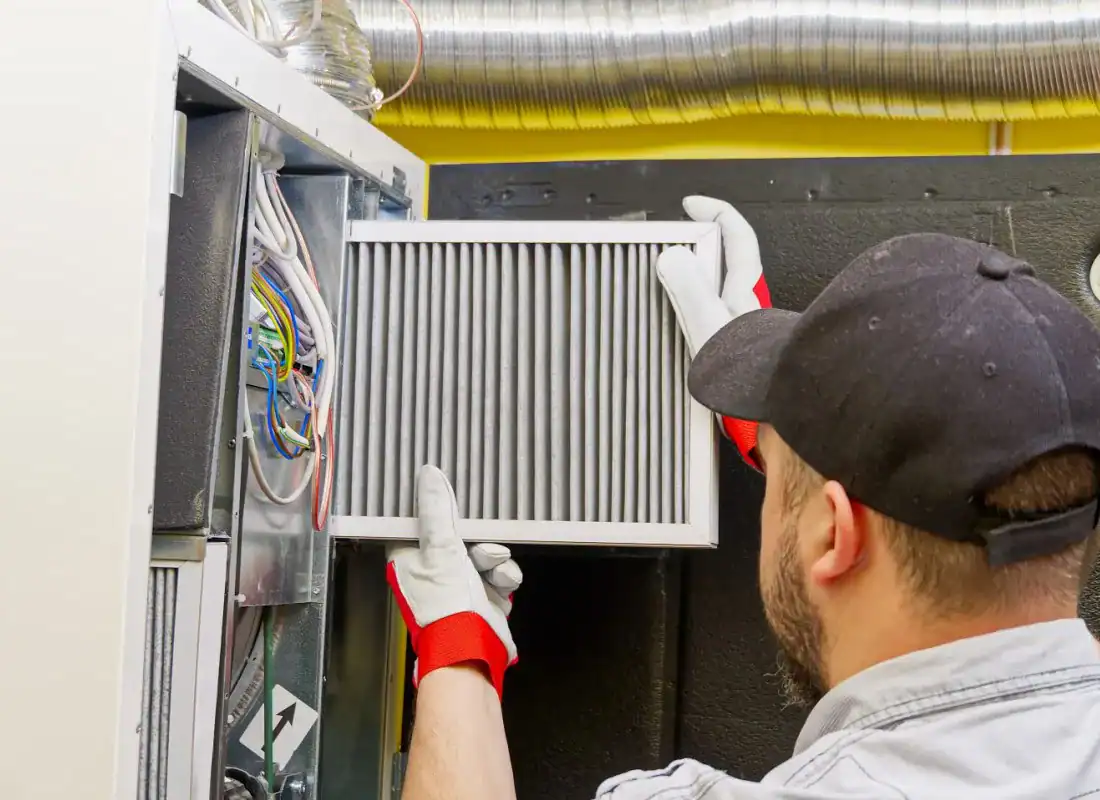
The single most common reason an air conditioner stops cooling effectively is a dirty air filter. It sounds almost too simple, but a clogged filter restricts airflow through the system so severely that it can trigger a chain reaction — reduced cooling, warm air at the vents, and eventually a frozen evaporator coil that makes things worse. If you haven’t changed your filter in the last month or two during heavy use, start there. It takes two minutes and costs a few dollars.
After the filter, check your thermostat. Make sure it’s set to “cool” and not “fan only.” Fan-only mode runs the blower without activating the cooling system, which means you’ll get airflow but not cold air. It sounds obvious, but it gets missed more often than you’d think — especially if someone adjusted the settings without realizing it.
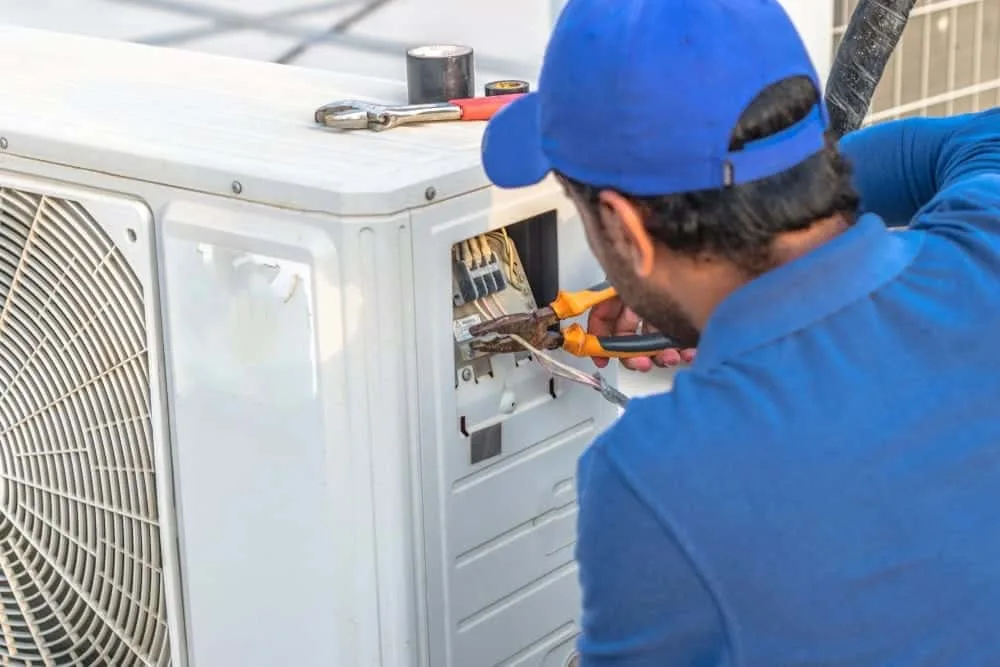
The outdoor condenser unit is worth a look too. If the coils are covered in dirt, grass clippings, or debris, the system can’t release heat properly, which backs up the entire cooling process. You can gently rinse the exterior coils with a garden hose if the buildup is visible, but don’t force anything or use a pressure washer.
Here’s the part that matters most: if you’ve done all of that and your air conditioner is still not blowing cold air, the problem is almost certainly something you shouldn’t try to fix yourself. Refrigerant leaks, frozen evaporator coils, failed capacitors, and compressor issues all require a trained technician — and in the case of refrigerant, a technician who holds EPA Section 608 certification, which is a federal legal requirement for anyone who handles refrigerants. It’s not optional, and it’s not a technicality. A contractor without that certification cannot legally purchase or work with refrigerant.
Refrigerant leaks and why they’re a bigger problem than they look
Low refrigerant is one of the more misunderstood causes of an air conditioner not blowing cool air. A lot of homeowners assume it just means the system needs to be “topped off” — like adding oil to a car. That’s not how it works. Your AC system is a closed loop. If refrigerant levels are low, it means there’s a leak somewhere. Adding more refrigerant without finding and fixing the leak is a temporary fix at best, and an expensive one at that.
A refrigerant leak does more than just reduce cooling. It puts strain on the compressor — the most expensive component in your system — because the compressor has to work harder to compensate for the pressure imbalance. Left unaddressed, what starts as a leak can turn into a compressor failure, and that’s a repair that changes the entire cost conversation. You might notice a hissing sound near the unit or see ice forming on the refrigerant lines. Either of those is a signal to shut the system off and call us.
This is especially relevant for Nassau County homes built before 2010. Many of those systems still use R-22 refrigerant, which was phased out under EPA regulations. R-22 is no longer manufactured, which means what’s left in the supply chain is expensive and increasingly scarce. If your system is older and running on R-22, a refrigerant leak isn’t just a repair — it’s a decision point about whether to keep putting money into an aging system or invest in a replacement. A straightforward diagnostic visit can tell you exactly where you stand.
Continuing to run your AC when it’s not cooling properly can turn a manageable repair into a much larger one. If the system is blowing warm air and you’ve already checked the basics, turning it off and calling us is the smarter move.
Why Nassau County homes have a harder time staying cool
Nassau County’s housing stock creates a specific set of HVAC challenges that generic troubleshooting guides don’t account for. A large portion of the homes here — particularly in Lynbrook, Rockville Centre, Freeport, and Merrick — were built between 1945 and 1970 as part of the post-war suburban expansion of Long Island. Many of those homes weren’t originally designed for central air conditioning. The ductwork was retrofitted later, sometimes well and sometimes not, and aging systems in older homes tend to fail in ways that newer construction doesn’t.
Add to that the fact that southern Nassau County sits close to the Atlantic Ocean, and you have a real accelerant for condenser coil corrosion. Salt air is hard on outdoor units in a way that homeowners in inland markets simply don’t deal with. If your outdoor unit is more than a few years old and you’ve never had the coils inspected, it’s worth having someone take a look — especially if you’re within a few miles of the coast.
Long Island’s heat and humidity make AC problems worse
Long Island summers are genuinely demanding on HVAC equipment. It’s not just the heat — it’s the combination of high temperatures, high humidity, and extended runtime that wears systems down faster than in drier climates. When your AC runs longer to keep up with the heat and humidity, every component works harder. Capacitors fail more often. Refrigerant leaks that might go unnoticed in a milder climate become obvious when the system is running eight to ten hours a day.
The first heat wave of the season is particularly revealing. A system that sat idle through fall and winter and then gets pushed hard on the first 90-degree day in June is going to show its weaknesses fast. This is when most Nassau County homeowners discover their AC isn’t blowing cold air — not gradually, but all at once, on the day they need it most.
That’s why same-day service matters here in a way it might not everywhere else. When your AC fails during a heat wave and you have kids or elderly family members at home, waiting three days for the next available appointment isn’t a real option. We’re available 24/7, including nights, weekends, and holidays — because the urgency is genuine, and we treat it that way.
There’s also the permit side of things that out-of-county contractors often handle poorly. Nassau County’s five municipalities — the towns of Hempstead, North Hempstead, and Oyster Bay, and the cities of Long Beach and Glen Cove — each run their own building departments with different requirements and inspection timelines. We work in Nassau County regularly, so we know how that process works, which keeps things moving smoothly on larger repairs and replacements.
Repair or replace? How to know which one makes sense
This is the question Nassau County homeowners dread most — and for good reason. Nobody wants to spend money on a repair only to be told six months later that the system needs to be replaced anyway. At the same time, not every aging system needs to go. The right answer depends on the specific failure, the age of the equipment, and the cost of the repair relative to what a new system would run.
A few things that generally point toward repair: the system is less than ten years old, the failure is isolated to a single component like a capacitor or a contactor, and the refrigerant is a modern type rather than R-22. In those cases, a repair is usually the straightforward, cost-effective call.
Things that point toward replacement: the system is running on R-22, it has needed multiple repairs in the past few seasons, the compressor has failed (which is the most expensive single component to replace), or the system’s efficiency rating is so far below current standards that the energy savings from a new unit would offset a significant portion of the replacement cost over time. Modern systems rated at up to 22.0 SEER2 use substantially less energy than equipment from even ten years ago, and that difference shows up on your PSEG Long Island bill every month.
If your system is still under warranty, make sure whoever you call is factory-trained on your equipment. DIY repairs and work by untrained technicians can void manufacturer warranties — and losing warranty coverage on a relatively new system is a real financial loss. An honest diagnostic visit should give you a clear picture of what you’re dealing with and what your actual options are, without pressure in either direction.
Getting your air conditioner repaired in Nassau County, NY
If your air conditioner stopped blowing cold air, the path forward is pretty straightforward: check the filter and thermostat first, and if those aren’t the issue, stop running the system and get a qualified technician out to diagnose it. The longer a struggling system runs, the more likely a manageable problem becomes a costly one.
Nassau County homes have specific challenges — older ductwork, salt air, aging equipment, and the kind of humid summers that push systems to their limits. What actually helps is a technician who knows this area, understands the housing stock, and gives you a straight answer about what’s wrong and what it’ll take to fix it.
COOL BROS CORP is based in Lynbrook and serves homeowners across Nassau County, NY. We’re available 24/7 including nights, weekends, and holidays — because a broken AC in July doesn’t wait for business hours. If you’re dealing with an air conditioner not blowing cold air and you want an honest diagnosis from a certified team, give us a call.