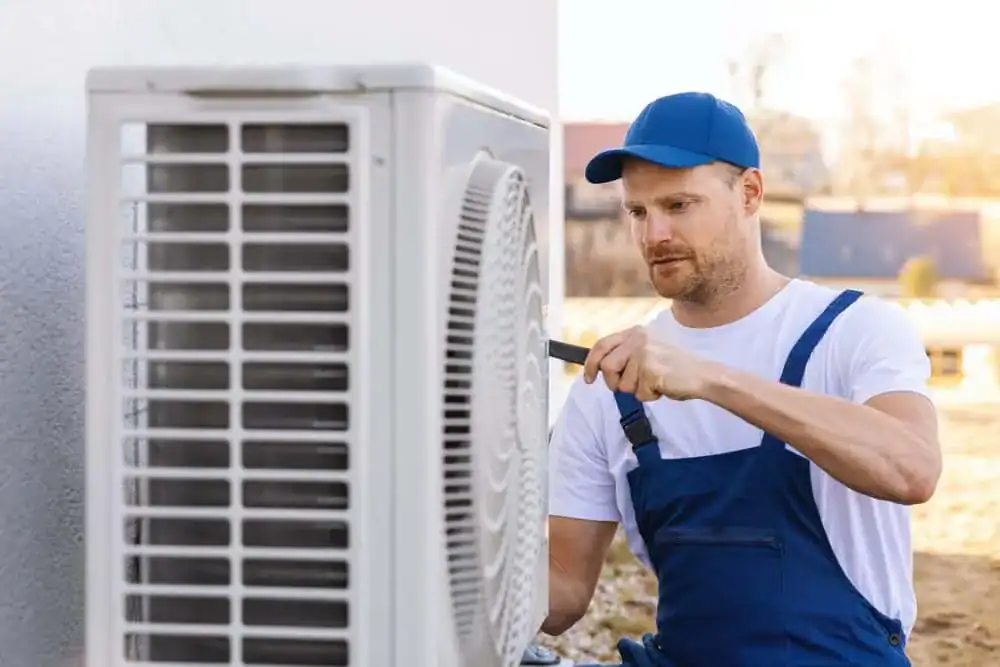
Your AC stopped working. Again. It’s 88 degrees outside, the humidity makes it feel like 95, and your house is starting to feel like a sauna. You’re sweating, the kids are complaining, and you’re wondering if this is another $200 fix or if it’s finally time to replace the whole system. Nassau County summers don’t give you the luxury of waiting around to figure it out. You need answers now—what’s wrong, what it’ll cost, and whether the technician who shows up actually knows what they’re talking about. Let’s walk through what’s happening with your system and what you should expect from a real repair.
Common AC Problems in Nassau County’s Humid Climate
Your air conditioner works harder here than it would in Arizona or Colorado. That’s not an exaggeration. Nassau County’s combination of heat and humidity creates a perfect storm for AC systems. Your unit isn’t just fighting temperature—it’s battling moisture that can damage components and create drainage issues that don’t happen in drier climates.
The high humidity you deal with every summer causes serious damage to your condensate drain. This leads to water pooling around your unit that goes beyond normal condensation. You’ll see it collecting near the indoor air handler or dripping from vents, and that’s your system telling you something’s wrong before it gets worse.
Frozen coils are another frequent problem in this area. When airflow gets restricted—often from dirty filters or blocked return ducts—the moisture in Nassau County air can cause ice buildup that stops your system cold. The electrical components in your system also take a beating from the climate, with constant cycling between high demand during the day and lower demand at night, combined with humidity, causing sensors and controls to malfunction more frequently than in drier climates.
Refrigerant Leaks and Low Cooling Performance
If your AC is running but not cooling properly, there’s a good chance you’re dealing with a refrigerant leak. Refrigerant doesn’t just “run out”—if levels are low, something’s leaking. This is one of the most common issues we find during emergency AC repair calls in Nassau County, and it’s not something you can fix yourself.
Low refrigerant means your system can’t absorb heat from your home’s air effectively. You’ll notice the air coming from your vents isn’t cold—it’s just room temperature or slightly cool. Some homeowners try to compensate by dropping the thermostat lower and lower, hoping that’ll help. It won’t. All that does is make your system run longer while still not delivering the cooling you need, which means higher energy bills for worse performance.
The issue could also involve your evaporator coils, which are responsible for actually cooling the air before it gets distributed through your home. In Nassau County and surrounding areas, where humidity makes everything feel hotter, an AC that’s not cooling properly isn’t just uncomfortable—it’s a health concern, especially for kids, elderly family members, or anyone with respiratory issues.
Our trained HVAC technicians repair the leak, ensure it’s properly fixed, and recharge your system with the appropriate amount of refrigerant. This ensures your unit functions for optimal performance and efficiency. Adding more refrigerant without fixing the leak is not a solution—it’s a temporary patch that’ll cost you more money when the problem returns in a few weeks.
When you’re running your system and not getting cold air, that’s not something that’s going to fix itself. The longer you wait, the harder your system has to work, and the more strain you’re putting on components that are already struggling. If you’re experiencing this right now, it’s time to call for professional AC repair before the problem escalates into something more expensive.
Drainage Problems and Condensate Line Clogs
Nassau County summers are warm and humid, which means your air conditioner produces a lot of condensation as it cools. That moisture has to go somewhere, and when it doesn’t drain properly, you’ve got a problem that can cause serious damage to your home.
Your system is designed to collect that moisture and drain it away through a condensate line. But when that line gets clogged with algae, mold, or debris, the water backs up and has nowhere to go. You’ll see water accumulating around your indoor air handler, dripping from your vents, or puddles forming near your outdoor unit.
The condensate drain gets special attention in Nassau County because humidity-related problems are so common here. We verify that your unit is properly leveled and that drainage systems are clear and functioning correctly. If your room unit isn’t mounted level, even a clear drain line won’t work properly—gravity needs to do its job.
Water where it doesn’t belong is never a good sign. If you’ve noticed moisture in these areas, your AC is dealing with a drainage issue that needs attention now, not later. Left unchecked, this can lead to mold growth in your ductwork, water damage to your ceilings or walls, and eventually a complete system shutdown.
Professional AC maintenance includes cleaning the condensate drain line before it becomes a problem. This is one of those preventive measures that costs very little during a tune up but can save you from a much more expensive emergency repair down the road. The humidity makes everything sticky and uncomfortable, and without proper air circulation and drainage, your home becomes a breeding ground for mold and allergens.
Your central AC repair needs can’t wait when temperatures soar into the 90s. Living in Nassau County means your air conditioner faces specific challenges that require technicians who understand what they’re looking at. The high humidity levels cause damage that systems in drier climates simply don’t experience, which is why working with local HVAC professionals who know this area makes a real difference in how quickly and effectively your problem gets solved.
AC Tune Up and Preventive Maintenance
An AC tune up isn’t optional in Nassau County—it’s necessary. Your system works overtime here compared to most of the country, and that extra workload means components wear down faster. Regular maintenance is the difference between a system that lasts 10 years and one that lasts 20.
When you schedule routine AC maintenance, our technicians perform a series of checks and tasks that catch problems before they become emergencies. This includes cleaning both evaporator and condenser coils with detail, which increases heat transfer and system performance. Over time, these coils accumulate dirt and grime that acts as an insulator, reducing their ability to absorb and release heat. This inefficiency can force your system to run longer and harder, increasing energy consumption significantly.
We also accurately measure refrigerant levels to ensure optimal cooling features and prevent system strain. We inspect and tighten electrical connections to prevent failures, lubricate moving parts like fan motors to reduce friction and wear, and check the thermostat for proper operation. Air filters get inspected and replaced if needed—and in Nassau County’s climate, they need attention more frequently than in drier areas due to higher moisture levels.
Air Conditioning Tune Up Benefits for Long Island Homes
The benefits of an air conditioning tune up go beyond just preventing breakdowns. A well-maintained system operates 20 to 30 percent more efficiently than a neglected one. If you’re spending $900 annually to cool your home, that efficiency loss means you’re throwing away $180 to $270 every single year—more than the cost of the maintenance you might be tempted to skip.
Regular tune ups also validate your home’s air quality. In Nassau County, where summer humidity can make indoor spaces muggy and uncomfortable, your AC plays a critical role in removing excess moisture from the air. When your system isn’t maintained properly, it can’t dehumidify effectively, which leads to that clammy feeling even when the temperature seems reasonable.
Professional maintenance extends your equipment’s lifespan by years. Research consistently shows that HVAC systems receiving annual maintenance last 40 percent longer and cost 25 percent less to operate than neglected systems. For every dollar spent on professional maintenance, homeowners save four dollars in avoided breakdowns and repairs.
The inspection includes detailed checks for leaks and blockages in ductwork, maintaining proper air distribution throughout your home. Coastal homes in Nassau County deal with salt air corrosion and higher humidity, so we look at how those factors are affecting your system’s performance. Pollen, salt, and moisture clog filters and coat coils, reducing airflow and efficiency. Regular cleaning and filter changes aren’t optional here—they’re necessary to keep your system running.
You should schedule your air conditioner tune up in the spring before the cooling season starts. This timing ensures your system is ready when you need it most, and it means you’re not competing with emergency repair calls when everyone’s AC fails during the first heatwave. Most standard tune ups are completed in under two hours, and the cost is a fraction of what you’d pay for an emergency compressor replacement that could have been prevented.
What Happens During a Professional AC Tune Up
A thorough air conditioning tune up follows a systematic approach. We start by checking thermostat calibration to make sure your system is responding correctly to temperature settings. We inspect electrical components for safety issues—loose connections, worn contactors, failing capacitors—all the things that can cause your system to stop working without warning.
System pressures get measured to verify refrigerant levels are within manufacturer specifications. Too high or too low, and your system isn’t operating efficiently. We evaluate airflow throughout your ductwork, looking for restrictions or leaks that reduce performance. We test safety controls to ensure your system will shut down properly if something goes wrong, preventing more serious damage.
The outdoor condenser unit gets cleaned, removing debris, leaves, and dirt that accumulate around the coils and reduce heat transfer efficiency. The indoor evaporator coil is inspected and cleaned if needed. Both of these components are critical to your system’s ability to cool your home, and when they’re dirty, your AC has to work much harder to achieve the same results.
Drain lines are flushed to prevent clogs before they cause water damage. The blower motor and fan blades are inspected for wear, and moving parts are lubricated to reduce friction. We check the condition of your air filter and replace it if necessary, and we’ll let you know how often you should be changing it based on your specific situation—pets, allergies, and proximity to the coast all affect how quickly filters get dirty.
This comprehensive evaluation provides a complete picture of your system’s health, not just a band-aid for whatever symptom brought you to call. You’ll get a clear explanation of what’s working well, what needs attention now, and what you should keep an eye on for the future. No scare tactics, no pressure to replace things that don’t need replacing—just honest information so you can make informed decisions about your home comfort system.
AC Unit Replacement: When Repair Doesn’t Make Sense
There comes a point when repairing your AC unit is just throwing money away. If your system is approaching the end of its lifespan—usually between 15 and 20 years—efficiency decreases as it gets closer to failure. You want to act proactively to plan what your replacement will be instead of acting reactively when your system unexpectedly quits on the hottest day of summer.
Similar to when your car requires more and more repairs, there comes a time for evaluation. Are you spending more in repairs than it would cost to invest in a new system? If the answer is yes, it’s time to have a conversation with us about your options. A good rule of thumb: if your AC repair costs will exceed 50 percent of what a new AC unit would cost, replacement is the better option.
If your system is under 10 years old and the repair costs less than half the price of a new unit, repair usually makes sense. You’re extending the life of a system that still has years left, and you’re spending a fraction of what replacement would cost. But if you’re calling for repairs more than twice a year, your energy bills are increasing despite steady utility rates, or some rooms are significantly warmer than others, your system may be failing and replacement becomes the wiser investment.
AC Unit Replacement Cost and What Affects Pricing
The cost to replace an AC unit in Nassau County varies based on several factors, but you’re typically looking at a range between $6,000 and $12,500 for a fully installed central air conditioning system. That’s a significant investment, which is why understanding what drives that cost matters when you’re comparing quotes.
Unit size is the first factor. Larger homes require larger air conditioning systems, which are generally more expensive. We calculate the correct size unit for your living space using a Manual J load calculation. This detailed assessment considers your home’s square footage, insulation, window count, ceiling height, and other factors. An oversized or undersized system wastes energy and wears out faster, so proper sizing isn’t something to skip.
The SEER rating—or more accurately now, the SEER2 rating—affects cost significantly. SEER measures how efficiently an AC unit uses energy. The higher the SEER rating, the more energy-efficient the system is. In 2026, the minimum for the Northern region including New York is 13.4 SEER2. But most homeowners replacing an older system find that 16 SEER2 is the practical target, offering meaningful savings over older 10 to 13 SEER units while hitting a reasonable payback period.
High-SEER units consume less electricity, which translates to lower monthly energy bills. They also offer better humidity control and quieter operation. Modern systems with higher efficiency ratings often qualify for utility rebates, though the federal 25C tax credit expired at the end of 2025. A 20 SEER2 unit is approximately 43 percent more efficient than a 14 SEER2 unit, which can save you significant money if you run your AC three to six months out of the year.
Installation complexity affects your total cost. If your existing ductwork needs modifications, repairs, or replacement, that adds to the project. Ductwork replacement for a 2,000 square foot home adds about $2,100 to $4,000. Some older homes may need electrical panel upgrades to handle the load of modern AC units, and depending on your city or county regulations, you may need to factor in permit fees.
The brand and warranty matter too. Premium brands like Amana, American Standard, and Mitsubishi Electric typically cost more upfront but use higher-quality components and come with better warranty protection. An Amana system backed by the Lifetime Unit Replacement Limited Warranty offers peace of mind that budget brands simply can’t match. When you’re making a $10,000 investment, knowing it’s protected matters.
Air Conditioner Replacement Cost vs Long-Term Savings
Looking at the air conditioner replacement cost as just an expense misses the bigger picture. A new, high-efficiency system is an investment that pays you back through lower energy bills, fewer repairs, and improved comfort.
If you’re currently running a 20-year-old air conditioner with a SEER rating between 8 and 11, replacing it with a modern 16 SEER2 system can reduce your cooling costs by 20 to 40 percent each year. For a household spending $900 annually on cooling, that’s $180 to $360 in savings every single year. Over a 15-year lifespan, that adds up to $2,700 to $5,400—which offsets a significant portion of your initial investment.
Modern systems also require fewer repairs. Older units break down more frequently as components wear out, and finding replacement parts for systems that are 15 or 20 years old becomes increasingly difficult and expensive. A new system with a solid warranty means you’re not paying for multiple service calls every summer.
The improved comfort is harder to quantify but just as real. New systems with variable-speed technology maintain more consistent temperatures throughout your home, eliminate hot spots, and control humidity better. In Nassau County’s climate, where humidity is often the bigger problem than temperature, that improved dehumidification makes a noticeable difference in how your home feels.
When evaluating replacement quotes, look beyond the bottom-line number. Compare equipment models, SEER2 ratings, warranty terms, and what’s included in the installation. The cheapest quote rarely reflects the best value, and the most expensive doesn’t guarantee the best outcome. The best quote is the one that’s specific, transparent, and backed by a contractor with verifiable credentials and local references.
Ask about the installation process. Most standard HVAC installations are completed in one day, typically 6 to 10 hours. More complex projects like ductless multi-zone systems or full ductwork modifications may take 2 to 3 days. We’ll give you an accurate timeline based on your specific project, not vague estimates.
24 Hour Air Conditioning Repair and Emergency Service
When your AC fails at 9 PM on a Saturday in July, you need more than a company that says they offer emergency service. You need technicians who actually answer the phone, show up when they say they will, and have the parts and expertise to fix the problem that night—not schedule you for “sometime next week.”
Real 24 hour air conditioning repair means a live person answers your call, not an answering service that takes a message. It means technicians are on call and ready to respond to your emergency, whether it’s 2 AM on Sunday or 6 PM on a holiday. And it means we arrive with the diagnostic tools and common replacement parts needed to get your system running again, not just to tell you what’s wrong and leave you sweating until Monday.
Emergency HVAC repairs cost more than standard service calls—that’s the reality of after-hours work. But the markup should be reasonable and explained upfront, not a surprise when you get the bill. We maintain a no-surprise pricing policy and tell you what the service will cost before we start work, so you can make an informed decision even in an emergency situation.
Same Day AC Repair and Fast Response Times
Same day AC repair is critical in Nassau County, where temperatures can hit 90 degrees with crushing humidity. When your air conditioner breaks down during these conditions, every hour without cooling makes your home more uncomfortable and potentially unsafe, especially if you have young children, elderly family members, or anyone with health conditions that are affected by extreme heat.
Fast response starts with availability. We schedule our technicians accordingly and keep adequate inventory of common parts. We don’t overbook and leave you waiting. When you call in the morning with an AC emergency, you should get a specific arrival window that same day—not “we’ll try to squeeze you in” or “our first available is Thursday.”
The diagnostic process should be thorough but efficient. Our experienced technicians can usually identify the problem within 30 to 60 minutes. We check refrigerant levels, inspect electrical components, test capacitors and contactors, examine the thermostat, and evaluate airflow. If your AC is leaking water, we’re checking the drain line, the condensate pan, and whether the evaporator coil is freezing due to low refrigerant or airflow problems.
Once we’ve identified the issue, you get a clear explanation of what’s wrong, what it’ll take to fix it, and what it’ll cost. No technical jargon designed to confuse you, no pressure tactics to approve work you don’t understand. Just straightforward information so you can decide whether to repair or replace based on facts, not fear.
For common problems—a failed capacitor, a clogged drain line, a tripped breaker, a dirty filter restricting airflow—repairs are often completed during that same visit. We have the parts on our trucks and the expertise to install them correctly. Your AC is back up and running within hours, not days.
For more complex issues that require specialized parts or more extensive work, we’ll explain the timeline and help you understand your options. Sometimes a temporary fix can keep you comfortable while parts are ordered. Other times, the damage is extensive enough that replacement makes more sense than repair, and we’ll tell you that rather than taking your money for a repair that won’t last.
After Hours AC Repair and Weekend Service
Air conditioners don’t wait for business hours to break down. In fact, they often fail when they’re working hardest—during the hottest part of the day or after running continuously through a heat wave. That’s why after hours AC repair and weekend AC repair services are essential, not optional extras.
Emergency service calls typically add a premium to standard rates. In Nassau County and throughout Long Island, that premium is usually $50 to $100 above regular pricing. That’s the cost of having a technician available when most people are off work, and it’s reasonable given the circumstances. What’s not reasonable is a company that charges double or triple their normal rates just because you called on Sunday.
Most emergency repairs are completed within 1 to 3 hours of our technician arriving, depending on the complexity of the problem. A failed capacitor or contactor can be replaced in under an hour. A refrigerant leak requires more time to locate, repair, and recharge the system. But our experienced technicians working with proper equipment can handle most common repairs in a single visit, even after hours.
Weekend service shouldn’t mean inferior service. Our technicians responding to your Saturday emergency have the same training, certifications, and access to parts as the ones working Monday through Friday. They follow the same diagnostic procedures, offer the same warranty on their work, and treat your home with the same respect.
When you’re evaluating HVAC companies, ask specific questions about their emergency service. How quickly do they typically respond? Do they charge a flat emergency fee or time-and-a-half labor rates? What parts do they stock on their trucks? Are the after-hours technicians employees or subcontractors? These details matter when you’re standing in an 85-degree house at 10 PM trying to decide who to call.
Commercial HVAC Repair and Maintenance Services
Commercial air conditioner repair operates on a different timeline than residential service. When your business’s HVAC system fails, you’re not just dealing with discomfort—you’re losing productivity, potentially violating workplace safety regulations, and risking inventory damage if you operate a temperature-sensitive business.
Commercial HVAC systems are more complex than residential units. They’re larger, they run longer hours, and they often incorporate specialized components like economizers, variable air volume systems, or multi-zone controls. Repairing them requires technicians with commercial experience, not just residential training.
The stakes are higher too. A restaurant with a failed AC system during summer can’t serve customers. An office building with no cooling violates OSHA guidelines when temperatures exceed certain thresholds. A retail store loses sales when customers walk out because it’s too hot. Fast, reliable commercial HVAC repair isn’t a luxury—it’s essential to keeping your business running.
Commercial HVAC Contractors and Service Agreements
Working with commercial HVAC contractors who understand business operations makes a significant difference in service quality and response time. We structure our services around minimizing downtime, not just fixing problems. We offer scheduled maintenance during off-hours so your business isn’t disrupted, and we prioritize commercial emergency calls because we understand the financial impact of system failure.
Service agreements for commercial properties typically include more frequent maintenance visits than residential contracts. Where a home might get serviced twice a year, a commercial system might need quarterly inspections depending on usage and operating hours. These agreements also usually include priority emergency response—when you call with a problem, you move to the front of the queue.
Commercial AC maintenance involves more extensive checks than residential tune ups. We inspect and calibrate economizers, test and adjust dampers, verify building automation system integration, check multiple compressors and refrigerant circuits, and evaluate the condition of larger ductwork systems. We’re looking for problems that could cause system failure during peak business hours, and we’re timing repairs to minimize impact on your operations.
The cost structure for commercial HVAC services differs from residential pricing. Some contractors charge by square footage, others by equipment tonnage, and many use customized pricing based on system complexity and service requirements. Get detailed quotes that break down what’s included—how many visits per year, what’s covered under the agreement, response time guarantees for emergencies, and whether parts are included or billed separately.
Commercial Cooling Repair and Air Conditioning Service
Commercial cooling repair requires diagnostic expertise beyond what’s needed for residential systems. Our commercial HVAC technicians understand building automation systems, multi-zone controls, large-scale refrigerant management, and the specific demands of different business types. The approach to cooling a restaurant kitchen is different from cooling a retail space or an office building.
Commercial air conditioning service also involves coordinating with building management and tenants to minimize disruption. Repairs that require system shutdown need to be scheduled during times that won’t impact business operations. Parts ordering for commercial equipment sometimes involves longer lead times than residential components, so having a service provider who maintains relationships with commercial parts suppliers and can expedite orders when necessary is valuable.
Preventive maintenance matters even more for commercial systems because the cost of downtime is so much higher. A failed residential AC is uncomfortable and inconvenient. A failed commercial system can shut down your entire operation. Regular inspections, filter changes, coil cleaning, and component testing catch problems before they cause system failure.
When evaluating commercial HVAC contractors, look for companies with specific commercial experience in your industry. We regularly service restaurants and understand the unique demands of kitchen ventilation and cooling. We work with retail spaces and know how to balance customer comfort with energy costs. Ask for commercial references you can verify, and check that the company carries appropriate insurance for commercial work—the liability limits needed for commercial projects are higher than residential coverage.
HVAC System Replacement Cost and Energy Efficiency
HVAC system replacement cost includes more than just the air conditioner—it’s the complete heating and cooling system for your home. In Nassau County, where you need both reliable cooling for summer and dependable heating for winter, understanding the total investment matters when you’re planning a replacement.
The average cost to replace an HVAC system ranges from $11,590 to $14,100 for a combined air conditioning and furnace setup. This is the most common type of system in homes across the region. That range covers equipment, installation labor, permits, and basic ductwork connections. If your ductwork needs significant modification or replacement, add another $2,100 to $4,000 to that estimate.
HVAC replacement cost depends on your home’s size, the system type you choose, and installation requirements. A 2,000 to 2,500 square foot home typically needs a 3 to 4 ton system. Smaller homes under 1,500 square feet might need only a 2 to 3 ton system, while larger homes over 3,000 square feet require 4 to 5 ton systems or multiple units.
Air Conditioner Installation Cost Factors
Air conditioner installation cost varies based on several key factors beyond just equipment price. Understanding what drives these costs helps you evaluate quotes accurately and avoid surprises during the project.
Your home’s location and regional climate have a major impact on the type and size of HVAC system you need. Nassau County’s coastal climate with high summer humidity requires systems that can handle both temperature and moisture control effectively. The installation needs to account for proper drainage, protection against salt air corrosion for homes near the coast, and adequate dehumidification capacity.
Ductwork condition is a significant cost factor that many homeowners overlook. Over time, ductwork can lose efficiency or may need adjustments to work with a new AC system. Leaky ducts waste cooled air, forcing your system to work harder and use more energy. Undersized ducts restrict airflow and reduce system efficiency. A new high-efficiency unit pushing air through poorly maintained ductwork loses much of its efficiency advantage.
Electrical requirements sometimes necessitate upgrades. Older homes may need a breaker upgrade or new disconnect box to safely handle a modern AC system’s electrical load. This typically adds $150 to $400 to the project. These aren’t optional upgrades—they’re safety requirements that ensure your new system operates correctly and doesn’t overload your home’s electrical system.
Permit fees are required in most jurisdictions and typically run $75 to $200 for AC replacement, though new installations with ductwork can require permits costing $250 to $1,500. We include permit fees in our estimates and handle the permitting process for you. If a contractor suggests skipping permits to save money, that’s a major red flag—unpermitted work can cause problems when you sell your home and may void equipment warranties.
Removing old HVAC equipment costs $100 to $200, depending on local disposal requirements and refrigerant recovery fees. This includes properly recovering refrigerant, which is required by EPA regulations, and disposing of the old equipment according to local codes.
HVAC Replacement Cost and Long-Term Value
HVAC replacement cost should be evaluated based on long-term value, not just initial price. A system that costs $2,000 less upfront but uses 30 percent more energy and requires more frequent repairs isn’t actually saving you money—it’s costing you more over its lifespan.
Higher efficiency systems with better SEER2 ratings cost more initially but deliver measurable returns through lower utility bills. A well-maintained HVAC system lasts 15 to 20 years, and over that timespan, energy costs typically exceed the initial equipment cost. Choosing a system that uses 20 to 30 percent less energy than a minimum-efficiency model can save thousands of dollars over its lifetime.
Equipment lifespan varies based on installation quality, maintenance, and local climate conditions. In Nassau County’s coastal environment, systems face additional stress from salt air and high humidity. Proper installation with appropriate corrosion protection and regular maintenance extends system life significantly. A correctly installed system with annual tune ups can last 20 years or more, while a poorly installed or neglected system might fail in 10 to 12 years.
Warranty coverage provides important protection for your investment. Equipment warranties typically cover parts for 5 to 10 years, with some premium brands offering extended coverage. Labor warranties vary by contractor—some offer one year, others provide longer coverage. The Amana Lifetime Unit Replacement Limited Warranty is particularly valuable, offering protection that budget brands can’t match.
When comparing HVAC replacement quotes, look at total cost of ownership, not just purchase price. Factor in expected energy costs based on SEER2 ratings, warranty coverage, the contractor’s reputation for quality installation, and included services like startup, system balancing, and follow-up visits. The cheapest quote often reflects the cheapest installation, and in HVAC work, installation quality directly affects system performance and longevity.
Understanding Air Conditioner Efficiency Ratings
Air conditioner efficiency rating determines how much cooling your system delivers for every dollar you spend on electricity. In 2026, all new AC units sold in the United States use the SEER2 rating system, which provides a more accurate picture of real-world performance than the old SEER rating.
SEER2 measures your AC’s efficiency across outdoor temperatures ranging from 65°F to 104°F, giving you a realistic average of how the system performs throughout a typical cooling season. Think of it like the combined fuel economy rating on a car—your mileage varies based on conditions, but the rating gives you a reliable baseline for comparison.
The Department of Energy updated testing procedures in 2023 to better reflect how systems perform when actually connected to ductwork. The new test uses five times higher static pressure than the old method, simulating real ductwork resistance instead of testing units on a lab bench. This means SEER2 numbers are roughly 4 to 7 percent lower than old SEER numbers for the same unit.
EER Air Conditioner Ratings and What They Mean
EER air conditioner ratings measure efficiency differently than SEER2. While SEER2 accounts for changes in outdoor temperature throughout a season, EER2 is based on a constant outdoor temperature of 95°F. This makes EER2 useful for understanding how your system performs during peak cooling conditions—those hot, humid Nassau County afternoons when your AC is working hardest.
The relationship between SEER2 and EER2 matters when you’re evaluating high-efficiency systems. A unit might have an impressive SEER2 rating but a mediocre EER2, which means it performs well under moderate conditions but struggles during extreme heat. For Nassau County homes where summer temperatures regularly hit the high 80s and 90s, both ratings matter.
Higher EER ratings indicate better performance under peak load conditions. This translates to more consistent cooling on the hottest days and lower electricity costs when your system is running continuously. When comparing equipment, look for units with strong ratings in both SEER2 and EER2—that combination indicates a system that performs efficiently across all operating conditions.
The minimum EER requirements vary by region and system type, just like SEER2 minimums. For the Northern region including New York, the focus has traditionally been more on SEER ratings than EER, but as summers get hotter and heat waves become more common, peak performance matters more than it used to.
Best SEER for Air Conditioner in Nassau County Homes
The best SEER for air conditioner installations in Nassau County balances upfront cost, long-term energy savings, and your specific cooling needs. For most homeowners replacing an older system, 16 SEER2 hits the sweet spot. It delivers meaningful savings over older 10 to 13 SEER units and offers a reasonable payback period given the region’s moderate cooling season compared to southern states.
A SEER rating between 14 and 16 is generally considered a good balance between upfront cost and energy savings for most homeowners. However, if you run your AC heavily from May through September, or if your home has poor insulation or large windows that increase cooling load, moving up to 18 or 20 SEER2 can make financial sense.
The average SEER rating for central air systems has increased significantly over the past two decades. Units from 20 years ago typically rated between 8 and 11 SEER. Today’s minimum standard is 13.4 SEER2, and many systems range from 16 to 22 SEER2. This improvement in efficiency means modern systems use substantially less electricity to provide the same cooling—a 20 SEER2 unit is approximately 43 percent more efficient than a 14 SEER2 unit.
Central air SEER rating affects more than just energy costs. Higher-efficiency systems typically include features like variable-speed compressors and blowers that provide better temperature control, improved humidity removal, and quieter operation. These comfort improvements are harder to quantify than energy savings, but they make a noticeable difference in how your home feels, especially during Nassau County’s humid summers.
When evaluating what SEER rating makes sense for your home, consider how long you plan to stay in the house. If you’re planning to sell within a few years, a mid-range SEER2 system provides good value without the extended payback period of premium efficiency equipment. If you’re planning to stay 10 or 15 years, a higher SEER2 system pays for itself through energy savings and potentially increases your home’s resale value—buyers appreciate central AC with modern efficiency ratings.
Getting Reliable AC Repair in Nassau County
Your AC system is critical to your comfort and health during Nassau County summers. When it fails, you need fast, reliable repair from technicians who understand the specific challenges of this climate—the humidity, the salt air, the constant demand on systems during heat waves.
The difference between a $200 tune up and a $3,000 emergency replacement often comes down to one decision: calling an expert before the problem escalates. Regular maintenance catches the majority of issues before they cause system failure. Professional diagnostics identify problems accurately so you’re not paying for unnecessary repairs or replacing components that still have years of life left.
When you need AC repair, choose a company with verifiable credentials, transparent pricing, and a track record of customer satisfaction in Nassau County. We’ve served the area for over 8 years with certified technicians, real 24/7 emergency service, and a commitment to honest, professional service. No surprise pricing, no pressure tactics—just reliable HVAC solutions when you need them most.